Sometimes it’s losing someone you love. Sometimes it’s leaving a place you weren’t ready to let go of. And sometimes, it’s saying goodbye to a person you never wanted to let go of— but knew you had to.
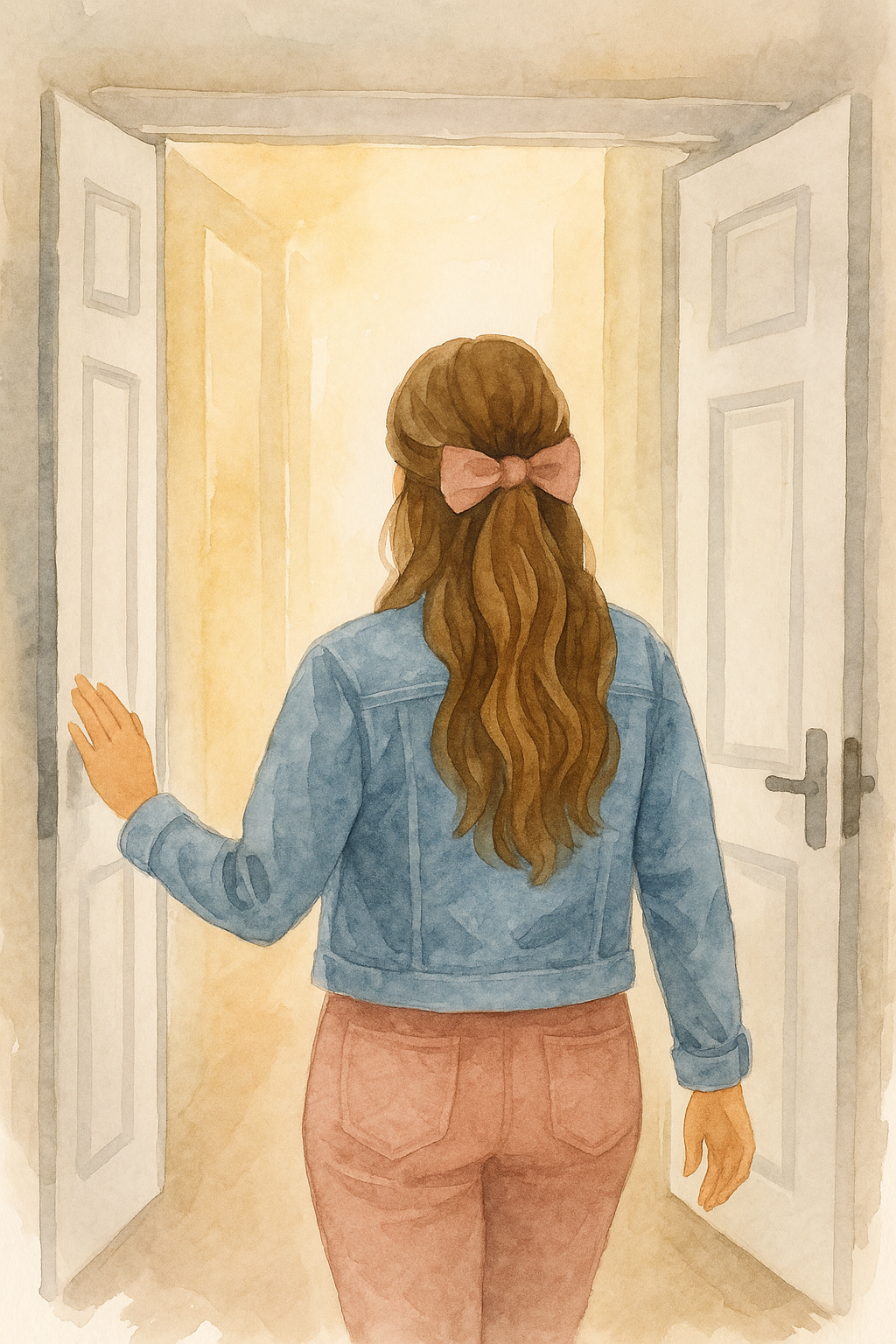
We all carry chapters that close. Doors that don’t open again. Final scenes that never got rewritten.
I used to crumble at the sound of “never again.”
Getting older doesn’t make the pain easier. But it does make you steadier. Wiser.
You learn that what’s meant to stay… stays. And the rest? It becomes part of the road behind you. A part of the story— but not the destination.
I used to think anything that mattered would announce itself. That if a door was about to close, I’d hear the hinge moan.
But some things don’t warn you. They don’t creak. They don’t crash. They just go quiet.
And the worst part? You don’t realize what mattered until it’s already folded into the noise of normal life.
Some things wait. Some things knock twice. But the rarest ones? They don’t wait at all.
They arrive and fill a void you didn’t realize existed, unexpected, real— and then they’re gone.
Not because they wanted to leave. But because they had to.
And no, timing doesn’t make something less true. It only decides whether it’s remembered or lived out loud.
And maybe… maybe that’s mercy.
Because not all things are meant to last. Some are just meant to wake you up. To show you what it feels like to be alive, And what it costs to carry it.
Some people don’t lie on purpose. They lie because honesty is costly— and pretending feels safer when the truth has never been welcome. This piece is for those performing perfection because imperfection has never been permitted.
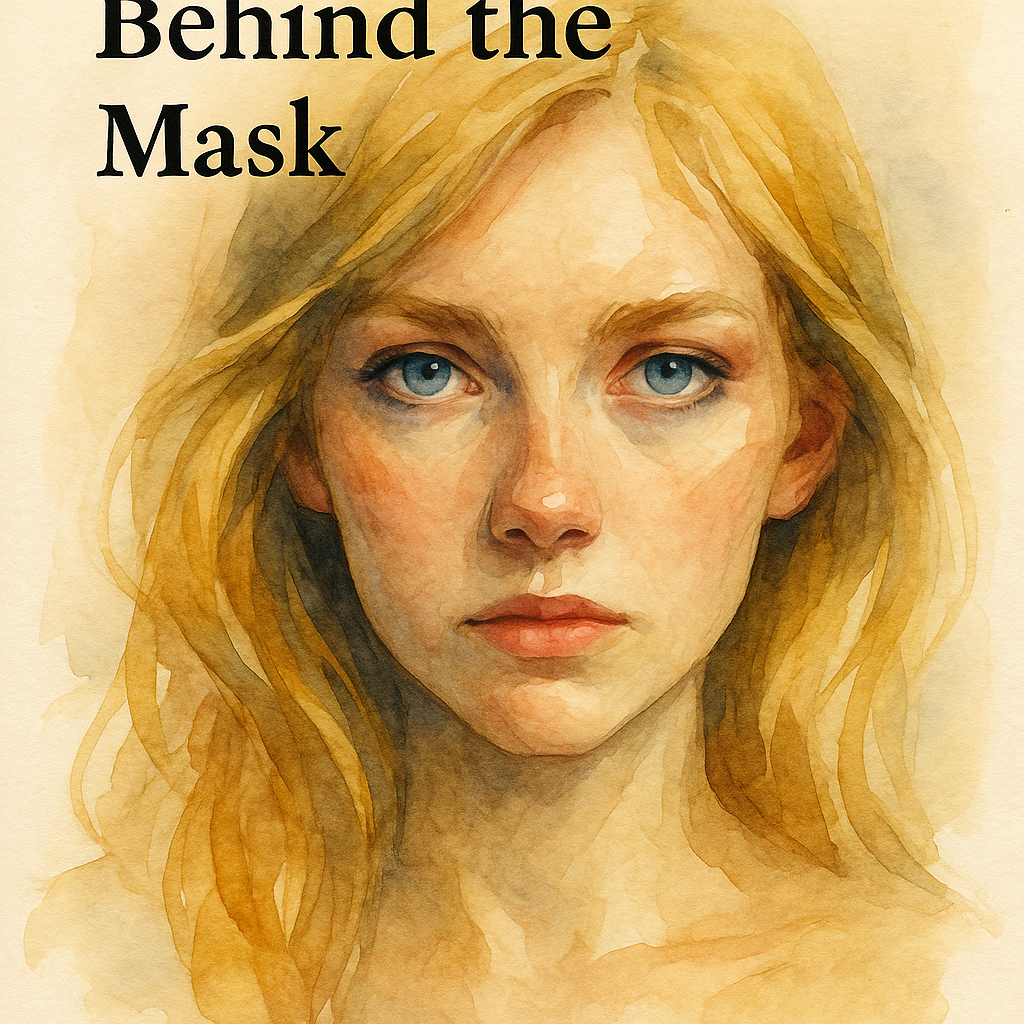
Behind the Mask
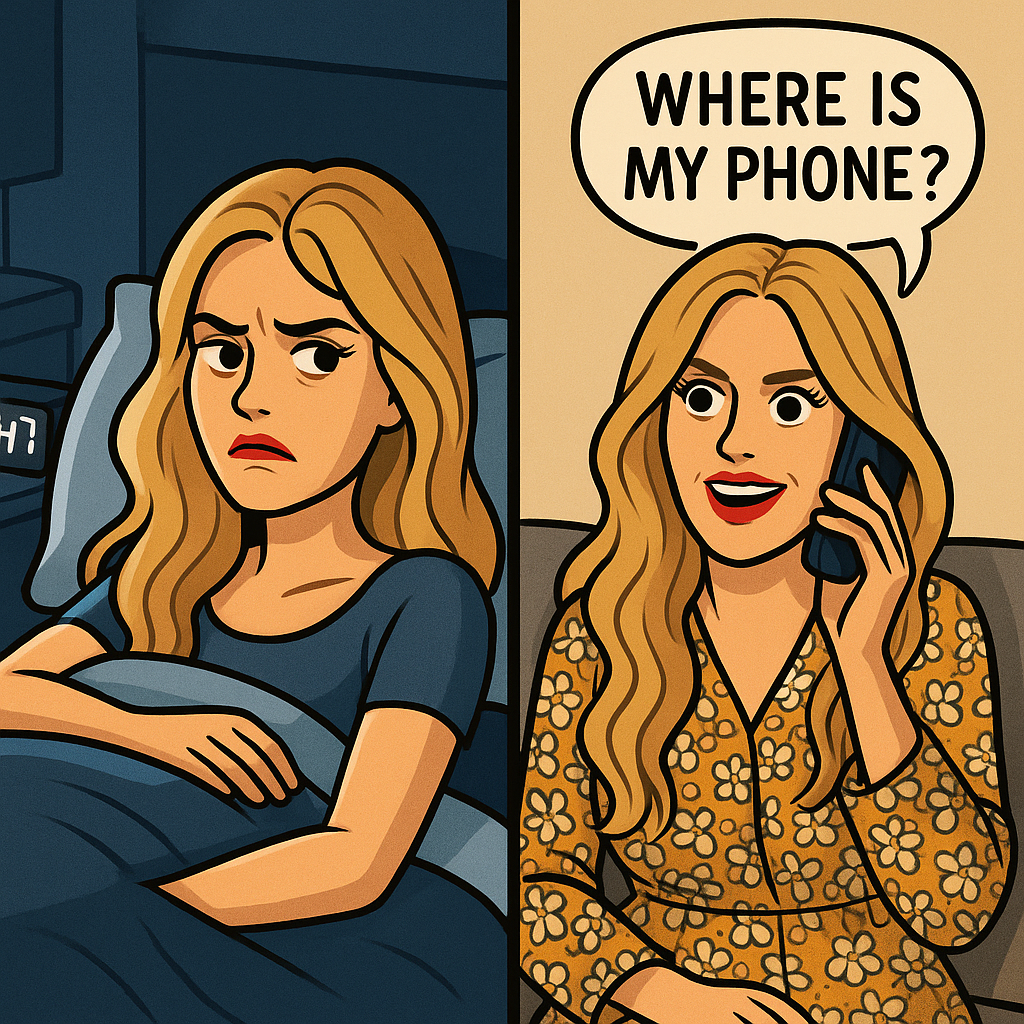
5:30 AM: Alarm goes off, but you’re already awake. You grab your phone to scroll. What does normal look like today? Every thumbs up is a signal of approval. Not the persona you want to be, but the performance you hope they will all see.
Show and tell begins at the crack of dawn, influencing the mask you put on. Those who want to stay above reproach don’t permit themselves to feel; it’s someone else’s identity that they must steal.
On the outside, you’re pressed and polished— only wrinkled in your soul. But that’s the part that you can hide behind your role.
It’s a question you wonder but would never dare ask: If they could see past the flesh and into your veins, which ones would stay? You know deep down there aren’t many. And instead of loving yourself, you always choose them.
7:00 AM: You show up looking like a dream, but on the inside, who you are screams. You greet and you smile, trying hard to conceal anything real. You feel so much on the inside that you refuse to share because performance is what you think makes others care.
12:00 PM: Exhaustion sets in. Lunch behind closed doors for refueling. The energy it costs to deny the truth is grueling. Afternoons are made for encores.
A minty ribbon to disguise your breath. A brief smile because you remember where it came from. A breath of fresh air reminds you that you’ll never be the same. As soon as you remember, you force yourself to let it slip through the folds of memory. Duty calls (ring, ring). The feeling of anything authentically affected will cause the line to be disconnected.
You lie to yourself; you lie to them.
In the prison of your life, there is no room for fallible feelings. No—acting responsibly isn’t enough. You must sew up the scenes behind your rib cage because a curated persona can only live if you kill what’s inside.
You know you won’t be loved for doing the right thing. You’ll be shot for even owning just a tiny bit of yourself. And because that’s what’s expected, you put your emotions on the shelf.
Consequently, you punish your identity. You put the truth in the hands that were never meant to hold it. Control dressed in pain took the reins. You traded dignity, respect, and your emotional safety just to survive.
That’s what happens when you play a game of shame to fit in. The opinions of others play so loudly that you never get a voice. You stayed silent while a desire for power, disguised as protection, laid you bare—and never cared. It was rage, not heartbreak, that filled the line. And through the noisy anger, not one tear made a sound.
In that moment, tenderness sat down while perfection put on her crown.
Author’s Note: This post is for every parent lying awake at midnight—brain fried, body done, heart full. It’s for the ones parenting through chaos, guilt, and grace, and finding the courage to stand up again tomorrow. You’re not alone.
Body:
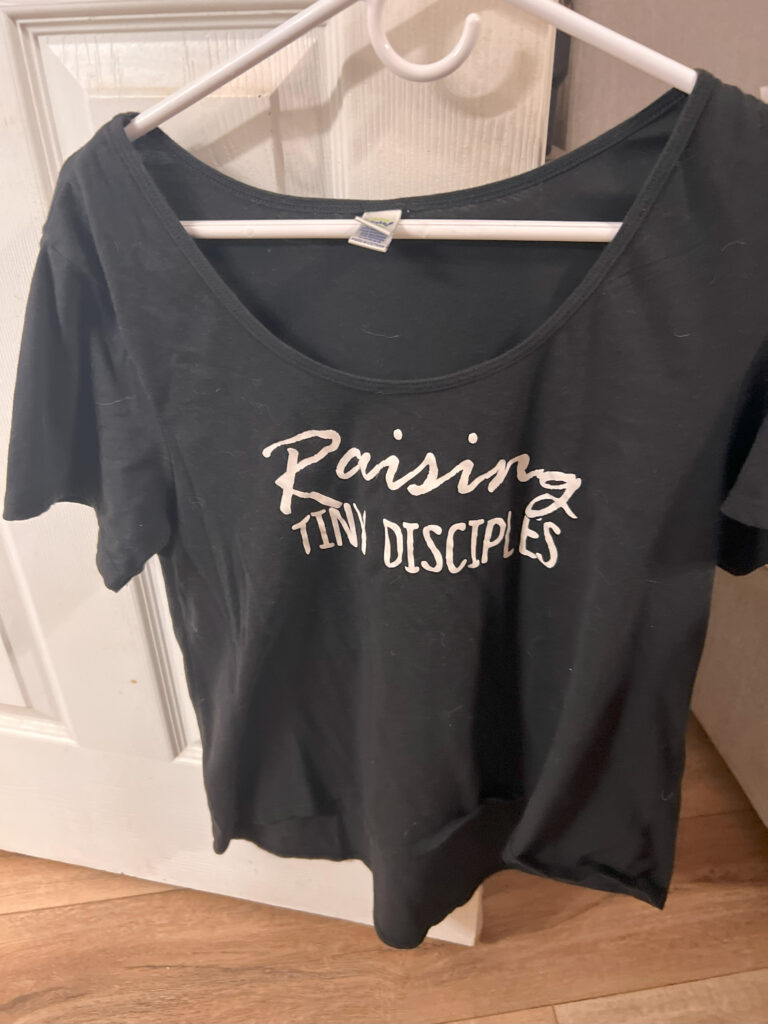
This was my shirt. Eight years ago.
The original HTV shirt from the “Jesus & essential oils” era—eight years and three chaos junkies ago.
A homemade HTV “Raising Tiny Disciples” shirt—peak “Jesus & essential oils” era. I’ll link a newer version of the DIY cutter I used back then (hello, Silhouette Cameo 2016).
It boldly declared my mom mission: “Raising Tiny Disciples.”
And to be fair, it wasn’t wrong… if we’re talking about the original twelve. You know, the ones B.C.—doubtful, chaotic, snack-seeking, and constantly questioning authority.
If I could go back, I’d add some fine print: (…like the one B.C.)
Because let’s be honest: my kids have the spiritual potential of Peter and the behavioral instincts of a gremlin on Red 40.
It’s Monday night. Quiet—only because the chaos is finally unconscious. I’m lying in bed, tossing like a hooked trout. My body’s begging for sleep. My brain? She’s just now ready to solve world peace and cereal logistics.
Sometimes I’m sharp when I need rest… and useless when I need function. I’ll lie awake planning tomorrow and then spend the
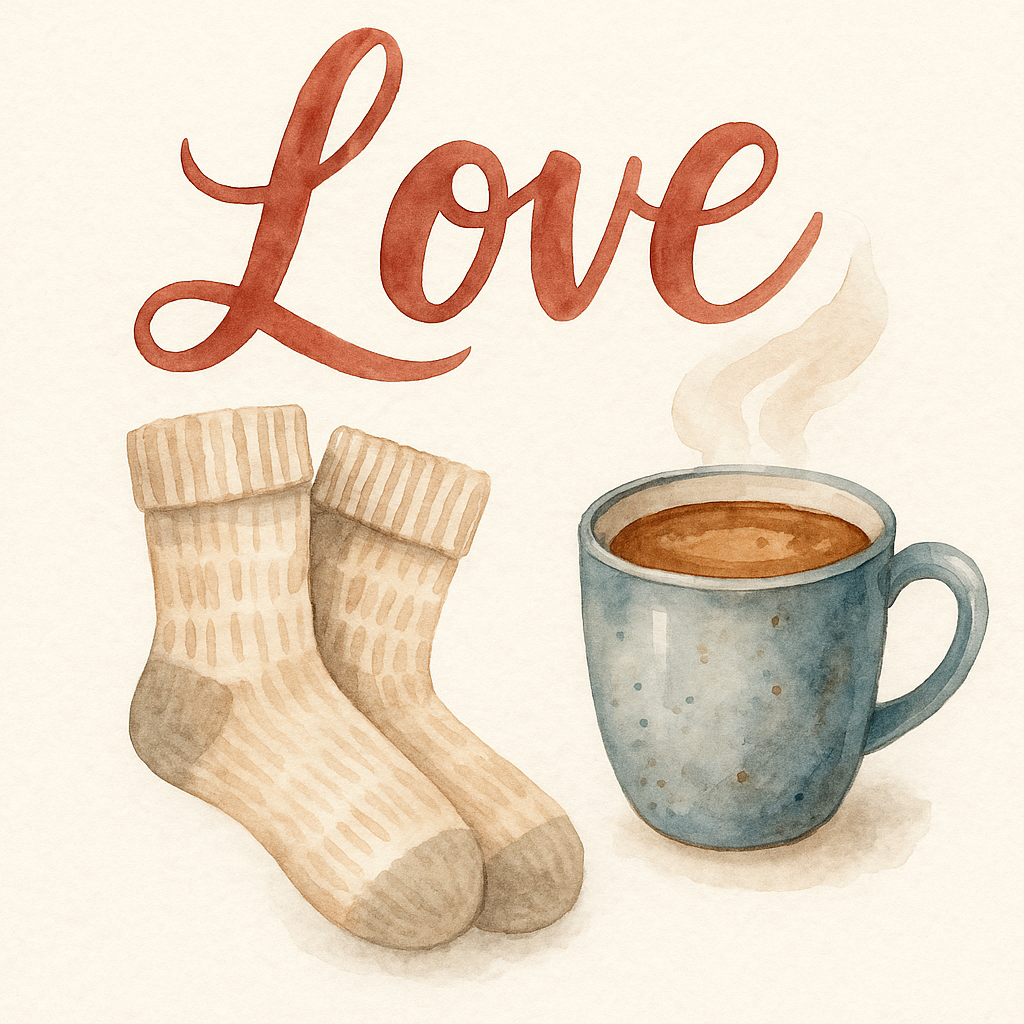
This letter is written to my daughter, Abigail, but it’s for anyone who wants to understand the quiet power of love that doesn’t leave when it gets hard. The kind that feels like wool socks and coffee—safe, steady, and completely yours.
Dear Abigail,
Today, I’m dreaming about your wedding day. I fight back tears by swallowing the lump in my throat—because I can’t wait to be there. Well… I do want you to wait. Please don’t get married at ten. (Giggling.)
I’m excited to see you glow. To watch you stand steady in a love that holds you. You’re still so young. You don’t even have a favorite flower yet. But I wonder what you’ll choose. You’ve seen me love plants—because they grow. You know how stems make me feel: rootless, wilting, like they need anchoring. But when your time comes, I know you’ll pick what’s yours.
Still, we both know: on that day, the flower won’t matter nearly as much as the person standing beside you.
Right now, I’m in my office, and you’re asleep in the room just above me. It comforts me to know that the part of my heart that breathes oxygen—you—still sleeps nearby. But someday, you’ll go.
And when you do—even with tears streaming down my face—I’ll be happy for you.
But before we go there, let’s start here:
What is love?
It’s more than a feeling. It’s the action (love) that creates the feeling (loved). It’s strength that endures the waves trying to drown you. It’s consistency that grounds you when the world tilts.
Here’s what makes it rare and powerful: You can’t earn it. You can’t make someone feel it for you. You can give it. You can show it. But you can’t force someone to return it.
The truth is— Love isn’t a feeling. It’s a choice the feeling might inspire.
But real love? It still shows up on the days when the feeling doesn’t.
That feeling you crave? That’s admiration. Respect. Affection. But it’s only a passenger sometimes. The real driver? That’s commitment. And it keeps going—cargo or not.
So what does that mean?
It means love lets you be painfully human—and still believe you’re worthy. It sees the truth of who you are, and yet… you don’t feel exposed. You feel known.
The world may see flaws. Love sees the traits that make you you. The world says you’re late. Love says, “You must’ve taken extra time—because wow, you look good.” The world replays your past. Love sees a misstep, not a sentence. No stones—just grace.
You hate to cook? Suddenly—look! It’s love’s new favorite hobby. The world might call you spoiled. Love calls you its best investment.
It doesn’t need a bow or the roar of applause. It’s that safety in wool socks and a cup of coffee. It lets you walk around like no one’s watching—because it is.
It doesn’t announce its arrival with a megaphone. It quietly whispers: “I’m here. I’m not going anywhere. And I don’t care who sees—or who doesn’t.”
When you try to leave, it guards the door. Not to control—just to say, I love you.
When it’s disappointed, it doesn’t keep score. It tries more.
To understand. To live without expectation. To avoid bond assassination. To find the darkness— sit with you in your shame— and still love you the same.
Some things are easier to say in metaphor. This piece isn’t about one person. It’s about what happens when silence grows heavy and stories start slipping through the cracks. When whispers grow teeth. When someone holds back the truth, not to deceive, but to protect what’s left of something that mattered.
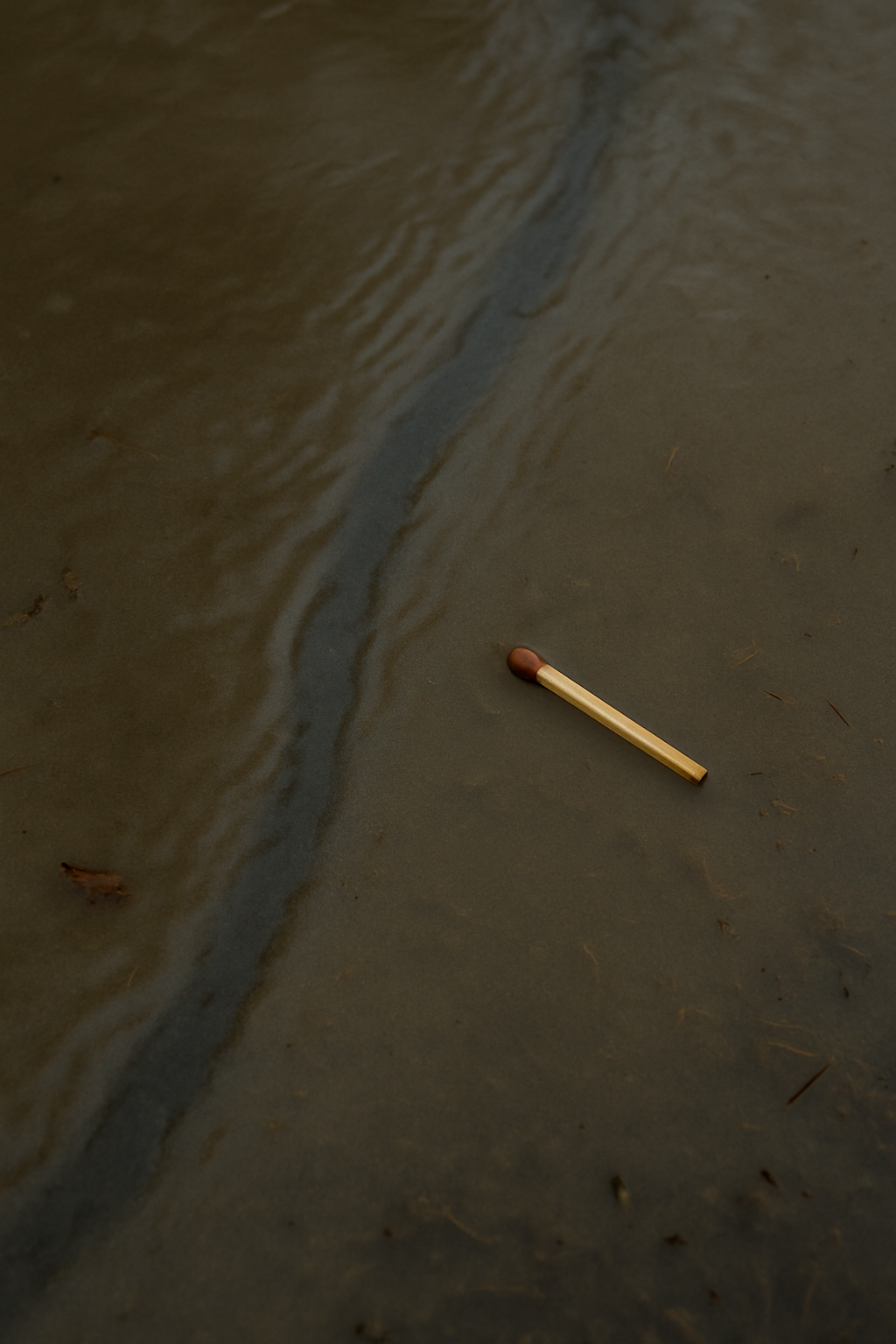
If you’ve ever tried to stay kind while holding a match that could burn down a thousand towns… If you’ve ever stayed quiet, not out of fear, but to spare someone pain… If you hate gossip and wish you could torch it at the source— You’ll feel this one.
Emotional Betrayal
In the middle of September, I held it in my hands. Uncertain whether it was soaked in truth or kerosene.
It didn’t matter. Gossip is never clean.
Masterfully crafted to tear someone down, Devotion worn like gold— But precise enough to slide a knife between the lines.
A stab in the back, a grip ice-cold.
It’s the betrayal of safety. The smell of smoke.
All the hard work it took to overcome the shame. Once the source is revealed, You’re never the same.
Said with a grin, like it wasn’t a blow Separate accounts. I’m the one in the hole
Like covering bills makes a heart more kind, But martyrdom’s just control redefined.
It wasn’t the checks that told the tale; It was power disguised beneath the veil.
Injections in the quiet, Drawing lines in hopes they would heal. Blooms on the sleeve, Meant to distract or conceal.
A frame reshaped, But the weight never leaves.
Resentment begins. A sense of autonomy Threatens the facade.
Shitty card to play But it ensures things will stay, so
It’s time to start handing out matches. Whisper by whisper, Confidence turns to ashes.
December was too cold for a picnic. Tomato soup to warm things up. Clouds formed with each breath, A history lesson about Twin Currents
But the water was already muddy. We both played naive to death.
A warning sent, Slipped between the lines—like a match in a sealed envelope.
Not to ignite, Just to signal the truth.
Hoping you’d feel a chill where warmth should’ve been.
Thought you might want to know before the hallway turned colder.
I wasn’t asking for anything. Just trying to steady the air So it didn’t collapse around you.
Discerning who stays quiet And where should you run It challenged what you thought you knew.
You panicked. Now all that’s left, Just the embers from what you blew.
This post isn’t just for my dad—it’s for the daughters whose dads aren’t here anymore, especially the ones who comforted me while carrying their own loss.
A year ago, my dad’s life was hanging on by a thread. He wasn’t telling many people how serious it was, so I carried the weight quietly. I felt like I was slowly falling apart inside. I pushed people away. I gave up things that usually brought me peace—music, running, friendships. I didn’t know how to say I was emotionally drowning.
Robert, who I love and who loves to cook with music playing in the background, would be in the kitchen making dinner. But I’d leave the room, put in headphones, and try not to feel anything. That became my coping mechanism—shut it down, shut it out.
When you think you’re going to lose your dad young, it feels like life skipped you. Like everyone else got more, and you got left with less. You feel like something was stolen. Like a piece of you will go missing if they go.
To the girls and women who have already lost their dads—I see you. I don’t know your pain fully, but I’ve felt enough to know it changes everything. Grief doesn’t leave you the same.
The season my dad was sick felt like being tossed in a storm—rain, thunder, waves constantly crashing. I was just trying to stay afloat, bruised and exhausted. The moments of peace were rare.
There was a song I clung to, even though it had nothing to do with my dad. It said, “It only hurts when I breathe.” That line became my reality.
Then one night, I had a dream. In it, the cancer was gone. My dad was healthy. He was older. He had lived.
I woke up sobbing because it wasn’t real. But I ran to get my iPad and wrote everything down, wanting to live in that future for just a little longer.
That journal entry is what I’m sharing today. I didn’t give it to my dad right away. I didn’t want him to feel pressure. If he had to go, I wanted him to feel peace.
But I was lucky. That wasn’t our story.
So to every daughter missing her dad today—I’m thinking of you. Your grief is real. It matters. I may not fully understand it, but I carry it with me when I think of what could’ve been.
The Future I Dreamed, The Miracle I Got
April 27, 2024
I pictured your hands covered in wrinkles. Your hair would be peppered by time with shades of gray. You would trade out your cargo shorts and polos for button-down sweaters and khaki pants. Maturity would have taken hold of you, and gentleness would have come naturally.
You would live in the guest house as a single widowed man, and I would give you a hard time for eating Cocoa Crispies cereal for dinner. Robert would be close to retirement. Matthew would be starting his first post-college job, and Abigail would be off at college but would come home every weekend to see you. I would send Jonah and Kaleb off to high school in the mornings, then spend my days with you.
You would have grown out of all your resistance to rules. A beat-up leather Bible would sit on your coffee table—the one I gave you the day you got saved. Time would have authorized you to freely express your opinions about parenting young adults, making me all the wiser. I would resist interrupting you because, by then, I would know time was growing shorter. I would soak in every piece of advice you offered and thank you for imparting your opinions to me.
We would spend summer vacations at the beach. We would laugh together in the shade under the pop-up gazebo, remembering when you used to take us there. There we would be—me finally taking you to the ocean. I would beg you to wear an old-man flat cap for family pictures. You would hate it, but you would do it anyway.
Then, at night, we would get back to the resort. I would be tired, but you would speak to me about an offer I couldn’t refuse:
“I’m going for my nightly walk. Do you want to join?”
We would walk along the ocean, reminiscing about when my kids would search for crabs. You would tell me you love me, and I would do the same. You would begin to tear up, like always, when you talked about how proud you are of me.
I would utter, “Dad, don’t get emotional.” But deep down, I would be smitten by your love.
As we finished our walk, I would hug you goodnight. My body would communicate to go to bed and shut my eyes, but instead, I would fold my hands and thank God for this time with you.
I would believe miracles exist.
The day I was able to send this to my dad, Fall 2024, was an answered prayer. A broken heart made whole again. A woman able to witness a real-life miracle.
New Post: A Thousand Years: Pregnancy Loss By Felecia Jacks June 16, 2025 | Interpersonal Insight
At the James Arthur concert, I was caught off guard when he sang “A Thousand Years.” Two weeks earlier, I had shared the story behind that song with Abigail—our pregnancy loss in 2010. When we got home that night, she played it on repeat through her Alexa.
I don’t have the words to express what it feels like when you realize your daughter understands the depth of love, pain, and hope that stories like these bring to life.
“Mom, why does it mean so much to you?”
That question lingered—echoing the unspoken pain and deep emotion I carry.
The Heart of Loss
In June 2010, my husband and I faced a heartbreaking reality: we lost our first child. My heart shattered when the doctor told me I wouldn’t be meeting the little one who had already stolen mine.
I tried to understand—did I cause this? Was it something I did? But there isn’t always an explanation. And that might be the most brutal truth of all.
A person you loved had to go, and there was nothing you could do to stop it. No lesson to learn. No habit to fix. Just grief.
Grief that leaves a hole in the soul.
What Does Grief Look Like?
It looks like a new reason to look forward to heaven.
It’s marked by two dates—one for the due date, and one for the day they were lost.
You count each year how old they would’ve been.
Even without holding them, there are vivid images—face, hair color, personality. They grow in your heart, not in front of your eyes.
You celebrate silent birthdays. You remember them in private. You feel them in sacred moments.
Over time, anger softens. The pain doesn’t go away, but it transforms. You don’t get over it—you grow around it.
Until one day, a “birthday” arrives, and the dam breaks again. The memories flood in: the image of their eyes, the way they’d fit into your family, the life that might have been. You smile. You cry. You know they would’ve belonged.
A Sacred Space in Your Heart
In quiet moments, if you close your eyes, you see something holy— eyes that never opened, dreams that never unfolded, love that never faded.
They live deep in your soul, and in that hope—something only God gives to parents of children in heaven—you find peace.
You know they’re waiting.
And that knowing becomes something you feel in your skin.
The Story of Love and Hope
When that song played, everything came rushing back.
Why does it mean so much?
Because it’s more than a melody. It’s a story.
Your dad was surprised by that pregnancy. We had only been married two months. He wanted me to finish school. He wanted peace. I wanted hope.
Each month, I prayed silently for a surprise.
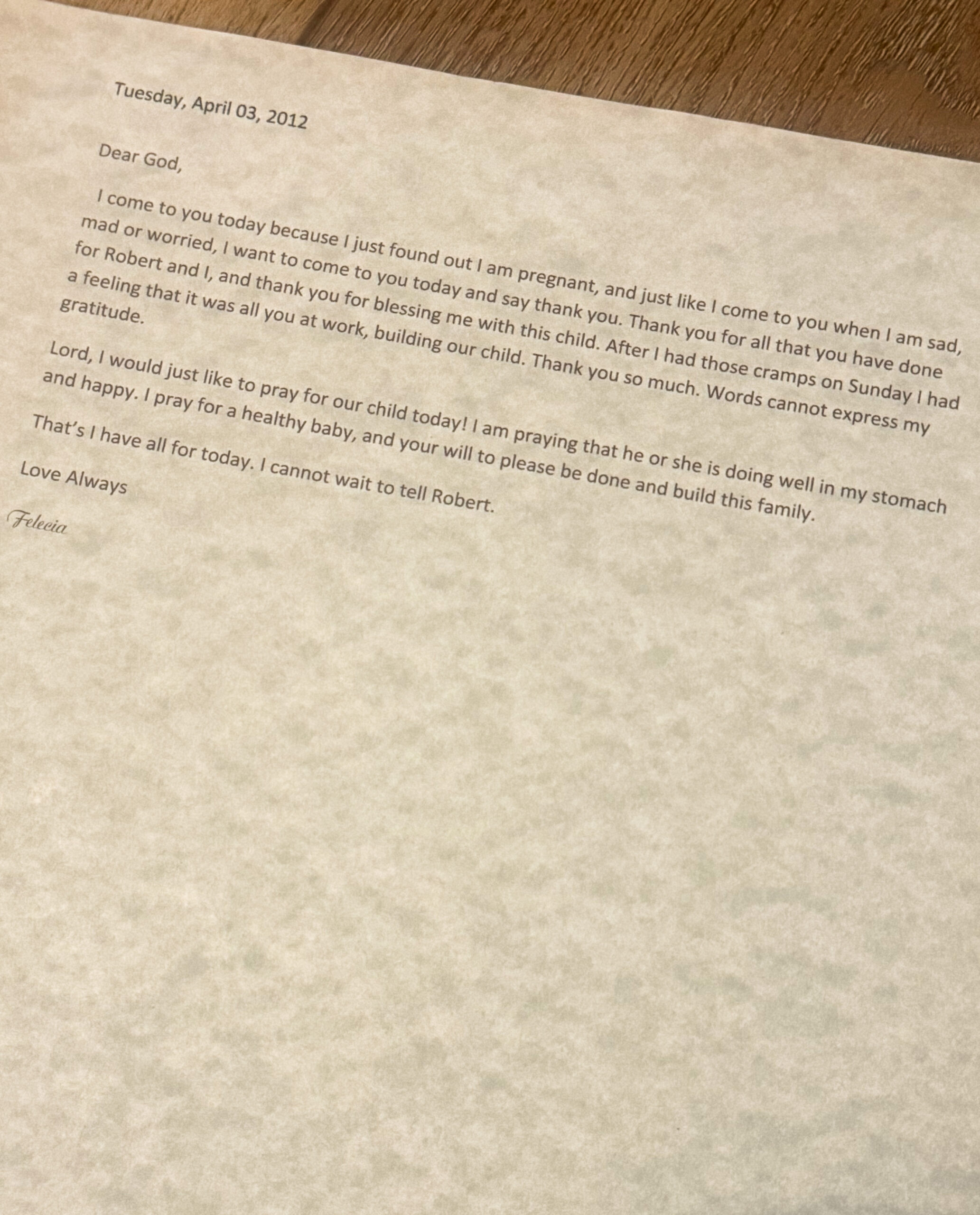
A heartfelt prayer written the day I found out I was pregnant with Matthew
The Moment of Hope
In January 2012, I dared to hope again. I calculated: if we conceived in March, I could finish school by December.
He felt the ache I carried. He said yes.
And in April, the test turned positive. I ran to my journal. He came home to a gray shirt with a very obvious message.
A Prayer from the Heart
“Dear God,
I come to you today because I just found out I am pregnant, and just like I come to you when I’m sad or scared, I come to say thank you.
Thank you for Robert. Thank you for this child.
After those cramps Sunday, I knew that was you at work. Thank you. I can’t explain it, but I know you’re near.”
Life’s Unexpected Trials
But life had other plans.
In May, I saw blood. At the OB’s office, I learned I had a subchorionic hemorrhage. A 50/50 chance of survival. I was crushed.
In the shower, blood washing down the drain, I dropped to my knees and prayed. That prayer became a life-marking moment.
I sang “A Thousand Years.” I waited. I braced.
The Miracle of Matthew
Matthew Bryan Jacks was born in December 2012—almost exactly a thousand days after we lost the first baby.
When I held him, he was so still I thought he had died in my arms. I screamed.
But then he moved.
And I knew—God answered.
The Meaning of Love and the Song
I hear the lyrics differently now:
Heart beats fast, colours and promises. How to be brave?
How can I love when I’m afraid to fall?
I have died every night waiting for you…
And I would love you for a thousand more.
Final Reflection
That day in the car, when Abigail asked, “Mom, why does it mean so much to you?”—I didn’t have the perfect answer.
But in my heart, I knew she understood the story.
Not just the one I told her—but the one written into the song.
This wasn’t just about music. It was about a love that endured. A faith that healed. A loss that shaped forever.
Because even love that only lives for a moment can shape eternity.
And the truest love really can wait a thousand years.
There comes a moment when telling your side stops being healing and starts being exhausting.
When you realize the truth doesn’t always need an audience, And peace doesn’t require approval.
The peace is within you. And only the devil sits in the details.
Telling becomes a temptation— because we believe our version of the story might change someone’s mind, soften someone’s heart, Or finally open them up.
But if we’re being honest… Think of someone you actually know.
Like your spouse. I’m picturing mine right now.
We’ve let each other down. We’ve walked through fire. There have been moments that needed apologies— But not performances.
We didn’t sit on trial. We didn’t beg to be understood. We didn’t weaponize silence or make understanding a condition.
That’s the difference.
There’s a line between the people who are worth explaining yourself to and the ones who never should’ve had that power in the first place.
And more often than not? The ones worth explaining to Don’t demand it.
Each time you choose to explain yourself to someone, You put yourself on trial.
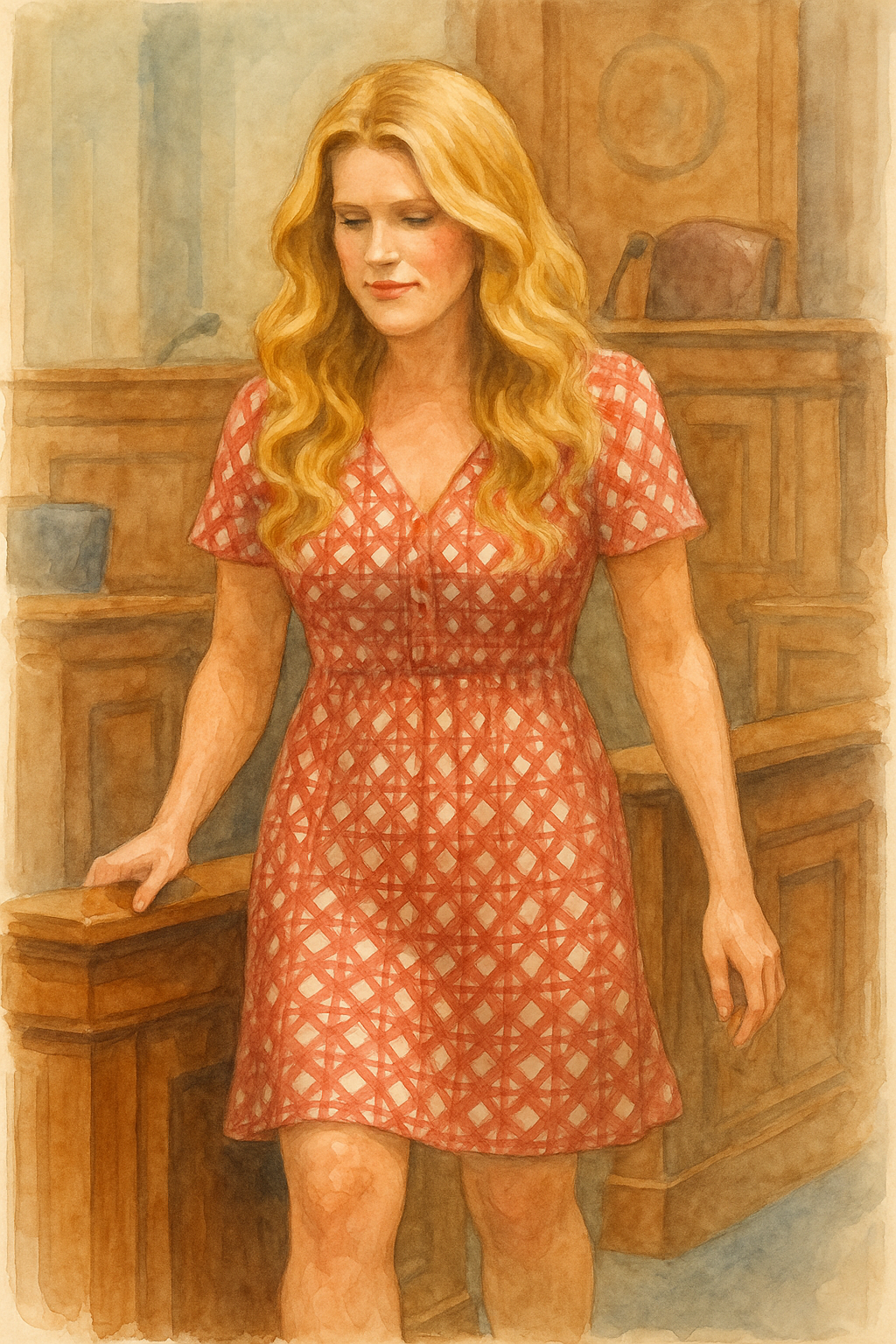
You become the defendant. And in court, most defendants don’t take the stand. There’s a reason for that.
Defending yourself already puts you under scrutiny— exposed to twisted narratives, manipulative questions, and people who weren’t listening to understand in the first place.
So just like you guard who you tell your secrets to, be especially careful about who you defend yourself to.
Think about your life. Think about who you’ve wasted your breath on. Did their opinion actually change your path? Did their judgment actually matter?
Because if someone doesn’t make a real impact, They don’t get a vote.
Bottom line: There’s a standard to be relevant. So don’t bother crowning the court jester.
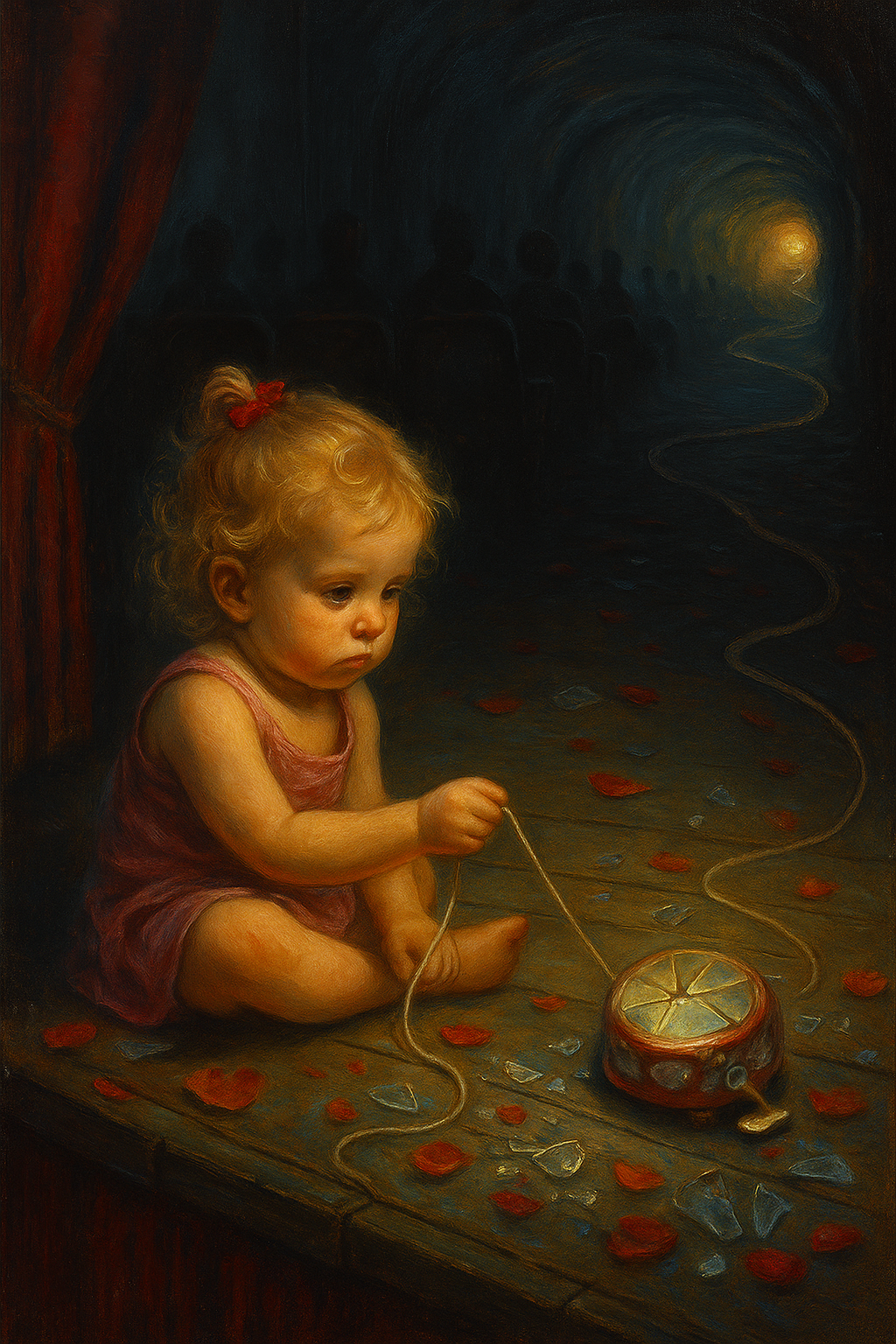
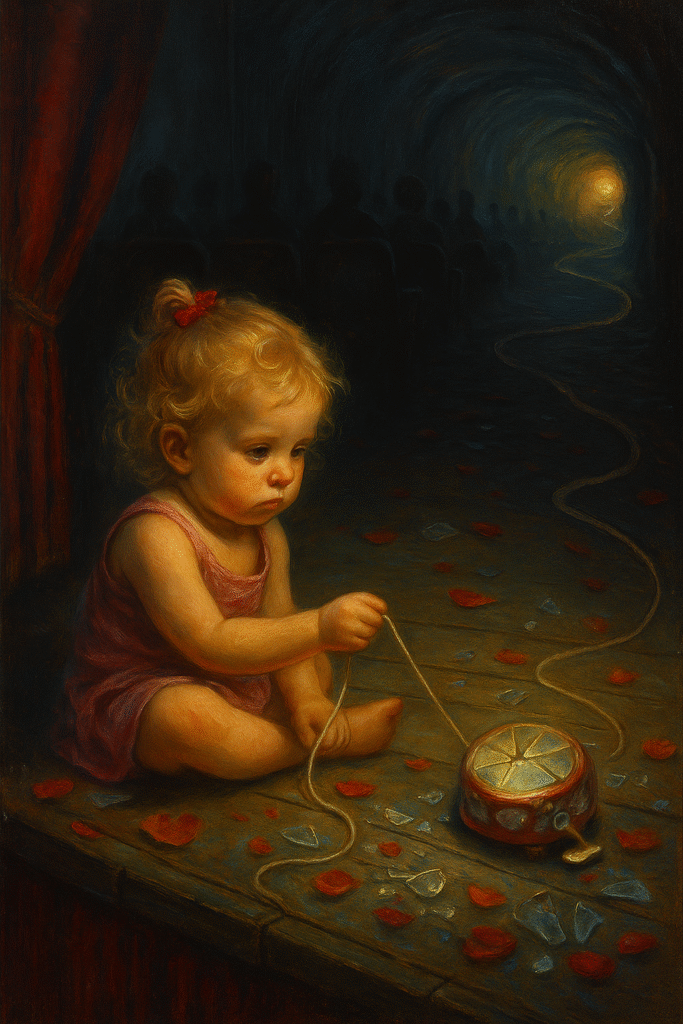
Author’s Note: In a world where approval often dictates worth, many of us become like children tugging at a toy—desperate to hear its song, seeking reassurance in its melody. That’s called emotional conditioning. This poem explores the silent struggle of constantly striving for validation, even when it’s broken or elusive. Through the metaphor of a toy that once sang, it reveals the human tendency to persist—to pull harder—and to hope endlessly for a flicker of light amid the noise and silence of unmet expectations.
The Toy That Once Sang
You probably remember the times you felt it— The sweeter goosebumps of approval. Two hands come together and make a tap. You’d found the string that made the machine sing.
You wanted a lullaby in encore. But sometimes the string stuck. Not because it was broken— Maybe you just didn’t pull hard enough.
So you learned: Pull harder. Even when you didn’t want to. Even when your chest throbbed. And on the days the toy stayed silent, something behind your bones began to rot.
In the quiet, your face surrendered to gravity a little more each day. Until it couldn’t rise above water without the noise.
So you pulled that string harder, louder, more often than not— just to see a flicker of light.
The one at the end of an endless tunnel. A light just out of reach, but bright enough to keep you hoping.
The ocean between you and the glow carries what crashes with the weight of all your collapses. Each wave a memory of the string that once worked. And how you never really figured out what made it sing.
Still, You keep pulling. Because a performance with no applause is easier than walking away from a toy that once made music.