I remembered that part later. At first, I just remembered you singing in the truck. Then the rest came back: you were driving, I was seventeen, and we were going to Waffle House like we did on Saturdays.
We had The Calling’s album because we liked “Wherever You Will Go.” But it was another song that made you cry that morning.
“Gosh, this song is so sad.”
I didn’t understand.
“What is it about? A breakup?”
“Gosh, no. Listen to it.”
You wanted me to hear the words. And when the background vocals came in—“fade away”—you pointed them out.
“Do you hear that?”
I remember looking at you, trying to understand what you were hearing that I wasn’t. We were just going to breakfast. You were right there beside me.
I heard that song again the other day.
And Mom, I hear it now.
I understand wanting another day. I understand going back through ordinary memories and finding things I would give almost anything to do again.
A Saturday morning. Your truck. Waffle House.
I would give anything to go back for one more minute. I would tell you that if this were our future, it would break me. It would change me forever.
But I get to remember this, too:
You beside me. Your voice. Your tears over a song I thought was about a breakup.
I wish I could tell you that I remembered. I wish I could call and ask whether you remembered it, too. Maybe you would. Maybe it was just one of a hundred drives to breakfast for you.
But it stayed with me.
I just never imagined it would be about you.
And now, all these years later, I’m the one crying in the car.
I hear it, Mom.
I hear it so loud.
It cuts deep, Mom.
I wish you were here to hear me say that.
Some days, I barely make it through the day.
Living without a goodbye—I don’t know that I will ever fully recover.
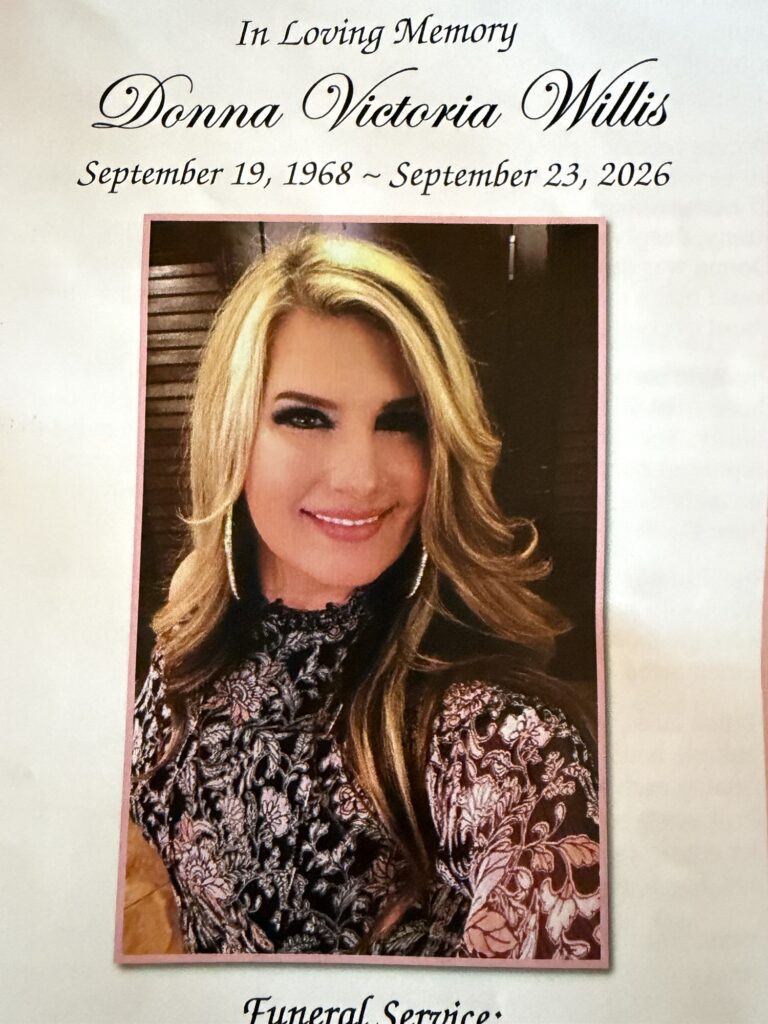
It was time for the family to go back for the viewing, but we were waiting on someone else. The funeral home asked if anyone wanted to go back alone.
I said I would.
I wasn’t prepared for what happened when I saw you in that coffin, Mom.
It felt like the nightmare you hope you’ll wake up from before it actually happens.
I knew you were dead.
I knew it.
But some part of me still believed that if I could just say the right thing, loudly enough, desperately enough, you might open your eyes.
I think I thought that even if you didn’t open your eyes, something in me could shift and I could find closure.
But each time I said it all, nothing changed in me, so then I would scream it all again.
And nothing was changing in front me or inside of me.
You looked like you.
You weren’t deformed. You didn’t look terribly sick. You hardly looked dead.
I looked at you and thought:
How could I have known?
And then I lost it.
“Mom, I love you.”
“I’m so sorry.”
“I want my mom.”
“Everything is my fault.”
“Mom, I’m so sorry. Please forgive me.”
I screamed it louder.
And louder.
As though volume might somehow reach wherever you had gone.
The last thing I said to you while you were alive was that I loved you. I’m grateful for that.
But standing there looking at you, I wished I had said it in person.
I wished I had hugged you.
I wished I had kissed your cheek.
I wished for one more chance to make everything between us small enough that love could swallow it whole.
Mom, I am dying inside.
You didn’t wake up.
I tried so hard.
Eventually I stopped looking at the coffin and started looking at you.
The little freckles on your hands.
The bump on your nose.
Your fingers.
They looked exactly the same.
There was something strangely comforting about being close to you. I had spent days dreading that room, and suddenly I didn’t want to leave it.
Mom, there is a hole where you were.
When crying and screaming didn’t work, I got angry.
I wanted to punch the wall.
I wanted to throw something.
I’m getting angry again writing this.
I know you didn’t choose to leave me, Mom.
Of course I know that.
But my broken heart doesn’t care what my brain knows.
I was furious that you left me.
I was furious because you knew how much I loved you.
I spent so much of my life wanting to be a good daughter and wanting you to be proud of me.
And I needed you.
Sometimes I don’t think you understood what I needed because you spent so much of your own life surviving.
You grew up worrying about things I never had to worry about.
But I was fed, Mom.
You made sure of that.
You gave me a different life.
And because you did, my needs became different from yours.
Sometimes what I needed couldn’t be bought.
It couldn’t be fixed.
It couldn’t be put in a box or handed to me.
And sometimes we completely missed each other there.
But there were other times when somehow you knew exactly what I needed.
There were days when I called you because I was emotionally on the brink.
There were days when I was haunted and couldn’t get off the floor of my office because my body felt too heavy for my heart to carry.
And somehow, Mom, you could put your hand right through that phone and hold me.
You carried me.
That’s part of why I’m so angry now.
Because I still need you.
And you’re gone.
I feel like I’m screaming inside a heart stuck somewhere between what was and what can never be again.
I know I will never be exactly the same.
And then, while I was standing there screaming at you, I realized something.
It was the first time in my entire life I had ever spoken to you and you didn’t respond.
So I screamed until I couldn’t scream anymore.
And then I stayed.
I had thought I would want to run from your funeral.
That’s what I do with pain sometimes. I retreat. I don’t particularly like being held. I don’t like being watched while I hurt. Give me a room by myself and let me figure out how to breathe again.
But I couldn’t stay away from you.
After I wore myself out, I stayed close.
I looked at your freckles on your hands.
Your face.
The way your nose had that bump I wish mine had.
All those tiny features that belonged to my mother.
And eventually I thought:
You’re not hurting anymore, Mom.
You carried wounds long before I ever existed. Some of them followed you through your entire life.
Some reached me, too.
There were things between us that I desperately wish had been different. There were things I needed from you that you couldn’t always understand. There were things you needed from me that I couldn’t always give without losing pieces of myself.
We hurt each other.
We loved each other.
Both things are true.
And death doesn’t sanitize the past.
And the past doesn’t have to be rewritten for me to miss you.
I don’t need to erase the hard parts to know that I would move heaven and earth today to have you back.
At your funeral, people talked about how much you helped people.
How compassionate you were.
How you could see someone hurting and immediately want to do something about it.
They were right.
That was you.
But compassion was complicated in our family.
Sometimes you could understand the wounds inside people who had caused wounds of their own. Sometimes I needed you to understand mine, but I couldn’t ever tell you outright.
I don’t think we ever completely figured that out.
Maybe we would have.
I thought we had time.
Goodness, Mom.
I thought we had time.
And there are things I wish I could tell you now.
I understand more about you than I did when I was younger.
I understand that you were mothering me with tools you had forged while surviving your own childhood.
I understand that some of the things you gave me were things nobody had given you.
And I understand that some of the things I needed were things nobody had ever taught you how to give.
None of that makes every hurt disappear.
But it makes me look at you differently.
And now there is Abigail.
Your granddaughter.
There are things that hurt you.
There are things that hurt me.
But they don’t get her.
That’s where this story changes.
She doesn’t have to inherit every wound simply because it came before her.
And, Mom, I wish you had understood that sometimes when I created distance, I wasn’t trying to stop loving you.
I was trying to stop pain from traveling another generation.
I couldn’t save the little girl you were.
I couldn’t save the little girl I was.
But I can protect mine.
And I’m going to give her the good parts of you.
There were so many.
Your generosity.
Your toughness.
Your ridiculous determination.
Your humor.
Your ability to make a catastrophe somehow seem manageable.
Your willingness to show up.
Your fierce love.
The way you could make me believe everything might actually be okay when I called you from the floor.
The way you came from so little and made sure your children had more.
Those things get to keep going.
Maybe that’s how families heal.
Not because one generation suddenly gets everything right.
Maybe one mother changes what she knows how to change.
Then her daughter changes a little more.
And someday my daughter will probably recognize things in me that I couldn’t see myself.
Maybe she’ll change those too.
One daughter at a time.
I may spend the rest of my life walking across some of the broken glass left behind.
But I’ll put my daughter on my shoulders.
She doesn’t have to walk through it just because we did.
And you don’t have to walk through any of it anymore either, Mom.
You’re free.
Nothing that haunted you can reach you now.
And that space between us that felt so enormous at the end?
It’s gone.
None of it matters to me standing beside your coffin.
I would move heaven and earth to hug you.
I’d kiss you on the cheek.
I’d tell you I’m sorry.
I’d ask you to forgive me.
I’d tell you I forgive you.
And then I’d probably hold onto you until you complained that I was squeezing too hard.
But I can’t.
And maybe that was what all that screaming was about.
For the first time in our relationship, there was nothing left I could say that could change what happened next.
You didn’t answer.
You couldn’t.
So eventually I stopped trying to find the words that would bring you back.
People ask me all the time what my relationship with Kaleb’s biological mom was like.
I usually just tell them the truth: it was really good.
A couple of weeks ago, the kids were talking about how they came out of my belly, and Kaleb started asking questions. It wasn’t some deep or sad moment. He was just curious.
He asked who his mom was, so I told him her name.
Then he asked why he didn’t stay with her.
I told him, “She was really sick, and she wasn’t completely sure she could take care of you. So I asked her if I could have you, and she let me.”
And that was pretty much it.
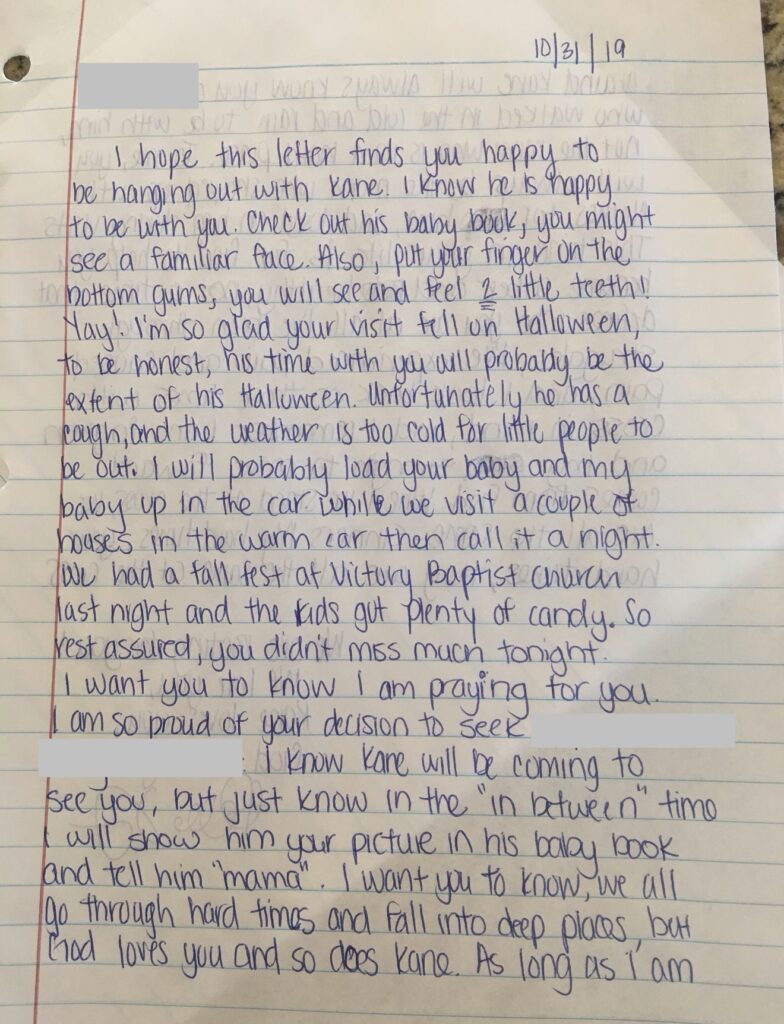
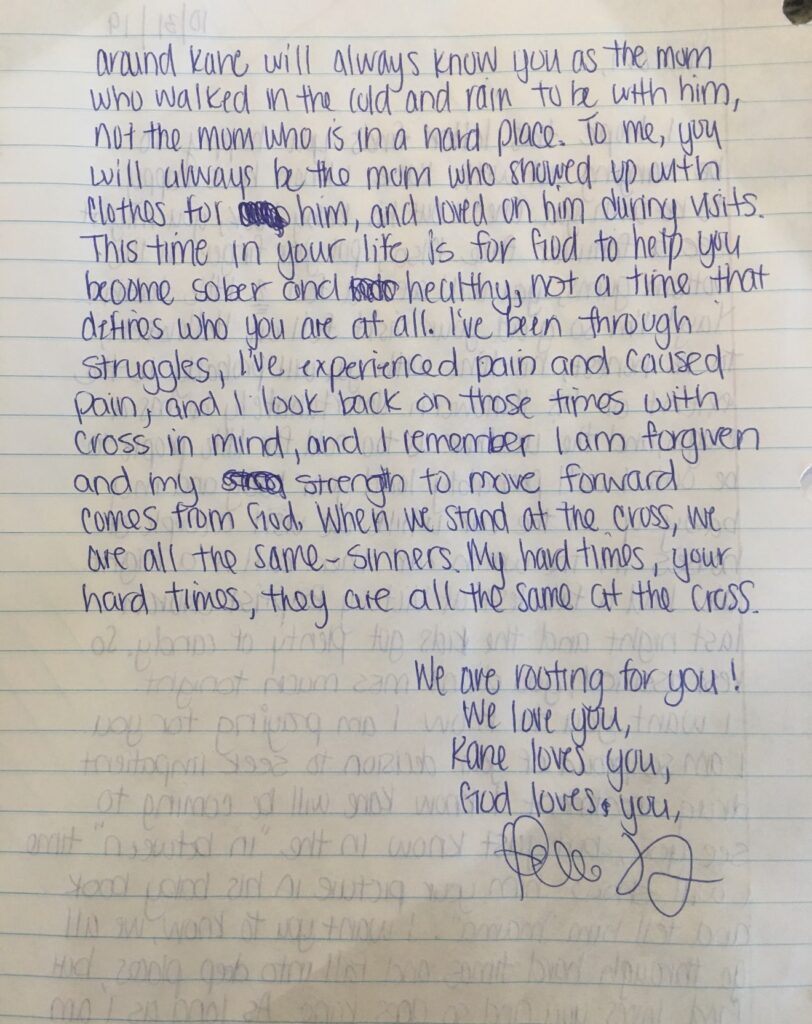
Then this week I found this letter.
I wrote it to his mom on October 31, 2019. He had only been living with us for a few months. In foster care, once a child has been in care for 15 of the previous 22 months, the state is generally required to file for termination of parental rights. So at that point, we were nowhere near knowing how his story would end.
Back then, his name was still Kane. I loved him already, but I had absolutely no idea that I would eventually adopt him or that one day he would become Kaleb.
At the time, his mom had made the decision to go into inpatient drug treatment.
And apparently I wrote her this.
Reading it seven years later, one part made me question myself:
“As long as I am around Kane will always know you as the mom who walked in the cold and rain to be with him, not the mom who is in a hard place.”
And another:
“I will show him your picture in his baby book and tell him ‘mama.’”
Have I kept this promise?
It reminded me of a conversation we had in the car that seemed ordinary at the time.
Just me telling my son the truth: yes, he was loved. He didn’t become mine because nobody else loved him.
Here we were seven years later, he asked.
And I got to keep that promise.
I think this letter also answers the question people have asked me all these years about how I could have such a good relationship with his mom.
Kaleb has always represented a whole person to me.
Not just my child.
He had a name before the one I gave him. He had a mother before me. He had a history that started before he ever entered my house.
And loving him meant loving all of him.
Supporting his mom was never separate from loving Kane. It was one of the ways I loved him completely.
When I wrote this letter, I loved that little boy desperately. And I desperately wanted his mom to get healthy.
Those things weren’t opposites, even though her getting healthy could have meant that he left me.
That may be one of the hardest things foster care ever taught me:
Sometimes loving someone completely means loving them enough to want what is best for them, even when where they may end up doesn’t line up with what you want.
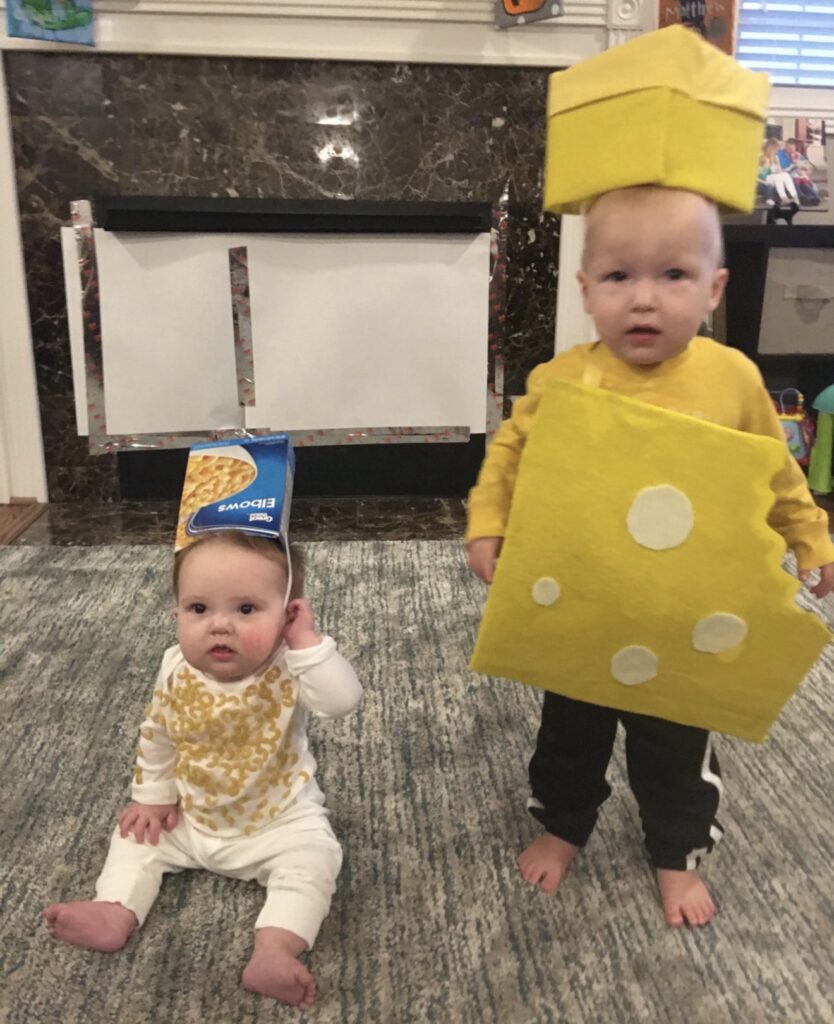
That Halloween, I wrote that I would probably load “your baby and my baby” into the car together.
And here they are.
My baby and her baby.
I just didn’t know yet that one day they would both be mine.
I don’t know what foster mom might need to hear this today, or what biological mom might need the encouragement.
But a hard chapter does not have to become someone’s entire story.
And loving a child well sometimes looks like refusing to let it become their mother’s entire story either.
I arrived at the hospital in the late hours of the night to induce the delivery of my son.
A pot of gold waiting at the end of a colorless rainbow.
A baby who never got the chance to be born, followed by a pregnancy complicated by a subchorionic hematoma that gave this baby only a 50% chance of survival, leaves a woman clenching her fists as tightly as she can to hope—all while preparing for the fall.
Prayers for God’s mercy on a fallible woman became regular conversations in our house.
Once, in the shower, with a large pregnant belly and an overwhelming feeling of helplessness, I leaned on the only One I believed had the power to change an outcome I could not control.
On my knees, water dripping down my naked body, I begged God to make Matthew mine.
It was a request I didn’t feel completely worthy of asking.
I had a Doppler at home to listen to Matthew’s heartbeat. Most mornings, I checked.
Hearing that little gallop gave me something pregnancy otherwise couldn’t: proof. For that moment, my baby was alive. He was still there. We were still moving toward the finish line.
I thought I needed to get him born.
If I could just get him here safely, maybe I could finally exhale.
I didn’t know yet that the fear would come with me.
Before pregnancy, I was happy, outgoing, and enthusiastic about life. Depression was not something I knew intimately. In fact, I remember someone I knew struggling with depression and making a comment that they needed to do something about it.
Get help.
Make a change.
Do something.
I didn’t mean to be cruel. I simply didn’t understand yet that sometimes a person can desperately want to get better, do the things she’s supposed to do, and still wake up sick the next morning.
I was about to learn that the hard way.
But here we were.
Our pot of gold.
The hospital hung Christmas lights every December, and I had told Robert that if I ever had a baby there, I hoped those Christmas lights would somehow make the cut into the final scene.
They did.
It was a long labor, but I remember the miracle of seeing a real-life baby in front of me.
He cried.
The world around us seemed to light up like a spotlight had suddenly been turned on in the room.
I took my baby and smiled.
Then he closed his eyes.
And I lost my breath.
“He’s dying. Please help him. Take him.”
I screamed for someone to help him.
It shocked everyone.
Including me.
Matthew wasn’t dying.
He had simply fallen asleep in his mother’s arms.
For months, I thought I just needed to get him here safely. But when he finally arrived, something inside me didn’t receive the message that the emergency was over.
I had my baby. I still needed proof that he was okay.
We had no idea this would be the beginning of a season of sorrow.
⸻
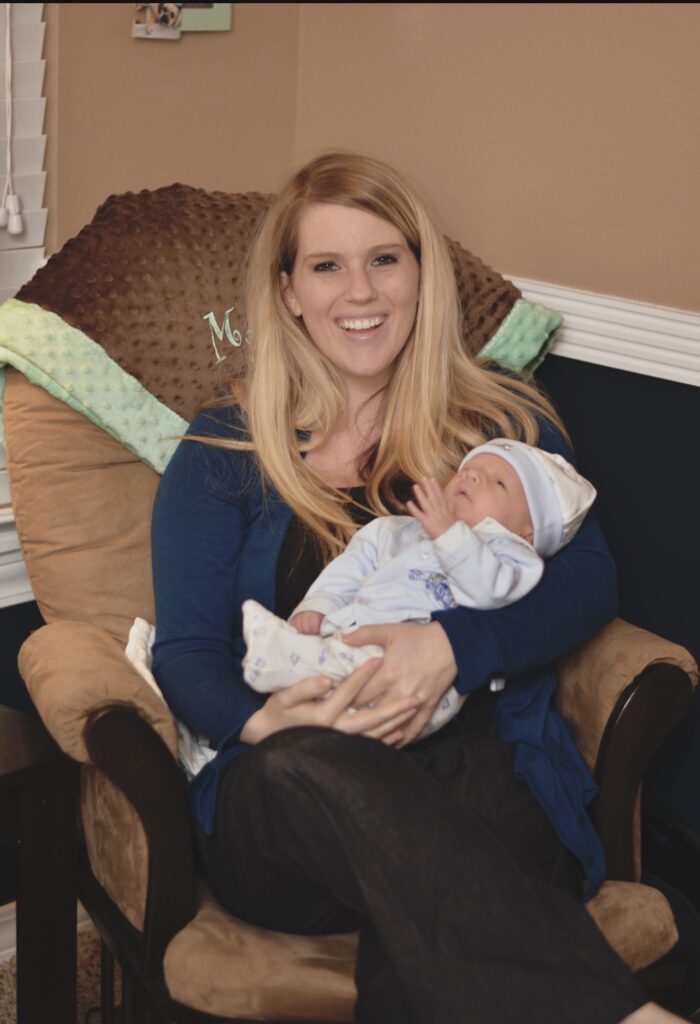
We made our way home, and I rocked Matthew in his glider and nursed him on demand.
He wasn’t nursing well, and his weight became something we legitimately needed to watch. I took him to the hospital every Friday to be weighed and kept track of that little piece of paper like it was a certificate of survival.
Eventually, my anxiety won, and I supplemented more and more.
That wasn’t my plan.
But I could not tolerate feeding my baby without being able to see and measure how much milk he had actually gotten.
A few days after delivery, I was struggling even to get up and grab Matthew because of tearing and stitches. I wasn’t getting much sleep. I wasn’t drinking enough. I wasn’t eating enough.
I remember my skin even feeling different.
Once I healed from the physical pain, I realized I was living in a pool of grief.
This was not what I pictured.
This was not what Facebook made motherhood look like.
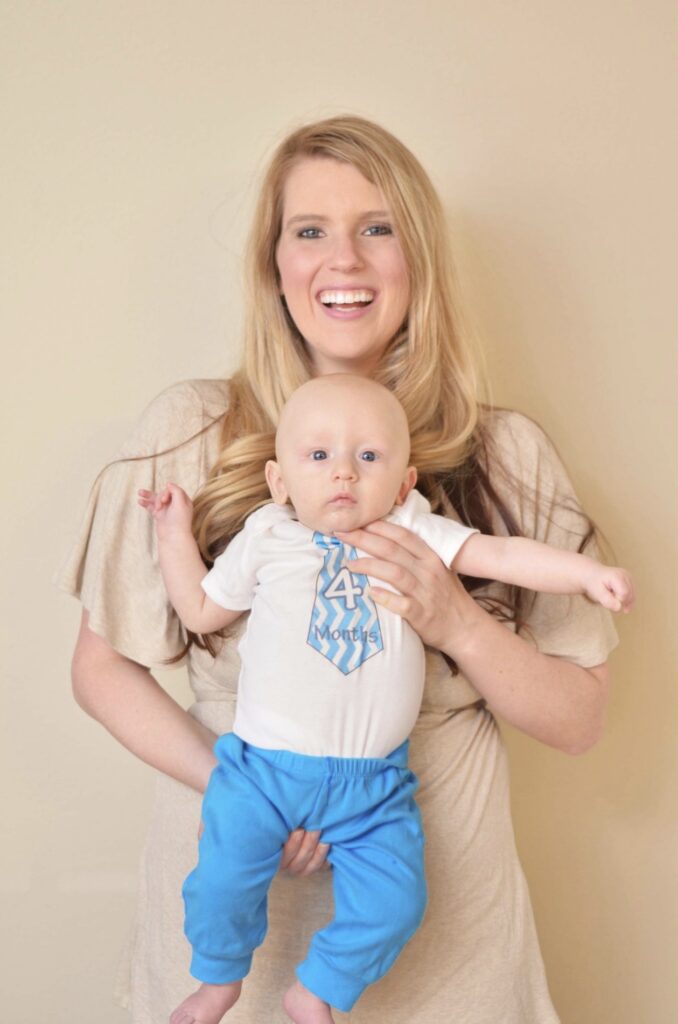
People smiled in pictures. They doted on their babies. They put a sticker on their baby’s onesie every month and photographed the milestone.
I had the monthly sticker.
I had the camera.
And I stood behind it feeling like a fraud.
⸻
It was a slow fade.
At first, I worried about breastfeeding and Matthew gaining weight.
But underneath those ordinary concerns, something much larger was taking shape.
I loved him more than anything, but he represented something I had not quite been able to wrap my head around:
Someone needed me now.
My life was no longer entirely my own.
And I had a problem with that—not because of Matthew, but because I didn’t feel like I had lived my life in a way that could guarantee Matthew would always have me.
My mom almost died from stage 3 breast cancer when she was 28.
I was nine.
She tried to go to a doctor, and they turned her away because they thought she was too young. She was postpartum, too, and she was initially told the lump was a swollen milk duct.
A year later, it was still there.
It was cancer.
My mom cried.
My mom thought she was going to die.
I thought she was going to die.
Before Matthew, those memories belonged to my childhood.
After Matthew, I could suddenly see them from my mother’s side.
And worse, I could see them from his.
⸻
Before motherhood, I jumped out of airplanes for fun.
People told me I should get mammograms because of my family history.
I didn’t go.
In fact, I went to tanning salons instead.
I was quivering as all of this began unraveling in my mind.
I loved my son more than life, but suddenly every careless thing I had ever done with my own life felt like something that might cut our time together short.
The tanning beds.
The screenings I skipped.
Every stupid risk that once belonged to a young woman who assumed she had plenty of tomorrows.
Now somebody needed those tomorrows from me.
And I couldn’t promise them to him.
I couldn’t bear the thought.
But the thought kept finding me in my dehydrated, sleep-deprived slumber.
The glider where I had started out rocking Matthew became a place in the house I feared, simply because I knew my thoughts became louder there.
My inner reprimand screamed at me from the corner of that room.
Eventually, I stopped going in there.
The more I thought about all the normal young-adult choices I’d made—choices that no longer felt normal in this state of mind—the more I thought about life and death.
And then another realization hit me:
I had brought Matthew into this world, and someday he was going to die.
We all are.
I had always known that.
But suddenly I couldn’t understand how everyone else was okay with it.
I felt selfish.
I loved him desperately, but part of me wished I hadn’t exposed him to a world where suffering and death were inevitable.
I hated myself for doing this to both of us.
I even resented my own parents for having me.
I never wanted to hurt Matthew.
I never had thoughts of hurting him.
Quite the opposite.
My mind was consumed with preventing anything from ever hurting him.
That was part of the prison. I had assigned myself the impossible responsibility of protecting another human being from everything—including the parts of being human that no mother can prevent.
My thoughts became a prison.
And I was suffering.
⸻
Motherhood came with responsibilities I understood.
Feed him.
Bathe him.
Change him.
Take him to the doctor.
Keep him warm.
Love him.
But somewhere in my postpartum mind, other responsibilities quietly appeared on the list:
Keep Matthew alive.
Keep yourself alive so you can raise him.
Never let anything separate you.
Those were the responsibilities I could never finish.
There was no box I could check that said:
Matthew will always be safe. ✓
There was no test I could take that promised:
You will live long enough to raise your son. ✓
But my brain treated those impossible guarantees like ordinary maternal responsibilities.
And every day, I felt like I was failing to complete them.
The only way I knew how to emotionally survive was to try to get ahead of everything that could possibly go wrong.
Keep harm out of Matthew’s way.
Find anything that could be wrong with me before it was too late.
Prepare for the worst before the worst could surprise me.
But that was a much bigger job than it sounds like on paper.
What if my mother’s cancer was coming for me?
Was the buzzer about to go off on my own life?
How do I prevent Matthew and me from separating?
What if I’m already too late?
Will I go to heaven?
Is there a heaven?
Is there a God?
Of course there is a God.
But what if there isn’t?
Then dying becomes much worse.
Then I don’t leave my son for a better place.
I just leave him.
There was an ambiguous sense of impending doom, but I didn’t understand yet that the catastrophe was happening inside my mind, not in the world around me.
I couldn’t understand how other people could be happy.
How could they be so calm knowing what they had exposed their children to simply by bringing them into the world?
And if I admitted that I was having these thoughts, how would everyone look at me?
Am I broken?
⸻
Christmas came only a few weeks after Matthew did.
I remember sitting with extended family while everyone opened presents.
At some point, I started crying.
People noticed.
They teased me a little for being emotional, and I gave them the explanation that made sense.
“It’s just so sweet.”
And it was sweet.
That wasn’t a lie.
But it wasn’t why I was crying.
I thought it might be my last Christmas.
I was sitting in a room full of people who loved me, holding the baby I had begged God to give me, surrounded by Christmas presents and family and all the evidence of a life I desperately wanted.
And inside my mind, I was already grieving leaving it.
Nobody in that room knew.
I had given them an explanation they could understand.
⸻
I could barely bring myself to talk to Robert about any of it.
At one point, Robert needed to travel out of state for a week, and I knew I wasn’t comfortable being alone with Matthew for that long.
So we made a plan.
Every single day Robert was gone, someone from our family came to stay with me and Matthew. For that entire week, we made sure I wasn’t left alone trying to carry everything by myself.
We were taking precautions.
We knew I was struggling.
People were helping.
And I was still sick.
Having someone there didn’t silence my thoughts. It didn’t suddenly make me feel like myself again. But it made those days more manageable.
Even on ordinary days, I barely made it to 5:00.
When Robert came home, I felt relief.
But the next morning, the thoughts were waiting for me again.
How do I control them?
Why won’t they leave?
I was supposed to love this season of my life.
Everyone online seemed happy.
I wasn’t happy.
I was sad.
And I was living in an almost constant state of terror.
I couldn’t get help by staying silent.
But I couldn’t tolerate the thought of the look I might get if I admitted everything out loud, either.
Then I did admit some of it.
And afterward, I didn’t always want to do it again.
Because how many times can you tell the person you love that you’re still not okay?
How many times can someone ask whether you’re feeling better before you desperately want the answer to finally be yes?
Sometimes I wanted everyone to believe I was getting better.
Sometimes I wanted to believe it myself.
I was tired of being the sick person.
I was afraid that if I kept talking, people would eventually realize just how consuming this had become.
They would think I was crazy.
There was something wrong with me.
It was dark.
I was never okay.
How long can I live in this darkness?
Will I ever see the light again?
Will I ever genuinely laugh again?
How long can my heart race and break?
How long can I live in constant emotional agony?
How long can it feel like a thousand miles just to walk into the kitchen and make breakfast?
I became afraid of waking up because I knew the pain would still be there waiting for me.
And yet I was terrified of dying because that meant leaving my son motherless.
I desperately wanted to live.
I just desperately needed this to stop.
There were moments I wished I had never been born.
Not because I had a plan to end my life.
I didn’t.
I didn’t imagine how I would do it.
I didn’t want to leave Matthew.
That was the very thing I was terrified of.
I wanted an end to the unbearable feeling of being alive like this.
I was stuck.
⸻
And perhaps the strangest part was that I didn’t know this was postpartum depression.
I thought I knew what postpartum depression looked like.
In my mind, postpartum depression meant a mother didn’t want her baby. Maybe she couldn’t bond with him. Maybe she regretted becoming a mother. Maybe she wanted to hurt herself or her child.
That wasn’t me.
I wanted Matthew.
I had begged God for Matthew.
I loved holding him. I wanted to nurse him. I wanted to take care of him.
I had never thought about hurting him.
I didn’t want less motherhood. I was terrified of losing it.
So I didn’t understand what was happening to me as depression.
It felt like fear.
It felt like danger.
It felt like something terrible was coming and everyone else was inexplicably calm about it.
It felt like an enormous responsibility I couldn’t figure out how to complete.
I didn’t understand that postpartum illness could look like this, too.
I only knew that something had happened to the woman I used to be.
And I wasn’t okay.
⸻
Five weeks postpartum, on a Friday night, I went to the hospital to have Matthew weighed.
I saw my OB in the elevator.
With tears threatening to stream down my face, I said, “I think I’m going to have to call you Monday.”
He looked puzzled.
“Is everything okay?”
And for the first time, I found words for it.
“I’m not okay. I think I’m depressed.”
He was stunned.
I don’t think he understood yet what kind of depression I meant.
“You wanted this baby so bad.”
“I know,” I told him. “But I feel like I can’t keep him safe. I’m having thoughts about whether God is real. And then I feel hopeless.”
The strange thing was, he was right.
I had wanted this baby so bad.
I had begged God for him from the floor of my shower.
I had spent months terrified that I would lose him.
I had listened for his heartbeat.
I had prayed over the bleeding.
I had waited for him.
I had wanted him more than anything.
And none of that protected me from postpartum depression.
In some ways, how desperately I loved him became tangled up in it.
⸻
I did what I knew to do.
I told my doctor.
I started medication.
I attended Bible study.
I prayed.
I accepted help.
My family showed up.
And I was still sick.
There wasn’t one morning when the medicine suddenly worked or one Bible verse that snapped me back into myself.
Sometimes Bible study comforted me. Sometimes questions about God and eternity frightened me even more.
But I kept going.
Getting help did not mean I immediately got better.
That battle went on for about a year.
And that taught me something I wish I had understood before I ever made that careless comment about someone else’s depression:
Wanting to get better and knowing how to get better are not the same thing.
Neither is getting help and immediately being well.
I had done something about it.
I was still doing something about it.
And for a while, I was still sick.
⸻
I became someone I didn’t recognize.
A fun-loving, social, enthusiastic woman quietly became afraid to say too much—to accidentally reveal to the outside world what was happening inside her.
Somewhere inside me, I knew other people weren’t seeing what I was seeing.
But knowing that didn’t make it feel less real.
The cancer diagnosis hadn’t happened.
The funeral hadn’t happened.
My son had not lost his mother.
The catastrophe existed in my mind.
But the terror existed in my body.
And from inside that terror, possibility could feel almost indistinguishable from reality.
I had spent the beginning of Matthew’s life asking God for something impossible:
Let me know we’re going to be okay.
Eventually, my prayers became smaller.
I asked God for five years.
Just five years to be his mother.
Five years to take care of him.
Five years to get him a little bigger.
Five years before I had to leave him.
That was all the frightened woman I had become could bring herself to ask for.
Matthew was born December 7, 2012.
It has been almost fourteen years.
⸻
Author’s Note
This is not what postpartum depression looks like for every woman.
This is what it looked like for me.
It happened many years ago. I have been off antidepressant medication for several years, and I am doing well today.
I share that not because medication is the right answer for every person, or because my recovery followed a straight line.
It didn’t.
But during that season, honesty and medical treatment were invaluable to me.
I told my doctor.
I took medication.
I prayed.
I went to Bible study.
I accepted help.
My family showed up.
And sometimes I still woke up sick the next morning.
Recovery was gradual.
There is something else that stayed with me.
Robert will tell you that if I hear someone has had a baby, chances are I’m going to make them dinner.
Sometimes I know the mother.
Sometimes I don’t know her at all.
There are women who have eaten meals I’ve cooked who probably couldn’t pick me out of a crowd. Maybe Robert works with their husband. Maybe I simply heard that somebody brought a baby home.
I don’t need to know whether she’s struggling.
That’s sort of the point.
I remember what it was like when people asked how I was doing and I didn’t know how to answer.
I remember wanting desperately to feel better.
I remember being exhausted by my own thoughts.
And I remember that sometimes another question—even one asked with tremendous love—felt like one more thing I had to answer.
So I don’t usually knock on the door unless they want company.
I leave dinner by the door.
No diagnosis.
No expectation that she tell me how she’s doing.
No requirement that she be struggling enough to deserve help.
Just dinner.
Because I can’t tell by looking at a new mother which one is having the greatest experience of her life and which one is quietly trying to make it until 5:00.
Sometimes showing up for someone means showing up with help instead of another question.
If you are somewhere inside your own version of this darkness, I hope you will tell someone the truth.
And if you’ve already told someone and you’re still not better, tell them again.
I once thought getting help meant getting better.
Now I know sometimes getting help simply means having people help carry you while you get better.
I used to believe Robert had to plan and initiate our dates for them to feel meaningful.
I thought that was what being pursued looked like.
If I planned the evening, asked for the time, or told him exactly what I wanted, I felt that somehow it would not count. The romance would feel less romantic because I had helped create it.
But the older I get, the more clearly I know what I want. And the more comfortable I become asking for it.
There is a kind of freedom in being honest about your desires. In believing it is okay to let vulnerability win and simply say, I want this. I want you. I want time with us.
So that is what I did.
I could have waited for Robert to initiate a date night.
And I have in the past waited until resentment brewed.
I could have hoped he would notice the opening and plan something himself.
He’s missed those hints in the past, too.
I used to wonder, “Does he see me?”
But this time, I tried something different.
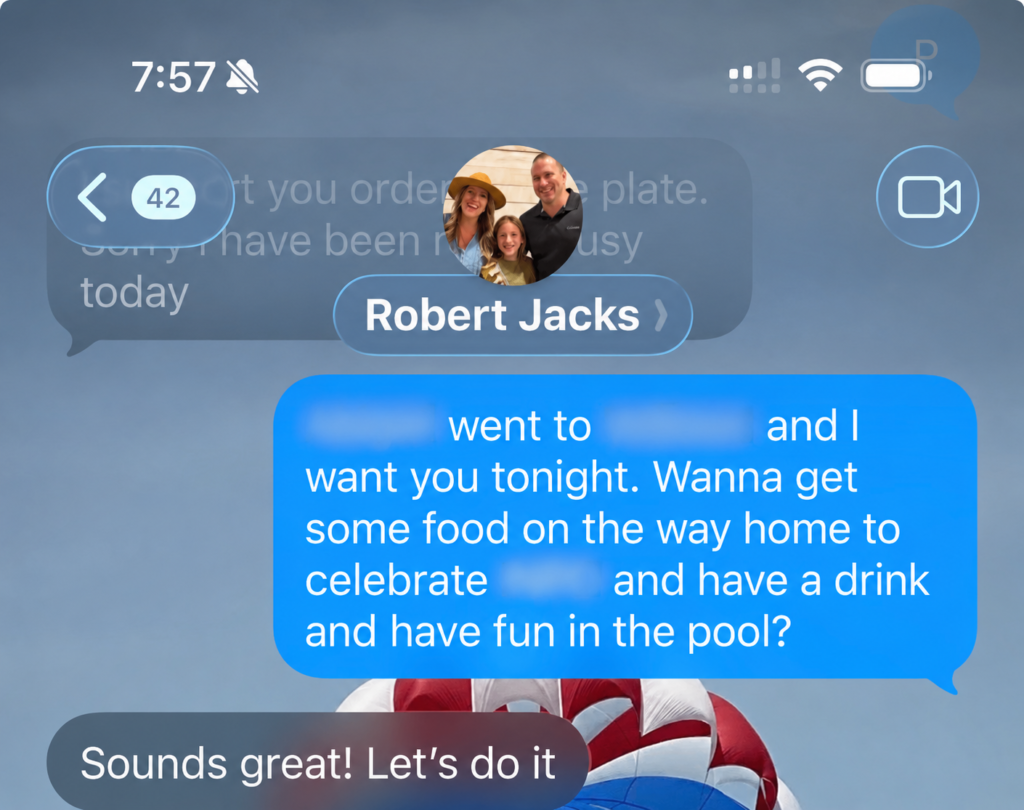
Instead, I sent the text.
We had a few children away, and the ones who were home rarely interrupt our date nights. We also had some wins from the week worth celebrating.
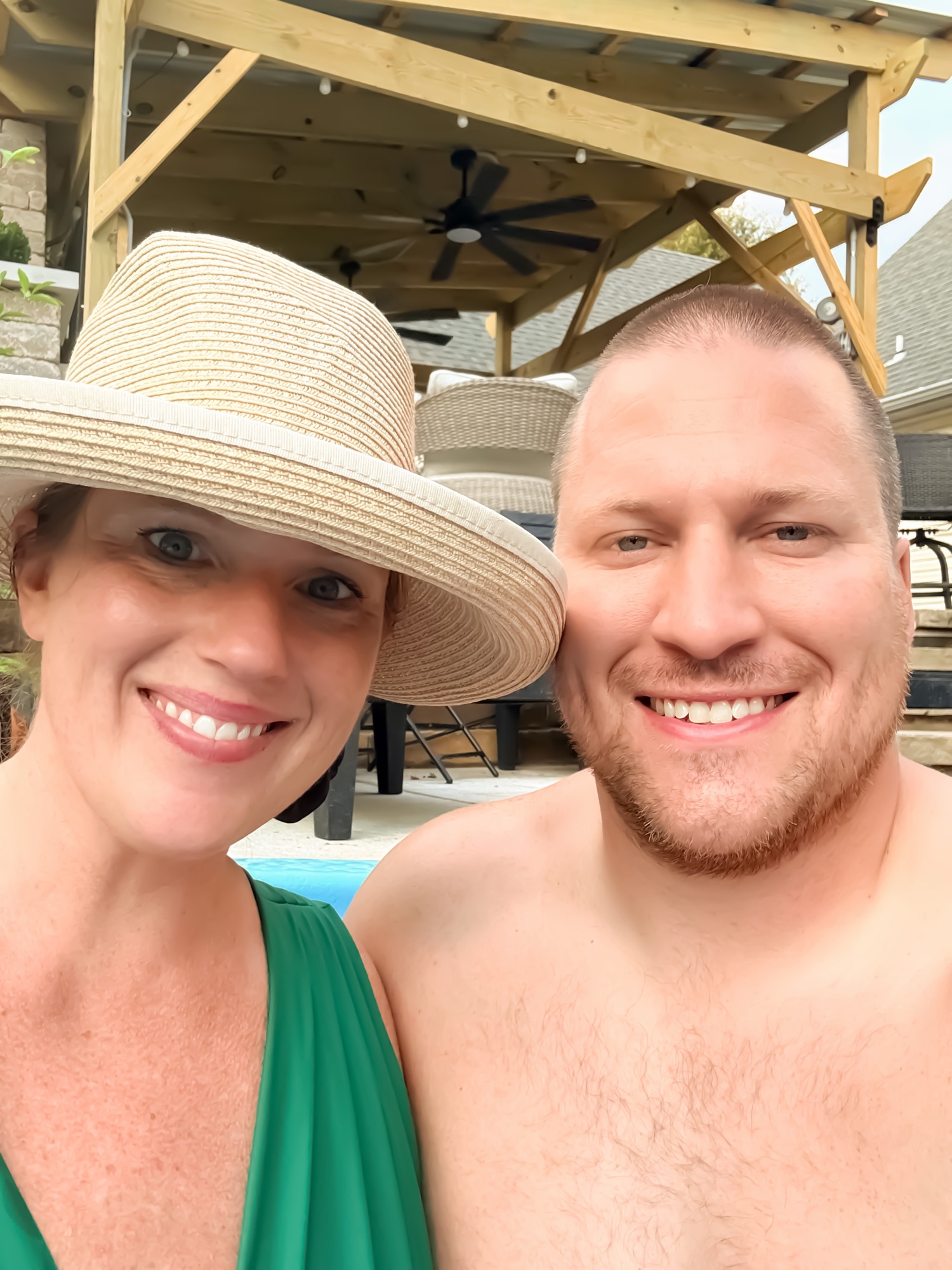
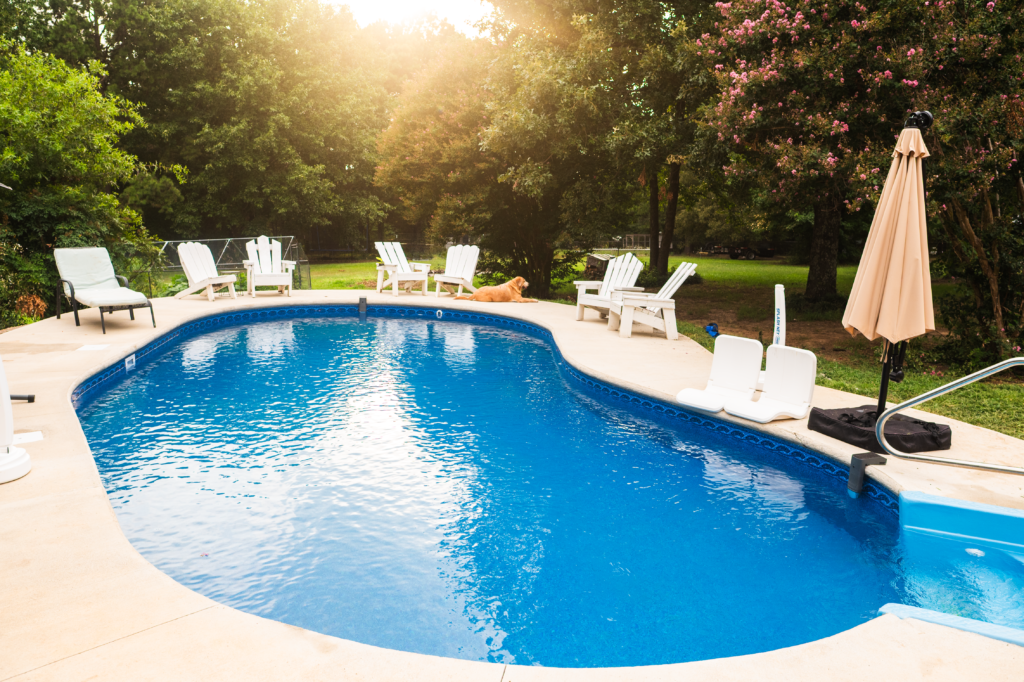
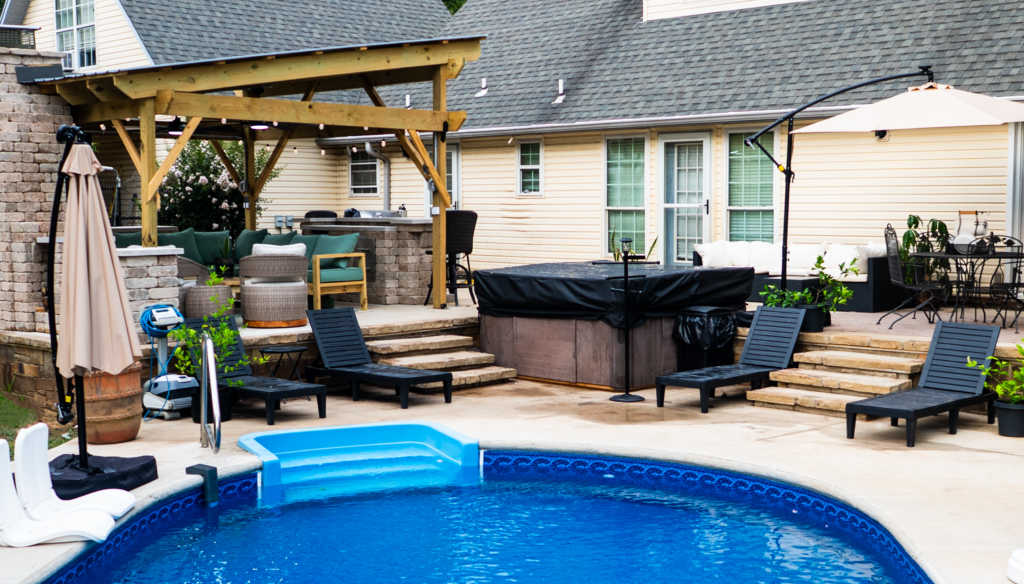
So I told him I wanted him. I asked him to bring home dinner so we could eat outside, have a drink, and spend the evening together by the pool.
I built the doorway and waited to see whether he would walk through it.
He did.
And it became one of the most romantic nights we have had in a long time.
The anticipation began for both of us as soon as I sent the text.
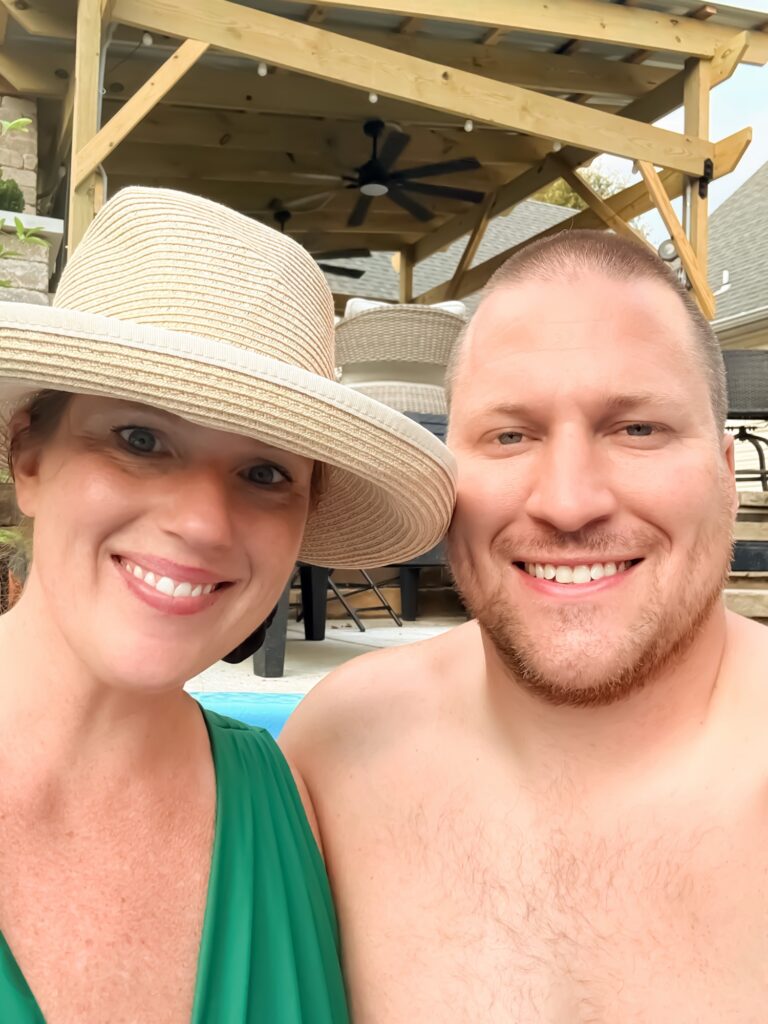
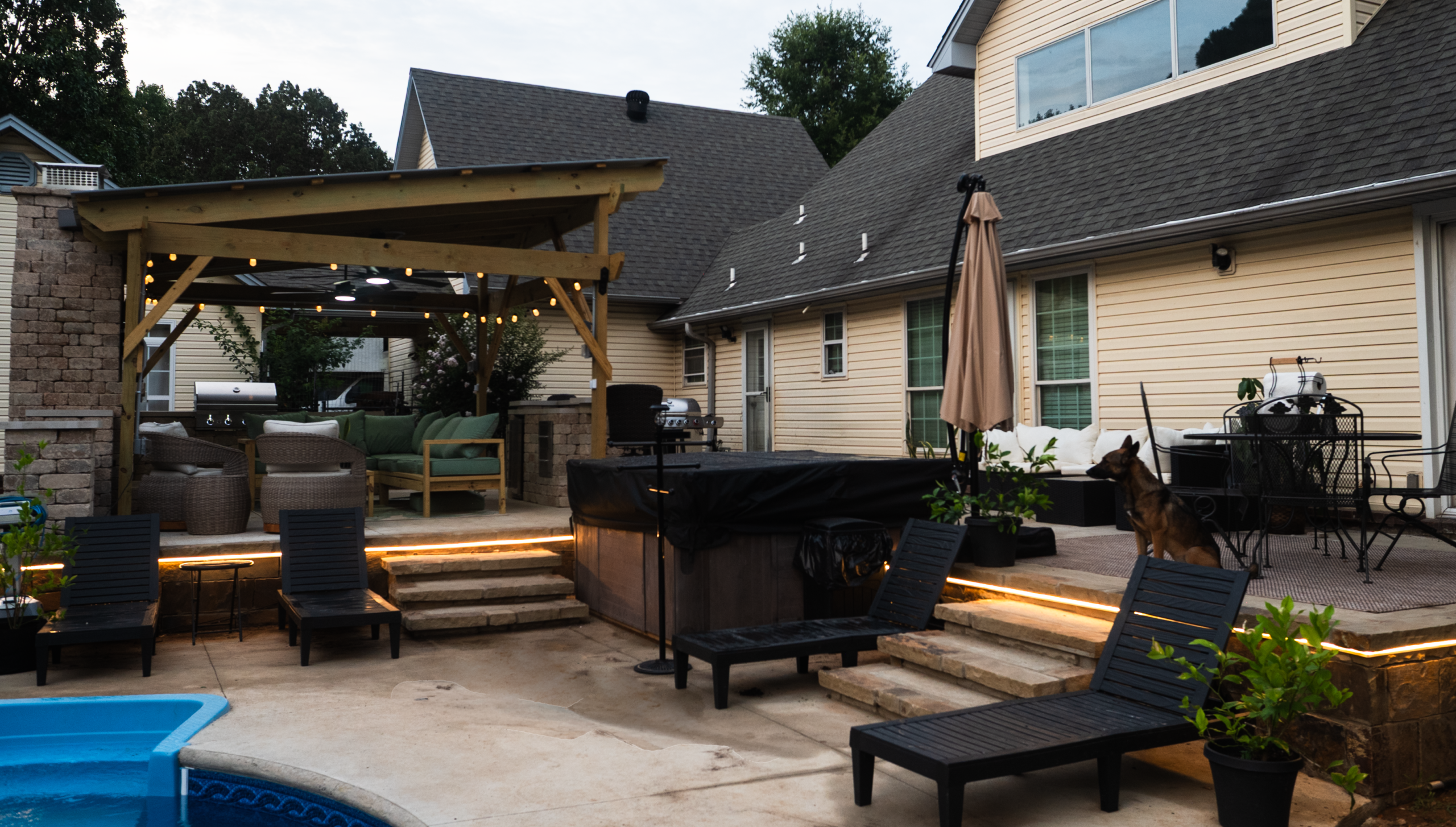
He came home with Ridge Brothers barbecue and a big smile. We ate outside at our outdoor kitchen while the sun went down. We talked. We swam. We talked about our children, because apparently even when parents escape their children, they still take them along in conversation.
By the time we climbed into the hot tub beneath the stars, the entire evening had slowly drawn us toward each other.
There was no abrupt switch from responsibility to romance. We had been walking there together all evening.
We began kissing like teenagers again.
Just as we started to kiss, one of the songs from our wedding began playing.
Robert and I both love rock music, so naturally we found ways to include it in our wedding. “Everything” by Lifehouse played as our ceremony began. “Never Gonna Be Alone” by Nickelback played during our joint wedding slideshow.
That night, when Nickelback began playing beneath the stars, I realized something.
We had made a promise all those years ago without fully understanding what it would require.
And somehow, we had kept it.
Not perfectly.
Not easily.
The clock moved faster than we imagined it would. There have been moments when we reached for our marriage, and moments when we pulled away. Days we wish we had not allowed to slip past us. Moments that, had they been our last, we would have regretted taking for granted.
But we kept finding our way back.
The words that reached me most that night were the promise not to miss another day.
Because love is not only a feeling you happen to receive.
Love is a gift you keep choosing to give.
It looks like dependability. It looks like keeping promises when keeping them is hard. It looks like holding tightly without pretending you have never disappointed each other.
It is loving someone beyond their mistakes.
Forgiving each other in disappointment.
Celebrating each other in success.
And sometimes, it looks like refusing to deny yourself the gift of asking for what you want.
I used to think that initiating the evening meant I was not being pursued.
But I understand it differently now.
I opened the door.
Robert walked through it carrying barbecue, wearing a big smile, and ready to meet me there.
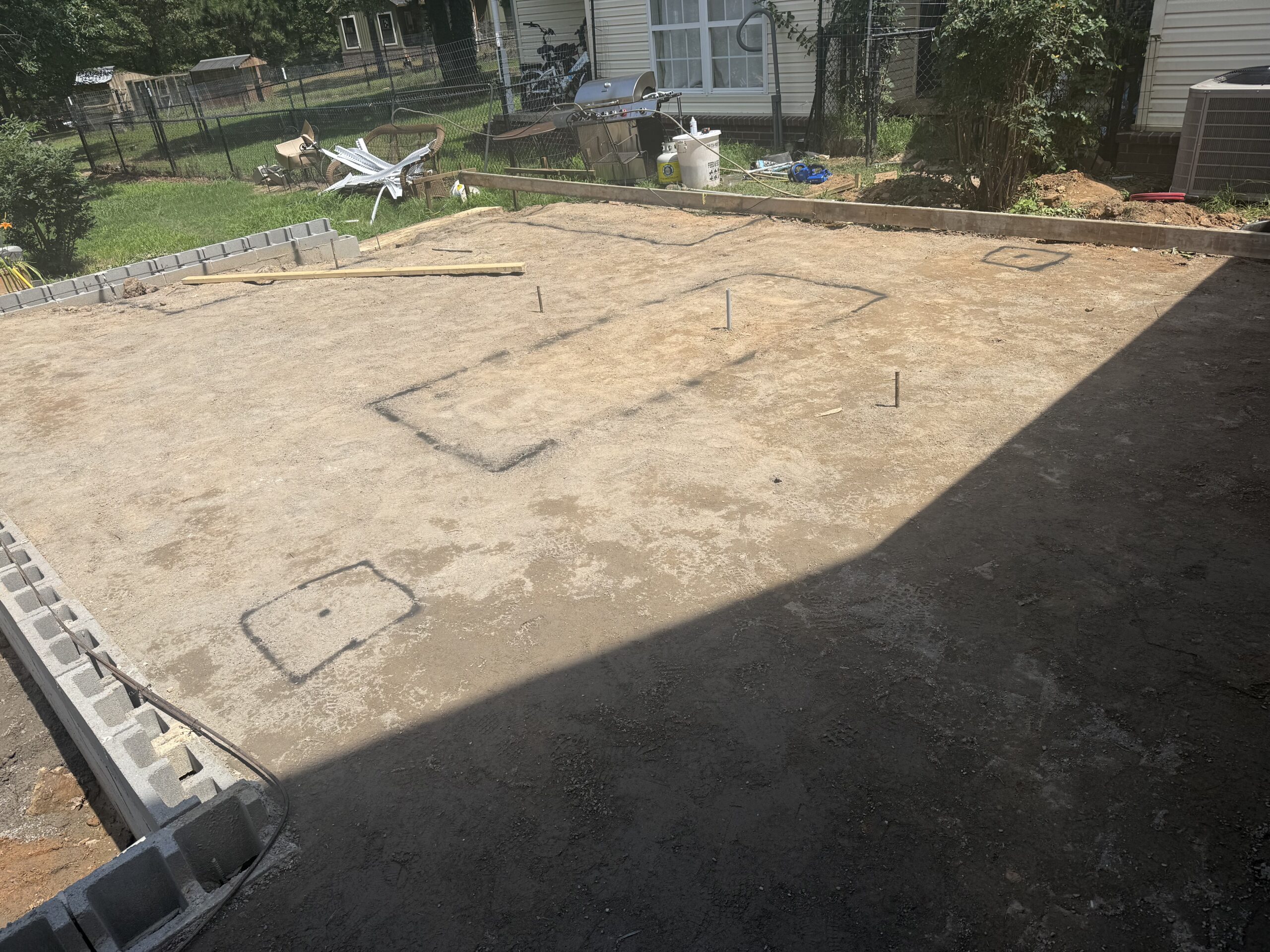
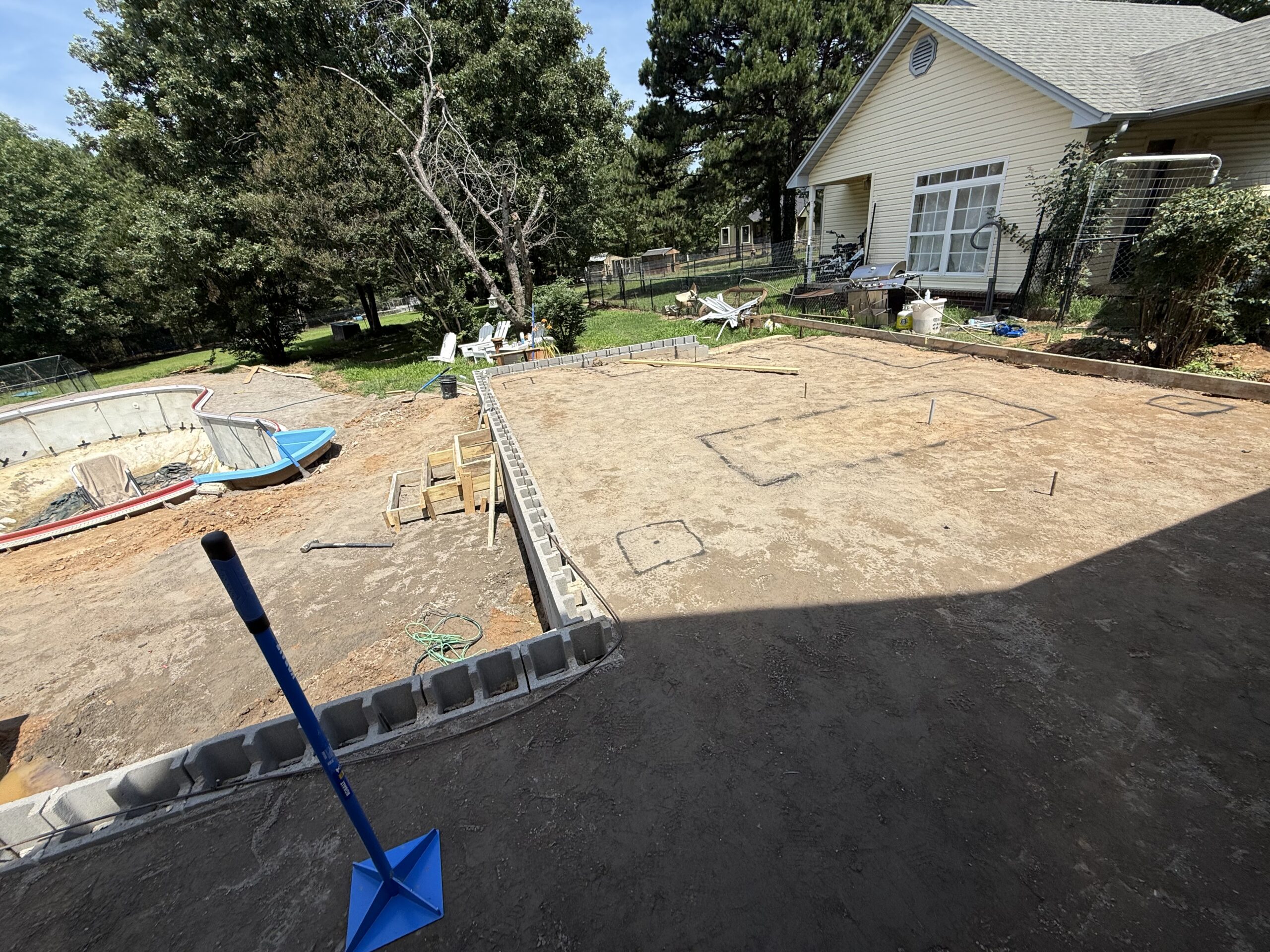
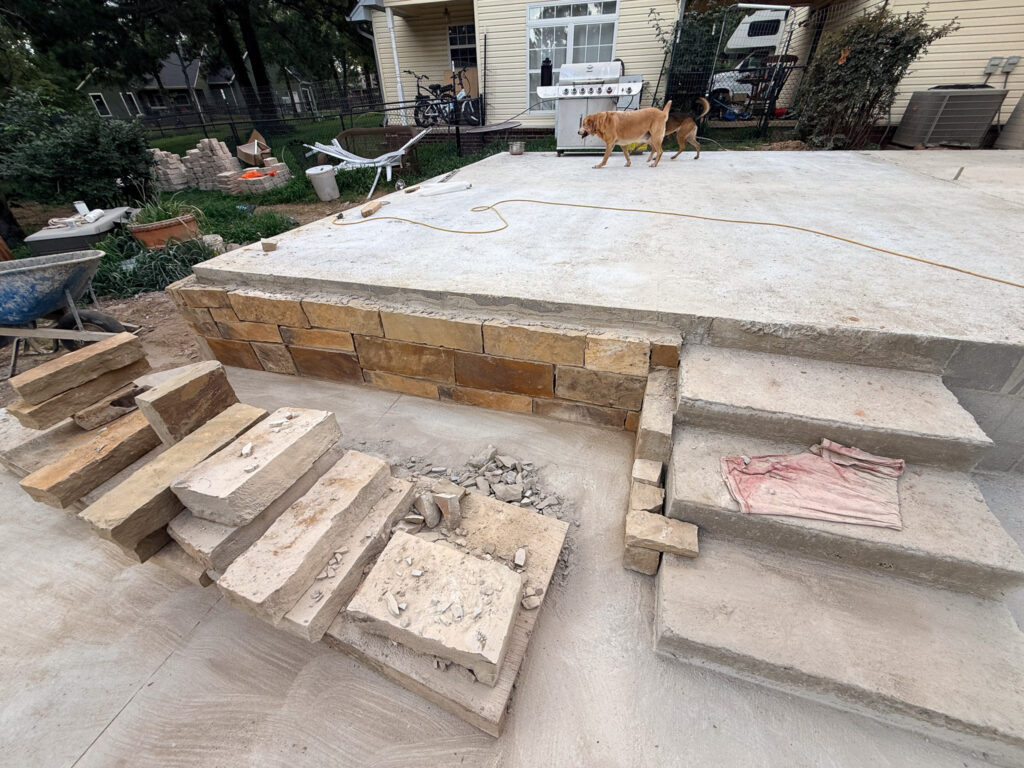
When we originally started the backyard remodel, we wanted stamped concrete. It seemed like an upgrade over a plain concrete slab, but I’ll be honest with you—no one wants to do stamped concrete. We got three quotes, and every one of them jumped dramatically when we asked about stamped concrete. Even then, Wenscalo’s bid was still about $6,000 to $10,000 less than everyone else’s.
So just know, if you ever decide to include stamped concrete in your own remodel, be prepared to pay an arm, a leg… and probably a hand too.
Robert designed the entire backyard himself, but after looking over his plans, the materials we had chosen for the outdoor kitchen, and the natural stone that would border the concrete, I started to wonder whether stamped concrete would actually distract from the heart of the backyard rather than enhance it.
I also knew I wanted a big sectional out there. I wrote about that here. Then I wanted a rug under the sectional, and before long I found myself wondering if anyone would even notice the extra $10,000 we were about to spend on stamped concrete.
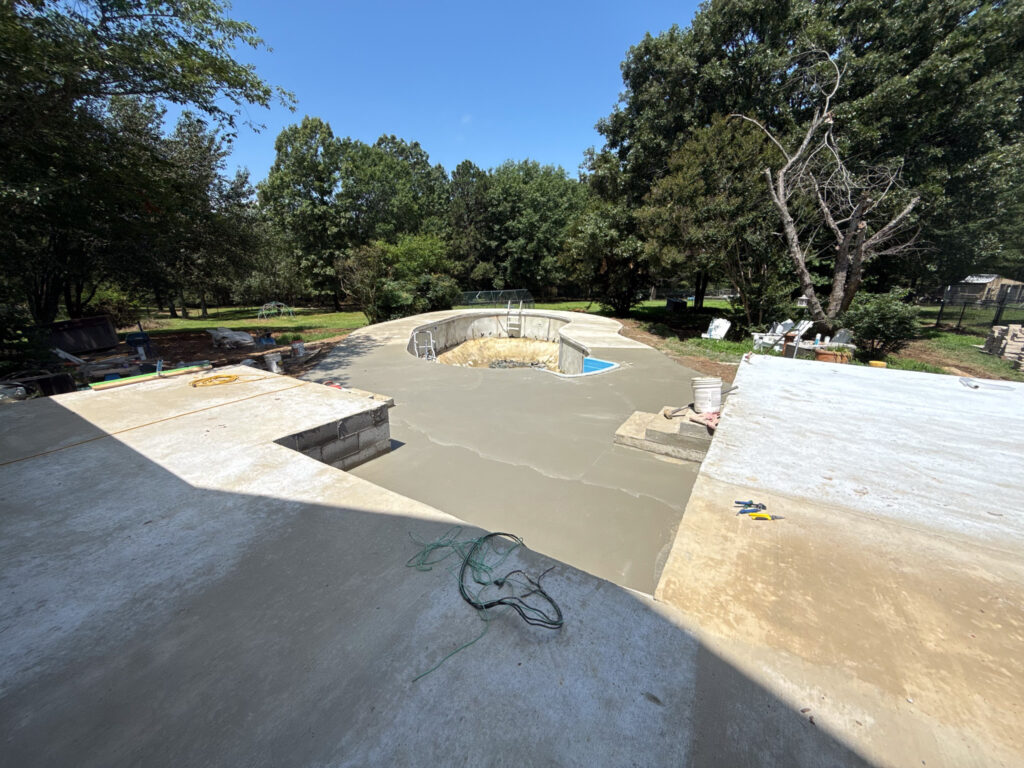
So the week before the pour, Robert texted Wenscalo, our contractor, and told him we wanted to switch to brushed concrete instead.
Wenscalo replied that it was no problem.
That was just like Wenscalo.
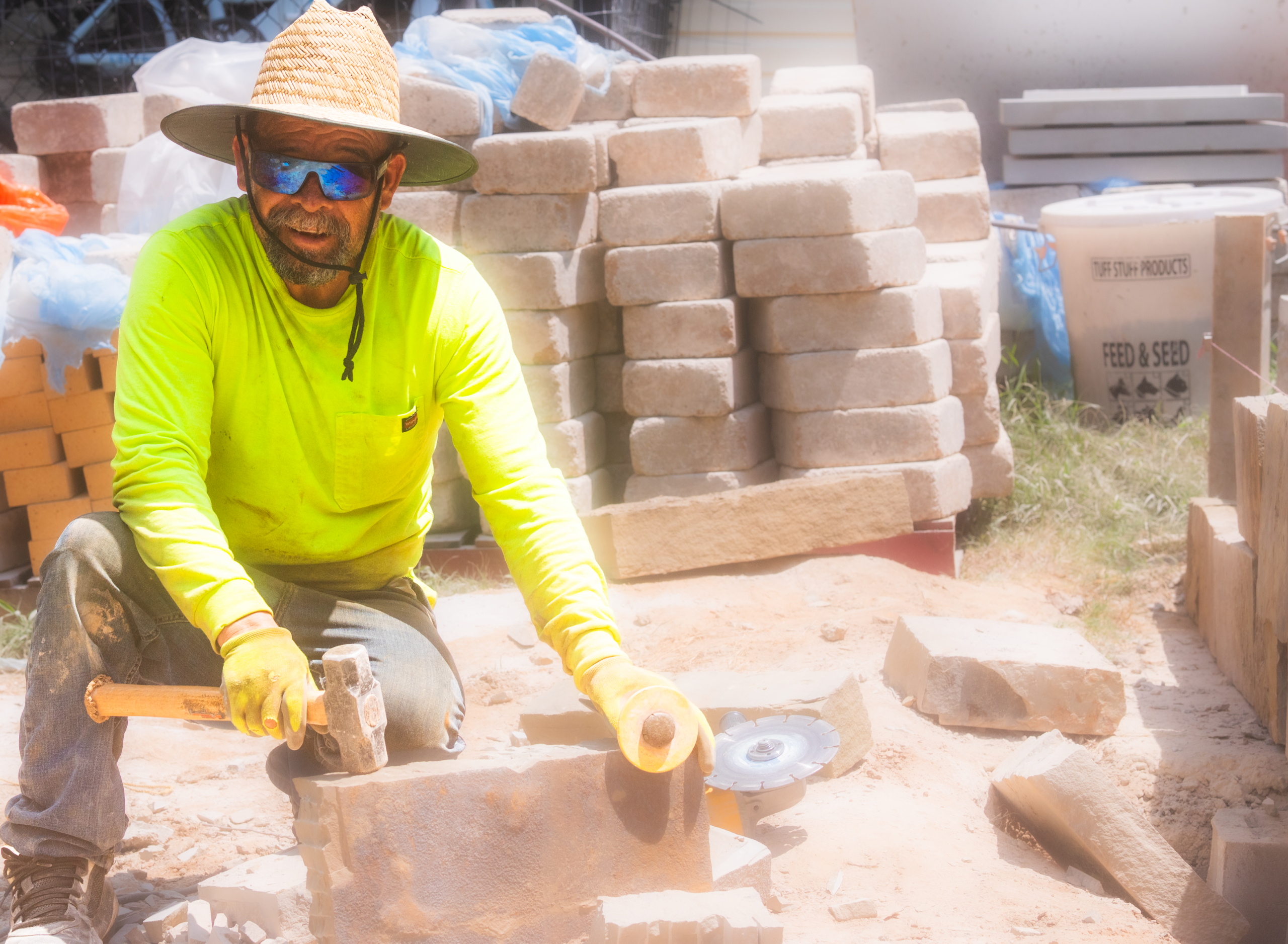
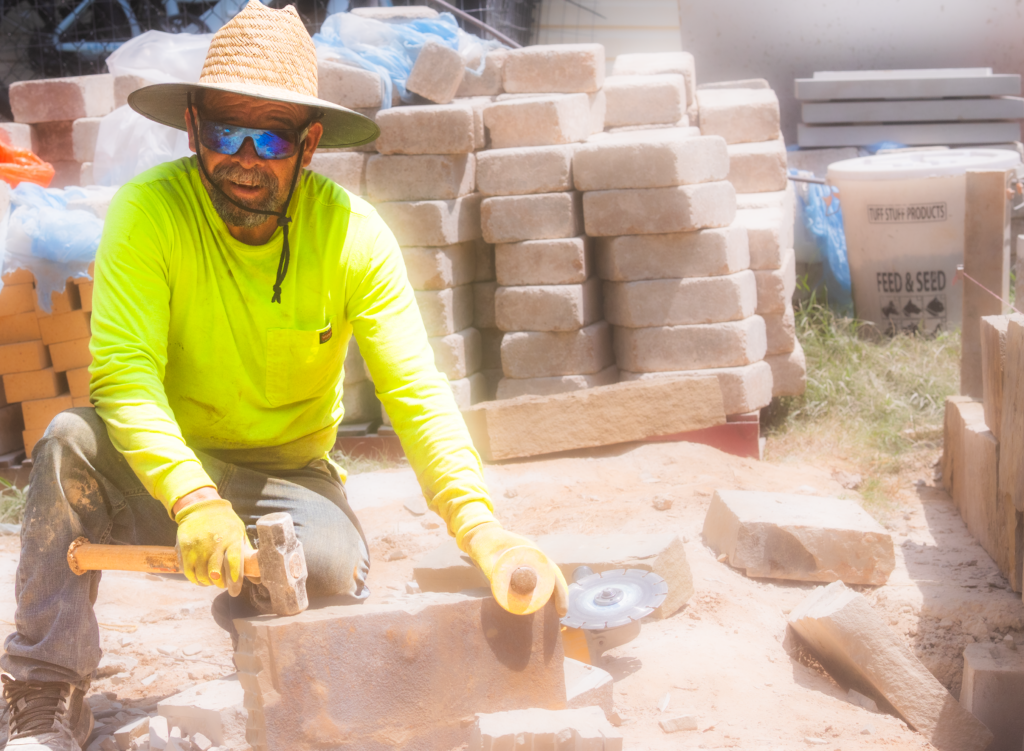
He’s a hardworking, easygoing contractor our family grew to love. He has three sons who work at the nuclear plant, and Robert says they’ve given their family name a great reputation there. I haven’t met them, but if they’re anything like their dad, I imagine they work just as hard.
Most days, Wenscalo worked alone. Occasionally he’d have two or three guys helping him, but honestly, he worked like a crew of ten all by himself.
We grew attached to him. Robert would cook breakfast just to convince him to stop long enough to eat.
One of the things I admired most about Wenscalo was how thorough he was.
When Robert first showed me his backyard design, something about it felt unfinished, but I couldn’t figure out why. Once Wenscalo began pouring the concrete, he brought over several different stone samples and asked me which one I liked.
That was it.
The concrete needed a natural stone border. My brain knew something was missing, but because I’d never built a backyard before, I couldn’t identify it until Wenscalo laid those stones in front of me.
Wenscalo speaks mostly Spanish with a little English, but somehow we became friends anyway.
We’d feed him lunch or breakfast, and he’d return the favor by bringing fresh vegetables from his garden. I love to garden, but Wenscalo knows how to garden—and there’s definitely a difference.
He brought us pounds of cucumbers and fresh green beans.
Robert spent a lot of time talking with him despite the language barrier, and eventually we started helping him with the concrete work.
The second day of the pour, one of Wenscalo’s employees didn’t show up.
Robert asked, “How can I help?”
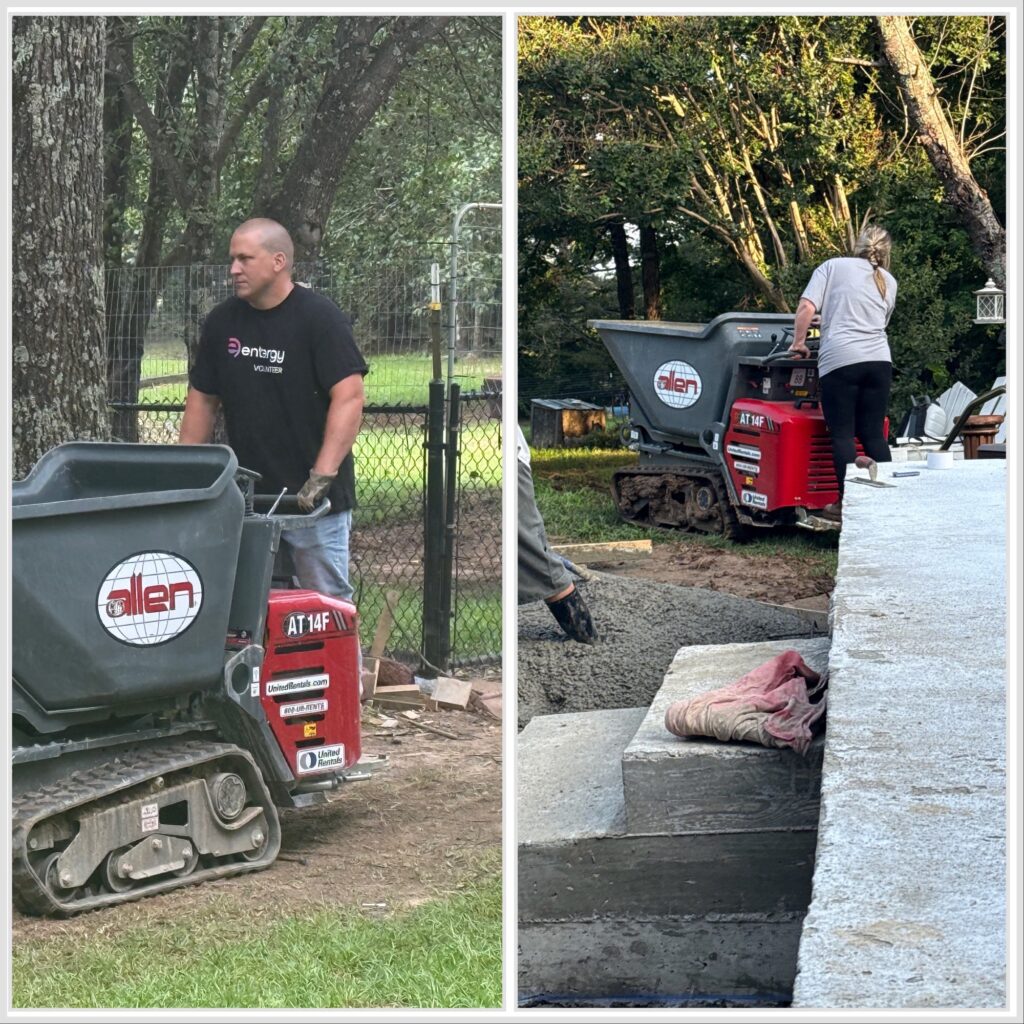
Wenscalo handed him the concrete buggy while he spread and finished the concrete, making sure it stayed level and moist enough for brushing.
The next day Robert had to work, so I took over driving the buggy. It was a neat experience getting to help him and learn a little about his trade.
Once the concrete was finished being poured, Wenscalo arrived with the stone on his trailer.
I was excited to help unload it.
Then I tried to lift one.
It wasn’t happening.
Those stones weighed somewhere around seventy pounds each, and they weren’t thin decorative veneer. They were solid, full-thickness natural stone that would become the face of the patio and the border around our concrete. The fireplace stones were a little lighter—probably forty or fifty pounds each—but that may have been my limit.
What impressed me wasn’t just the weight.
It was the craftsmanship.
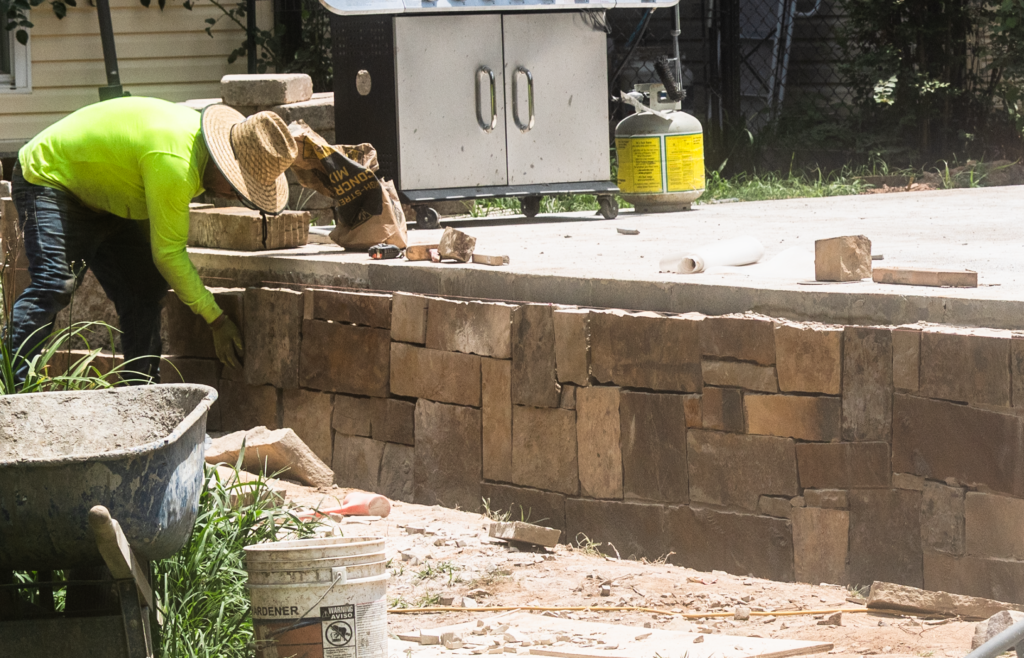
Every stone had to be considered before it was ever mortared into place. Wenscalo would pick one up, turn it, set it back down, try another, chip a corner, saw the edges, adjust the mortar, and somehow make pieces that came from a quarry look like they’d always belonged together.
At one point he told me, “If you do too many at a time, it will not be level.”
That sentence stuck with me.
Standing there in late-June Arkansas heat, watching him wrestle those massive stones into place one by one, I realized I wasn’t just watching someone build a wall.
I was watching an artist.
Looking back, I’m so glad we skipped the stamped concrete. I think another $10,000 worth of decorative concrete would have competed with what became the real centerpiece of the backyard. Instead, my eyes are naturally drawn to the outdoor kitchen and those beautiful stone walls every time I walk into the backyard.
Then Wenscalo surprised us.
He wrapped the steps in the same stone even though we hadn’t asked him to. He also built a walkway from the outdoor kitchen to the breezeway leading to our guest house.
He didn’t charge us a dime for the walkway.
He simply had extra stone and wanted the project to feel complete.
Then he suggested we install lights beneath the stone on the pergola.
After the stone and lights, looking back, choosing brushed concrete with natural stone instead of stamped concrete was one of the best decisions we made during our backyard remodel.
He was right. They looked amazing.
It made an incredible difference.
The day he installed those lights, he brought his wife and his two youngest boys.
When the boys wandered up to my office door, I picked up the youngest and introduced myself.
Wenscalo smiled and said, “They are fine.”
I laughed and replied, “I know, but they’ll have more fun with me.”
So I stole his kids for the day while he and his wife worked.
We had so much fun.
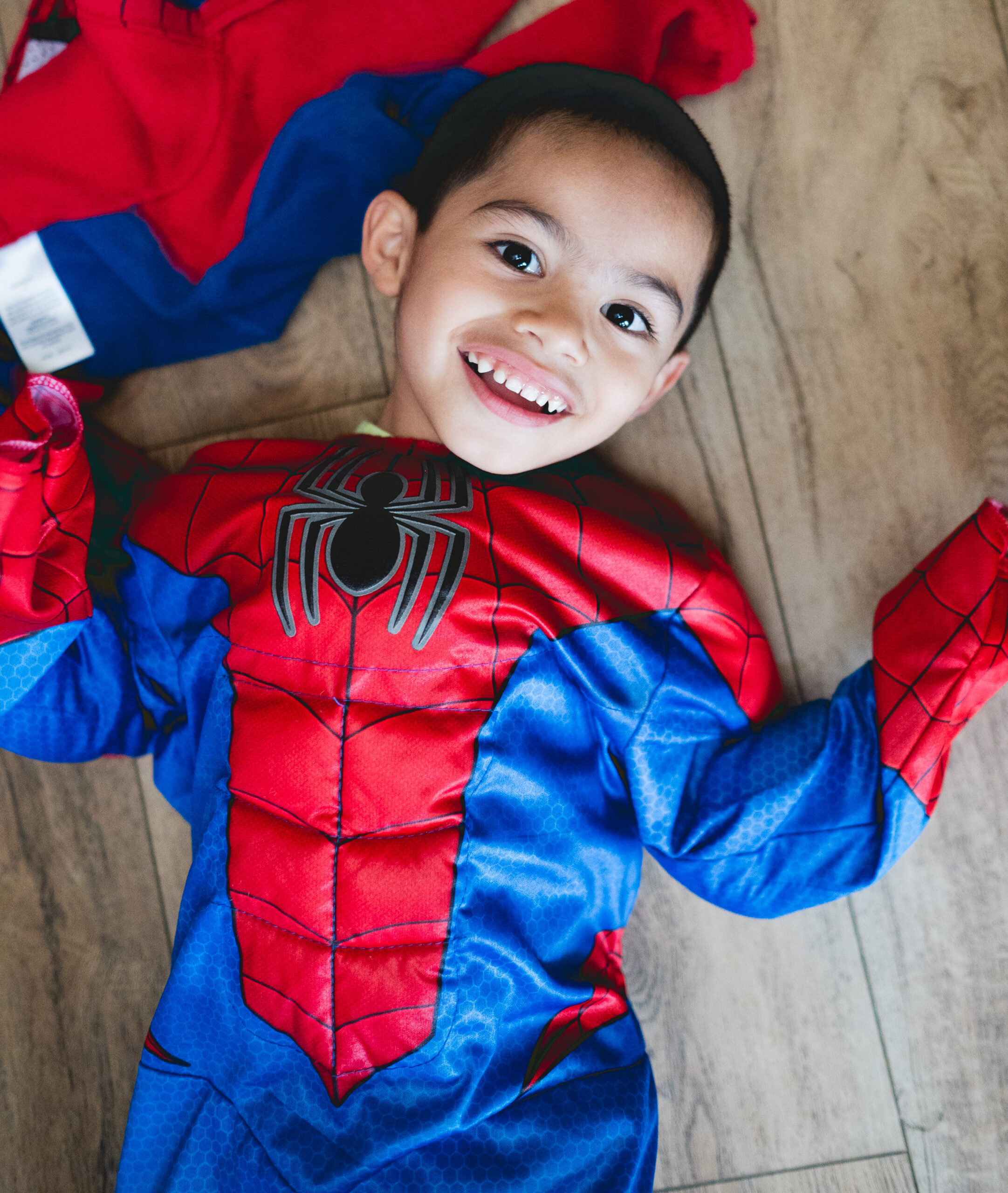
Alex, the older brother, spent half the day pretending to shoot all of us. We became surprisingly good at dramatically collapsing to the floor and playing dead. Then we dressed him in Spider-Man clothes, ate ice cream, went swimming.
By the end of the day, he’d had so much fun that he kept telling Wenscalo the same Spanish phrase over and over when it was time to leave.
“Me quedo.”
“I stay.”
Even though I was exhausted from our own late nights laying fireplace stone, his happiness reminded me how fulfilling it can be to be tired because you spent yourself creating joy for someone else.
Alex had a little brother named Juan.
Juan wasn’t quite as adventurous as Alex, but he loved to be held, and I enjoyed rocking a little one to sleep again.
Relationships between homeowners and contractors can sometimes be full of stress, but ours turned into something entirely different.
Abby and I miss all of them.
I think Robert misses his friendship with Wenscalo too.
One of my favorite memories still makes me laugh.
Robert had spent hours trying to level the mortar for the outdoor kitchen’s first course of stone. Wenscalo walked by, glanced at it for about two seconds, smiled, and said,
“Okay… now give it a little hit.”
Robert tapped it with his trowel.
Perfectly level.
Just like that, Robert gained the confidence to keep building.
Some people leave their mark because of what they build.
I think Wenscalo and his family left theirs because of the kind of people they are.
They built us a beautiful backyard, but somewhere along the way they also became friends.
And I have a feeling we’ll be hiring them again.
If you’re in the Arkansas River Valley and need someone to build concrete, stonework, or an outdoor living space, we couldn’t recommend Wenscalo more highly.
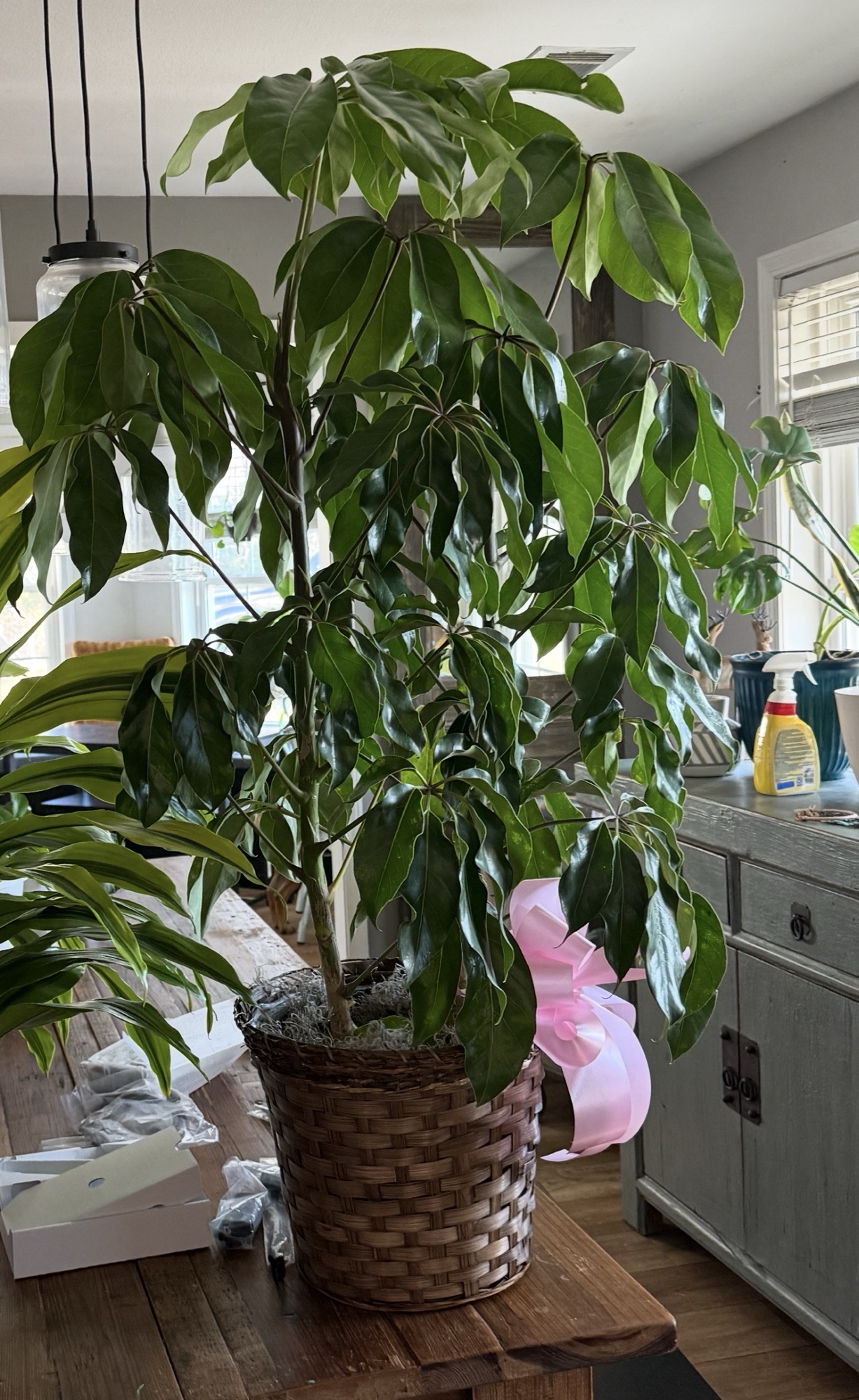
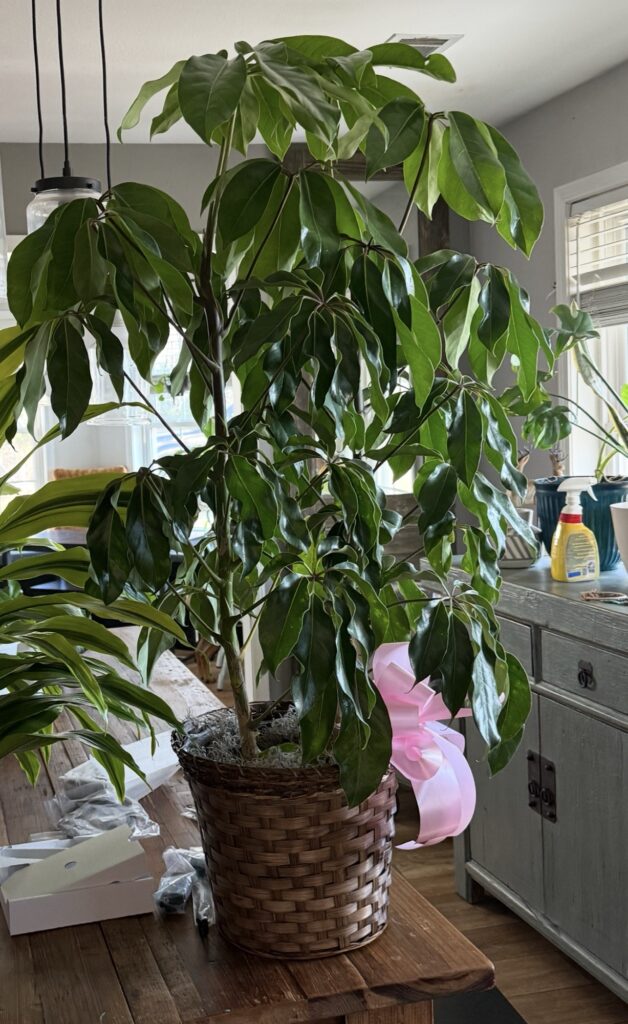
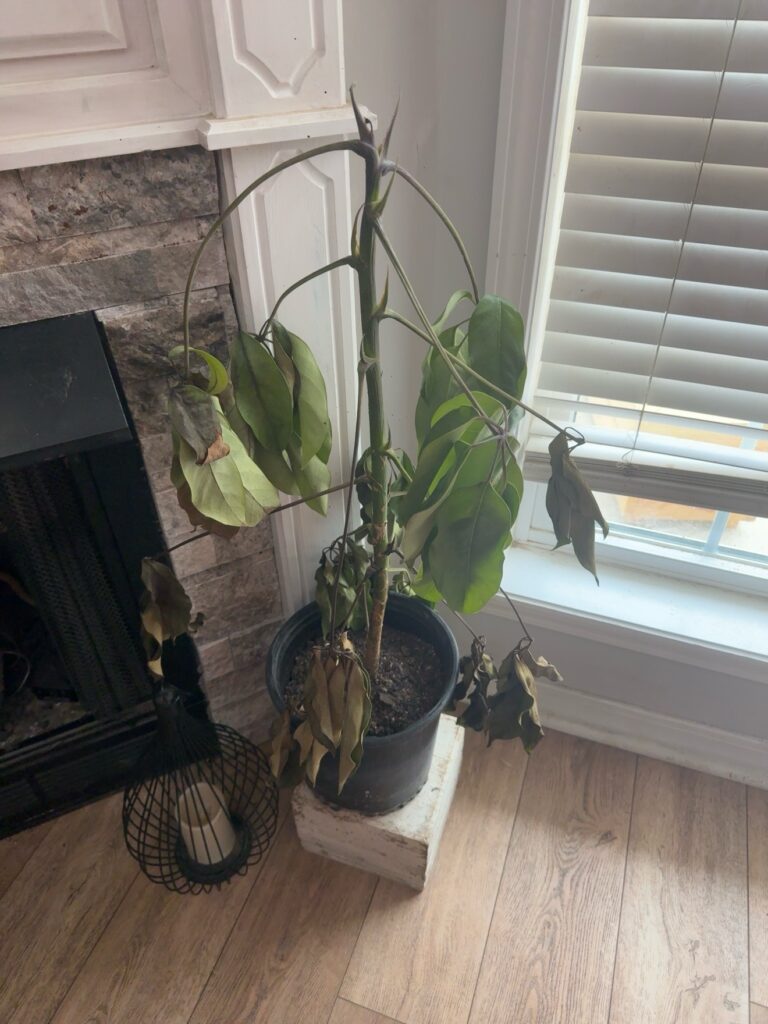
Nearly a year ago, Robert brought home this beautiful umbrella plant. It was full, healthy, and thriving. Naturally, when the time came to repot, I decided to divide it into two plants.
One half is doing great.
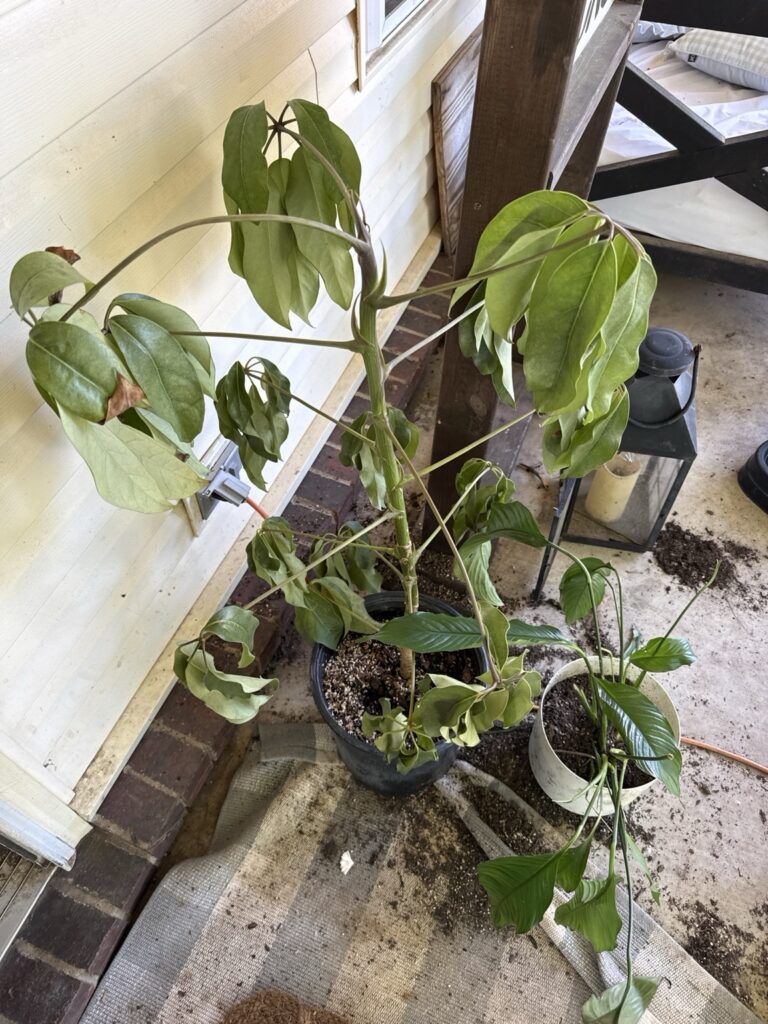
This half? Well…he apparently missed the memo when I said, “Persevere.”
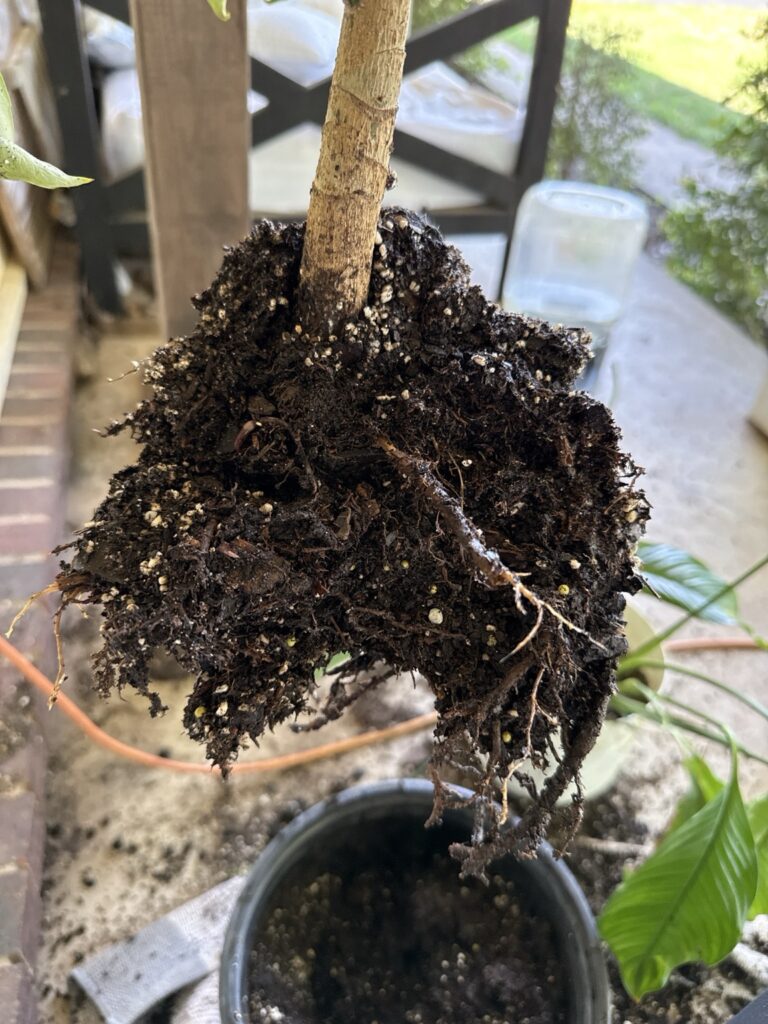
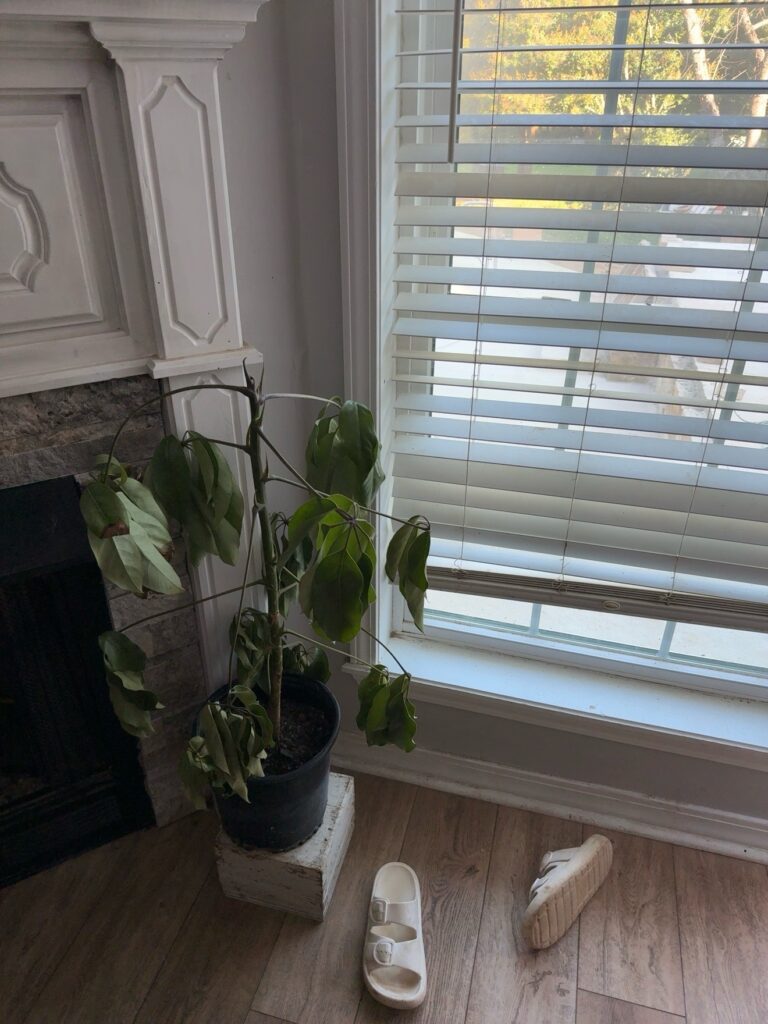
I thought he was thirsty, so I watered him. Then I realized the soil was staying wet, but he continued to droop anyway. He spent a few days outside in the Arkansas heat before I finally brought him inside, hoping the cooler temperatures would help him recover.
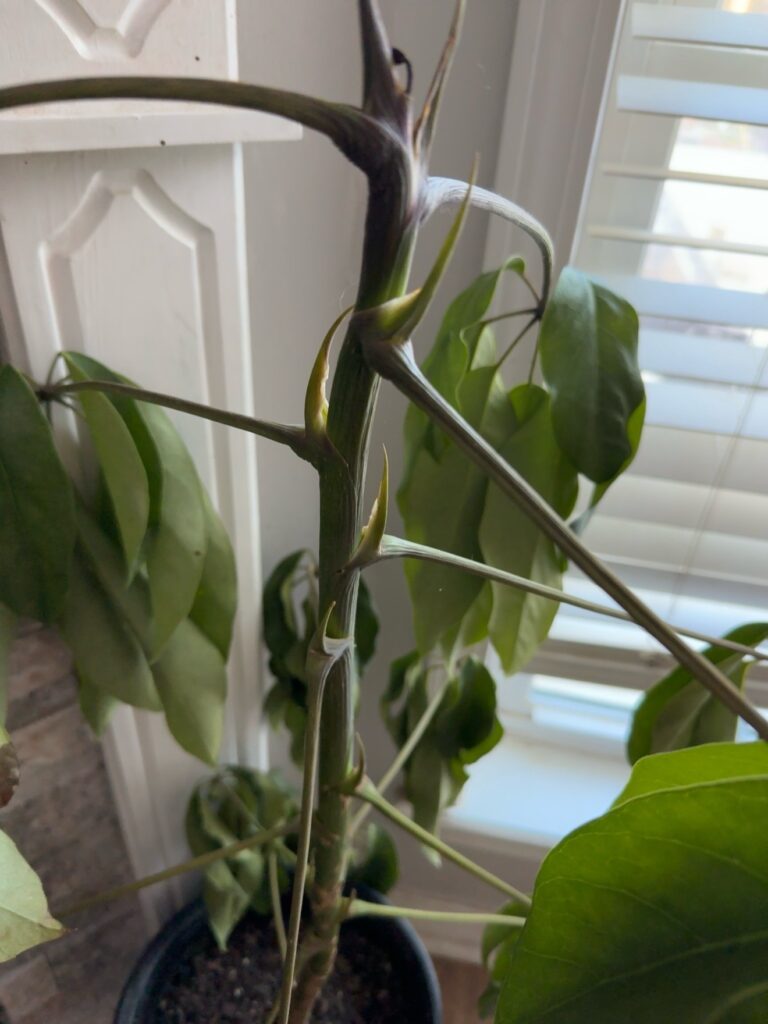
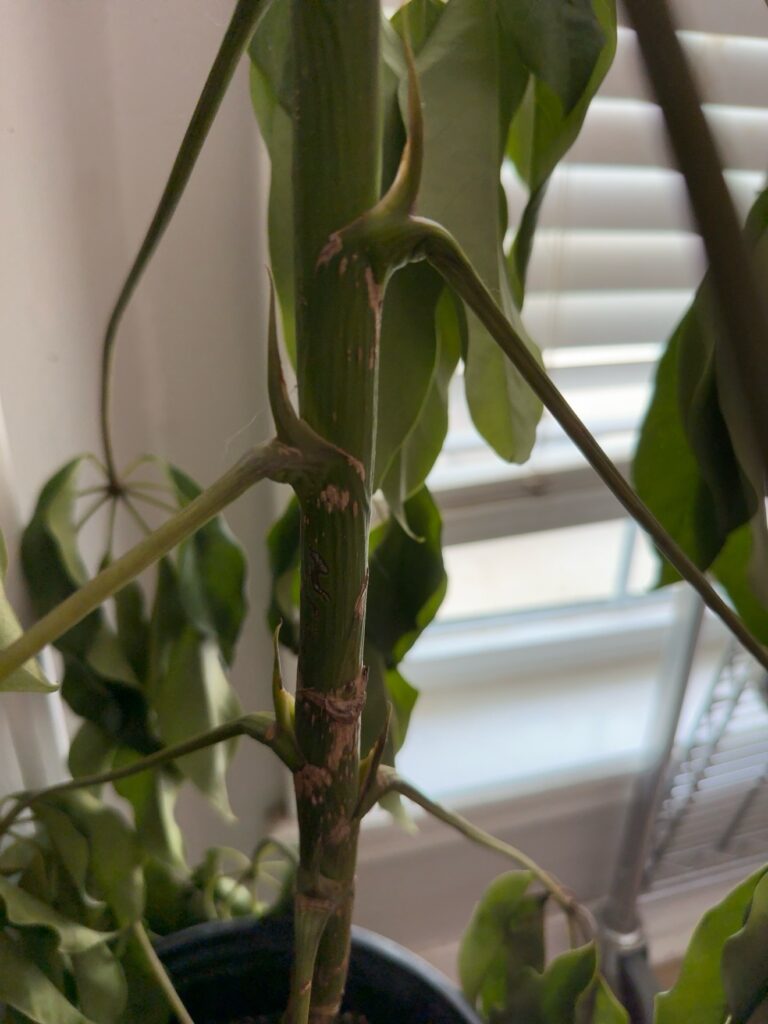
Since then, I’ve learned something I didn’t expect. A plant can look absolutely pitiful while still trying to grow. Even though many of the older leaves have drooped, there are tiny new leaves emerging from nearly every stem.
So, for now, I’m resisting the urge to keep “fixing” him.
No more moving him around.
No more watering every time he looks sad.
Just patience.
Gardening has a funny way of teaching the same lessons life does. Sometimes turning over a new leaf (pun intended) can still look messy. Because well, it’s growth.
Whether this guy pulls through or not, he’s already taught me something.
We’ll check back in a few weeks on a random Work on It Wednesday and see if he finally got the memo.
Also, if anyone has any advice, I’m open to it.
First signs of trouble. Roots still looked good though.I started to get worried when a few days later it didn’t perk up. Today… Looking scary!
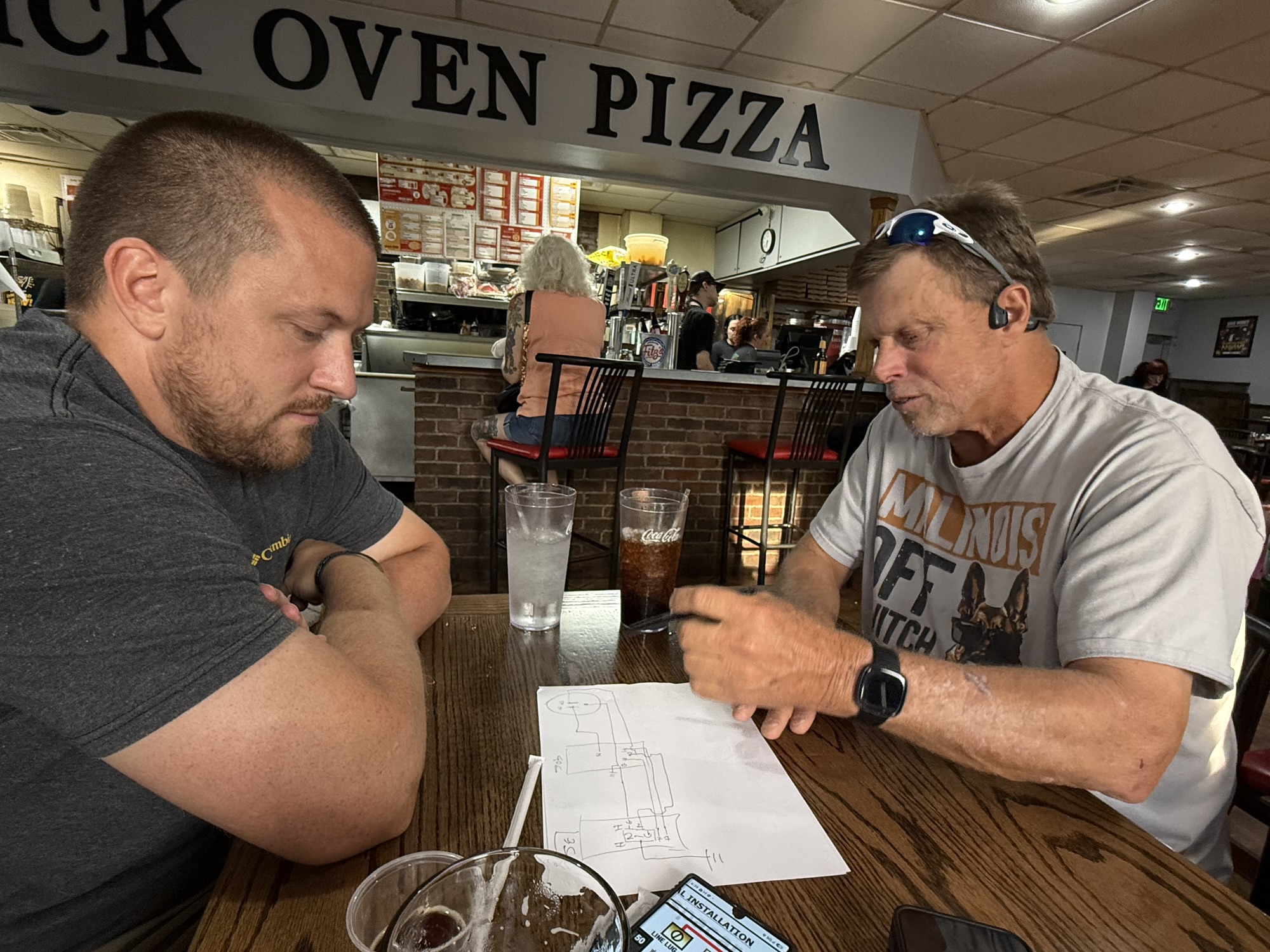
It’s a picture of my dad and my children’s dad sitting together at a table during my dad’s most recent trip to Arkansas. It was actually the last trip for a work contract that brought him here regularly, and since it was only a one-day trip, he suggested he not stay the weekend. I told him that coming to Arkansas and not visiting me would be crazy.
A couple of months earlier, my dad mentioned that he was beginning to feel like a burden when he came to visit. I love him dearly, but sometimes I think he lives in a completely different universe than I do.
I told him that we might be busy when he comes. The kids have activities, Robert and I have projects, and life keeps moving. But none of that changes how much his visits mean to me.
I told him, “Dad, even if we’re busy, just having you here means the world to me. You don’t even have to be in the house. When you stay in the guest house, and we can share a few meals, have a few conversations, and go about our days. Just knowing you’re here brings me comfort.”
I don’t know that he fully understood what I meant, but it’s true.
There is something comforting about knowing my dad is nearby, even when we’re doing nothing special at all.
To understand why these visits mean so much to me, you need a little backstory.
At Thanksgiving in 2022, my daughter hugged my dad and asked about a spot on his back. I asked him to show it to me, and the moment I saw it, my stomach dropped. I went into the kitchen where Robert was cooking and leaned against the sink and went to the floor. It reminded me of the melanoma brochures I had seen in dermatology offices.
I said, “Dad, I think you have melanoma.” I documented the spot with a picture and moved on.
You have to understand that my dad is like every other dad. He’s super brave. Always worried about everybody else. Telling me to go to the doctor when I have a fever for a few days straight, but he doesn’t worry about himself… at all.
Then, in November of 2023, we learned he had metastatic melanoma.
His doctor said remission would not be the goal. The melanoma had spread so much that his oncologist said he couldn’t believe my dad was still able to walk. Not only that, but he had a patient, same age/disease/same metastasis as my dad who only lived 6 months.
Ouch.
The thought of losing my dad felt unbearable.
But as usual, my dad was the strong one. He said he wasn’t scared. He said that he had made peace with a good life that he already had if this was the end. To this day, I am blown away by my dad‘s strength. If he truly was scared, he never showed it. And he was an example for me on who I want to be for my kids. I remember him even telling me one time, I will feel sorry for you if something happens, but I’ve lived in my life so don’t feel sorry for me.
That was a gut punch.
The treatment was difficult. It made him extremely sensitive to sunlight, which felt especially unfair for someone who loves golf, loves his dogs, and loves being outdoors. I remember wondering how much of the life he loved would be taken from him, even if the treatment worked. Because if he had to stay on that treatment to survive and he was breaking out in hives from ANY sun exposure, would he give up?
Then something remarkable happened.
My dad went into full remission.
Not only that, but he received a work contract that brought him to Arkansas every other month. Suddenly, I was seeing him more often than I ever had during my adult life.
During that season, there was a song that became deeply meaningful to me.
Sunshine by NEEDTOBREATHE
“Tell ’em you feel alright, we’re living in sunshine”
Those words stayed with me because they captured exactly what I wanted for my dad. More than survival, I wanted him to feel well. I wanted him to enjoy life again. I wanted him outside, doing the things he loved.
So you can imagine what it felt like when, during this last visit, my dad randomly said, “You know, I usually come to Arkansas around Thanksgiving when the trees are bare and everything feels gray. Being here in the sunshine when everything is green is amazing.”
It took my breath away. I thought, this is why we keep him around. It’s the simple things for him.
But in that moment, I realized it wasn’t that I was no longer hoping for those things. It was that I had only been able to imagine them. My dad had been in remission for two years, but my dad never came to Arkansas in the summer, so since his remission, I hadn’t actually seen him enjoying the sunshine like this. Standing there, watching him take it all in, I realized I was seeing something I had only hoped would be possible.
This visit was full of ordinary moments that didn’t feel ordinary to me.
My dad and I ate breakfast in the front yard.
He helped us move our garden fence.
He helped Robert run electricity through our backyard. That was a blessing in itself because my dad is a licensed contractor, and the work they accomplished together would have cost us thousands of dollars to hire out.
But what stood out to me most wasn’t what he did. It was who he is.
At breakfast one morning, I jokingly told him that I better hurry up and finish eating because Robert doesn’t do much in the yard unless he can do it from a riding lawn mower. Someone has to weed eat, I joked.
Most dads might have used that as an opportunity to join in.
Not mine.
Without missing a beat, he laughed and said, “That’s exactly what my wife would be doing too, and if she wasn’t fast enough, I’d probably complain about that.”
My dad has always protected me, but what I appreciate now is that he protects my marriage too.
A day after he left, Robert shocked himself while working on the electrical project my dad had tried to give him directions on. He was frustrated, discouraged, and ready to quit. I was buried in transcript work and couldn’t give him much attention.
Then my dad called out of nowhere to check on him.
When they hung up, Robert said, “Your dad renewed my motivation. I’m going to try again tomorrow.”
That is who my dad is.
He shows up.
He encourages.
He helps.
He strengthens the people he loves.
The older I get, the more I realize how much of who I am came from him. My love of being outdoors, my willingness to tackle projects, and my belief that family shows up for each other all have roots in the man who raised me.
In 2023, I thought I might be losing my dad.
Instead, I got breakfasts in the front yard, projects in the backyard, extra visits, more conversations, and a perfect spring weekend where I got to watch him stand in the sunshine and enjoy it.
Happy Father’s Day to the man who was the best daddy to a little girl and is still the best dad to a grown woman.
Week one, and I haven’t met my goal for blog posts. But the sun still rose, and the birds still sing. I know a lot of people get worked up when they don’t meet their goals, but I kind of like being a little unpredictable. Hehe.
While I didn’t post on Tuesday, it wasn’t for lack of good reason. Let’s start with Work on it Wednesday.
Right now, we are in the middle of a giant backyard renovation. We already needed a new pool liner, our wood deck needed repairs and staining, and we also realized a second pool filter would make the upkeep of the pool cheaper and easier. But that required demolishing the concrete around the pool, so Robert asked if I just wanted to switch to a concrete slab around the pool and deck. The idea of what we were going to do kept growing. We decided to add a stone fireplace, outdoor kitchen, and island. However, to get high quality and stay in budget, it was going to require a little bit of blood, sweat, and tears.
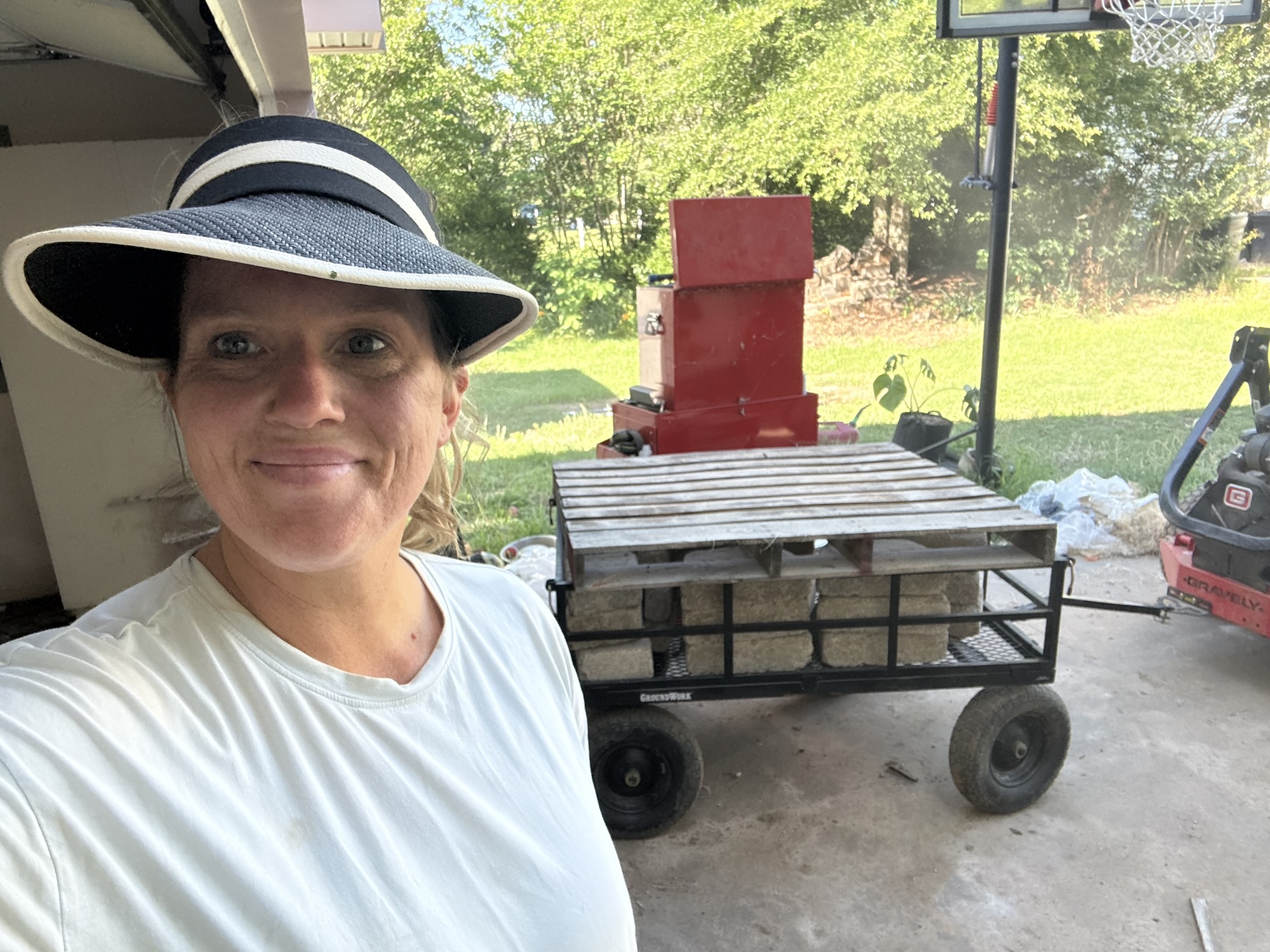
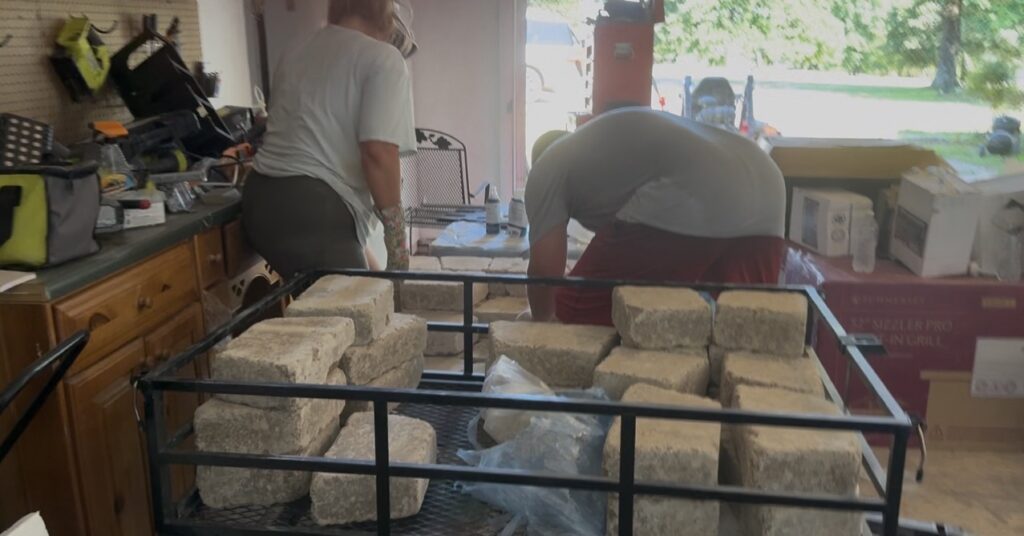
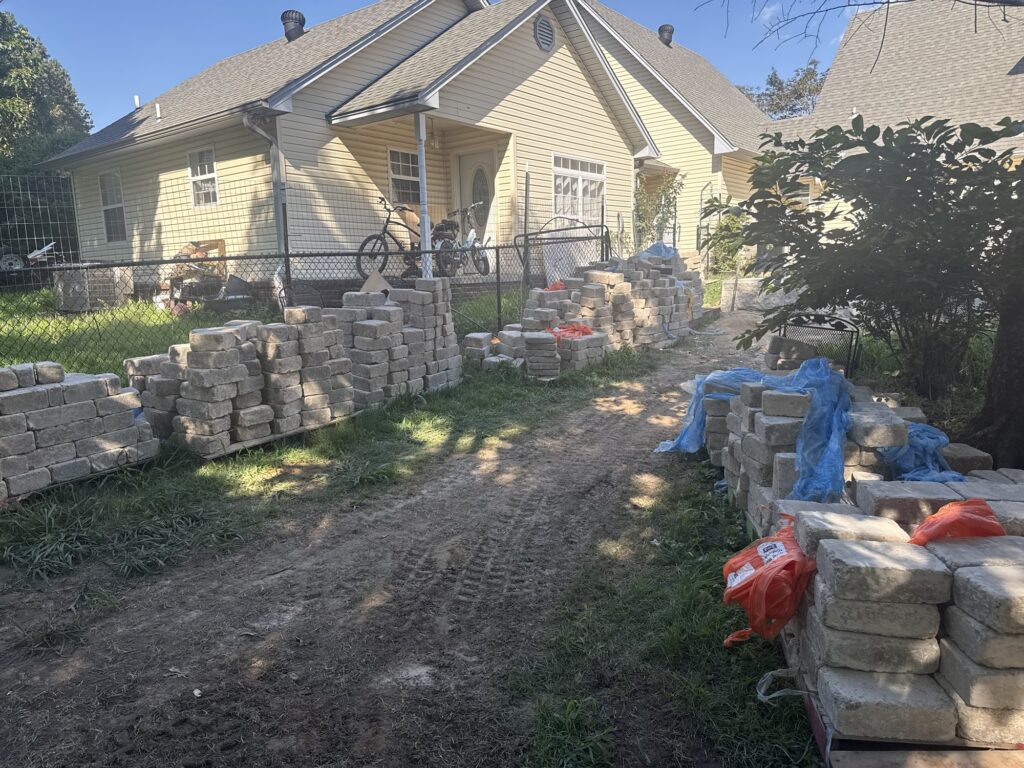
We found a website that sells outdoor kitchen kits that you can buy and build yourself. Check those out here. They are pretty neat because you don’t have to go pick out of your own stone, pick it up, and use your gas and time. They get shipped right to your house. If you know me, I love building things myself. I like working outside in the heat and creating something custom, so this was right up my alley. The problem is that the project itself didn’t really fit in my alley. I’m laughing because we had 19 pallets of stone shipped to us, and they ended up in our front yard. BUT…. We needed it in the backyard.
We started slowly and moved three pallets together one night. Then Robert got off work one day and moved five more. To be fair, two of those were our outdoor refrigerator and his new grill, so it wasn’t five full pallets of stone. But even so, he was carrying a lot of the project on his own. But his mind is already running a million miles an hour with pool coping, pool cleaning, and the logistics of stone going on a concrete slab, because cracked concrete isn’t the ideal outcome here.
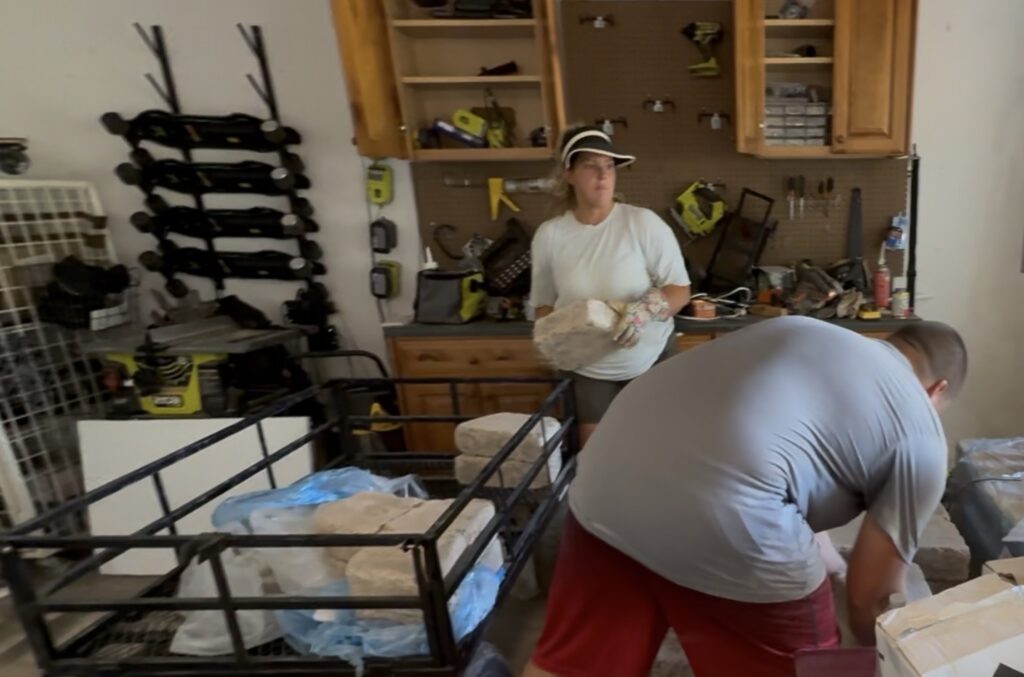
That night we were lying in bed, and I could tell he wasn’t himself. I asked him what was wrong. He told me that he could not do the backyard before the Fourth of July. We host our neighborhood gathering annually, so that was an important goal for me. He said he felt overwhelmed and alone. I assured him that he would never be alone, that I am his ride-or-die, and that I would help get the pallets to the back. My heart can barely stand to watch him feel so overwhelmed. If I ever run low on motivation to do better, his distress is the antidote.
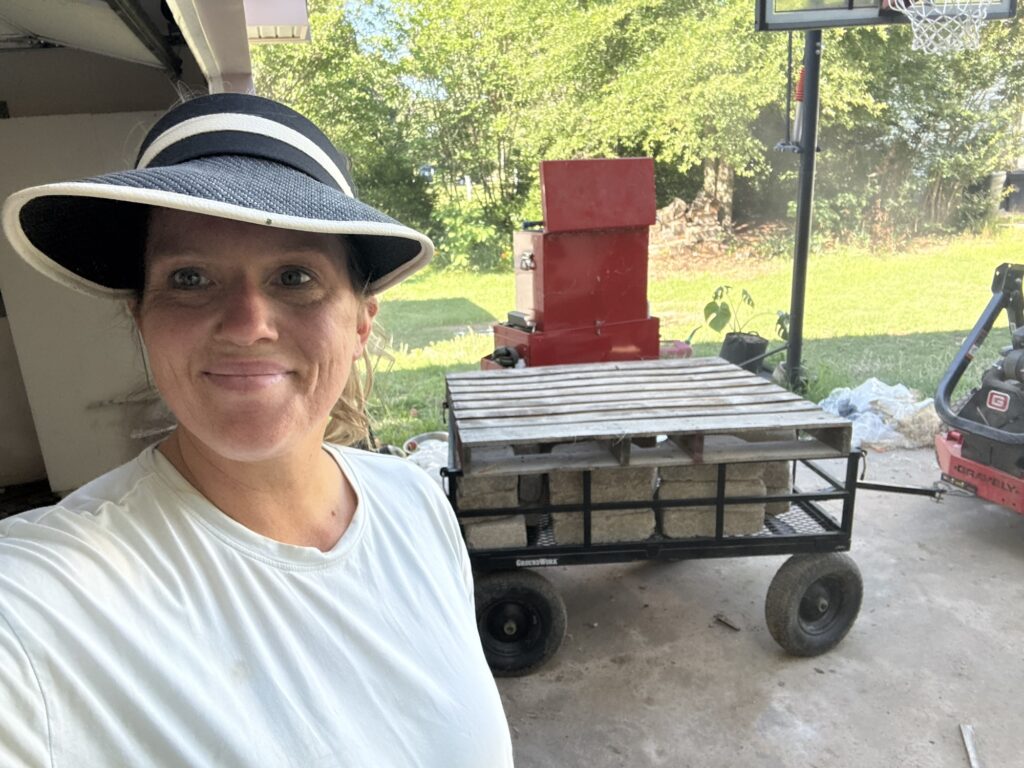
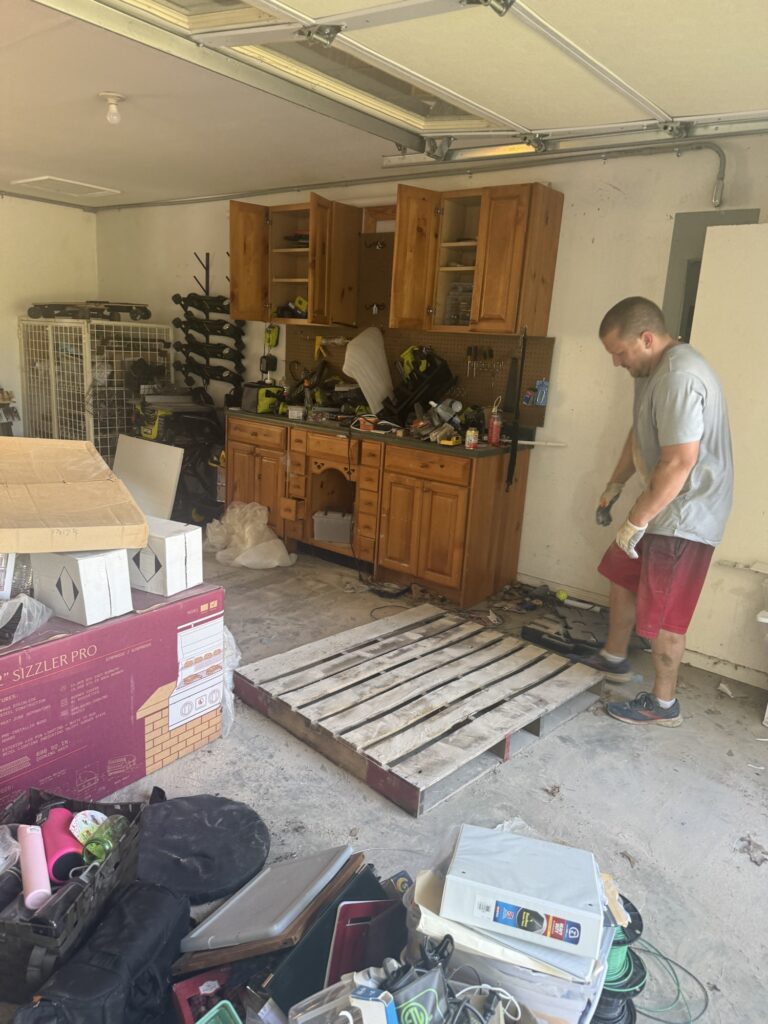
So yesterday, on Tiny Acts of Kindness Tuesday, I was keeping a promise to my husband. I could see the relief in his breath as we unloaded the last pallet. We moved 9 pallets. That means we took 1500 pounds per pallet, picked it up, loaded it on a buggy, and drove it to the back of our yard. From there, we lifted it out of the buggy onto another pallet in the backyard. Incase you’re wondering, Robert and I moved 13,500 pounds of stone from our garage to our backyard.
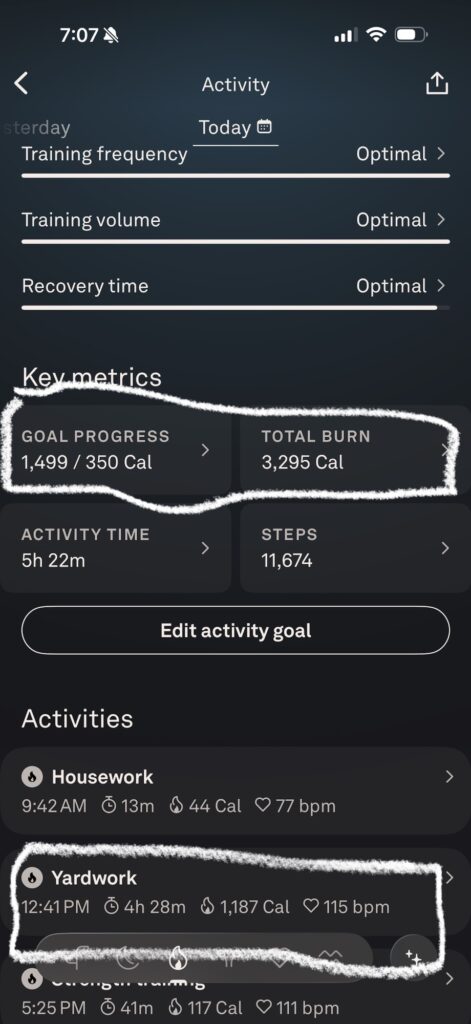
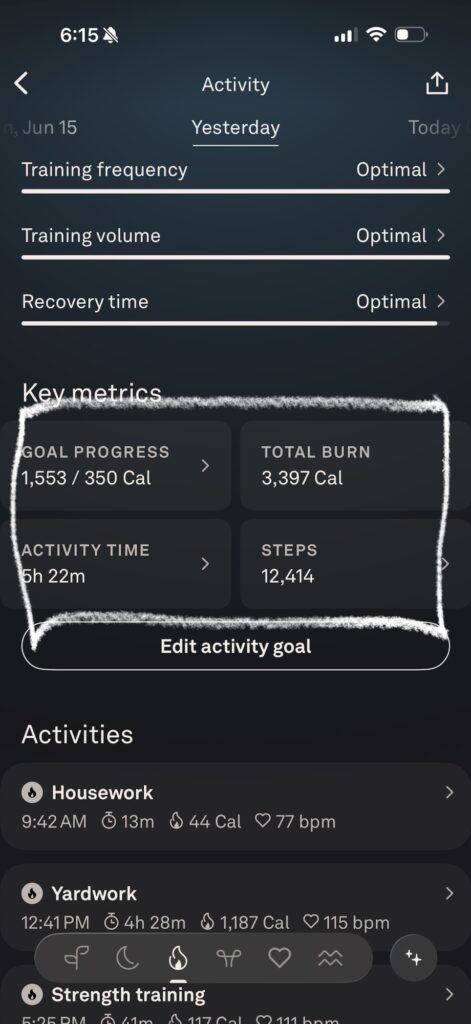
I love my Oura because I didn’t even have to ask it to log anything. It instantly picked up the work we were doing. If you have been thinking about getting an Oura ring, I have had mine for two years now; I wear it as a wedding band. It is so much easier than an Apple Watch, and I think you should go for it. You can buy the one I have here.
1,187 active calories is probably one of the top workouts I’ve ever had. And 115 BPM for 4.5 hours is also a record for sustained elevated heart rate.
While we were working on this project, something happened earlier in the week that reminded me why this backyard means more than concrete and stone. You can read this week’s Tiny Acts of Kindness here.
Recently, I shared how I discovered that many of my relationship patterns were rooted in a fear of abandonment. What looked like contradictory behaviors—clinging too tightly in some relationships and wanting to run from others—turned out to be different responses to the same fear.
If you haven’t read that story yet, you can find it here:
That discovery gave me something I had never had before.
A map.
For years, I spent my energy trying to change behaviors without understanding where they came from. Once I understood the root, everything started making more sense.
A few weeks later, Robert unexpectedly asked me a question that made me wonder if the same process might apply to him.
We have a major backyard renovation underway right now. Contractors, concrete, pool liners, schedules, budgets—the whole thing.
If you’ve ever met my husband, you already know this is exactly the kind of project that activates every anxiety circuit he has.
One day he asked me:
“Do you think some people are just more bothered by imperfection than others?”
I told him yes.
Then he asked:
“Do you think it’s okay that things bother me when they aren’t perfect?”
I told him that I thought it depended on how much it affected his life.
If noticing imperfections helps you catch problems before they become disasters, that’s a gift.
If it keeps you from enjoying your life, that’s a different conversation.
Then I told him about my own discovery.
For years, I thought my tendency to emotionally check out, pull away, or occasionally feel like running from my marriage had something to do with what my marriage lacked.
I thought maybe I needed more reassurance.
More connection.
More attention.
But after years of counseling, reading, and self-reflection, I discovered something uncomfortable.
The fear wasn’t really about Robert.
It was older than Robert.
When I finally understood my fear of abandonment, so many things started making sense.
So I told him something simple.
“I don’t think I can tell you why you’re a perfectionist. But I wonder if there’s a reason.”
Because once you discover that your own behaviors have roots, you start looking at struggles differently.
Instead of being judgmental, you start wondering why.
The truth is, I don’t think Robert’s standards are the problem.
Some of the things I admire most about him come from those standards.
This is a man who was captain of the football team.
Captain of the soccer team, despite not even liking soccer.
A 4.0 engineering student.
An engineer.
A leader.
A problem solver.
A person who has spent most of his life setting goals and reaching them.
High standards have served him well.
But as we talked, I realized something.
I don’t think perfection becomes a problem when it pushes us to do our best.
I think perfection becomes a problem when it keeps us from taking the next step because we haven’t already reached the finish line.
I told Robert that I know he values his faith.
How do I know?
Because I’ve watched him live it.
I’ve seen him read his Bible.
I’ve seen him turn to Scripture for comfort.
I’ve watched him cling to God during seasons when life felt impossible.
I’ve found Bible verses scribbled on pieces of paper.
I’ve watched him seek God when nobody else was looking.
So when he tells me he doesn’t like where his spiritual life is, I believe him.
But I also told him something I’ve noticed.
Sometimes when we miss church, he feels like he’s failing spiritually.
And yet from Monday through Saturday there are dozens of opportunities to nurture that relationship.
A devotional on the way to work.
Five minutes in Scripture.
A prayer during lunch.
Listening to the Bible while driving.
Small things.
Micro wins.
But it seems like sometimes those opportunities get overshadowed by the feeling that he isn’t where he wants to be.
And then I realized I’ve done the exact same thing.
One week we missed church.
A few days later, I found myself emotionally depleted and desperately needing comfort.
I knew exactly what I needed.
I needed God.
I needed my Bible.
But when I reached for it, I felt resistance.
Not because I didn’t want God.
Because I didn’t want the guilt.
Somehow, I had convinced myself that because I missed church on Sunday, opening my Bible on Tuesday wouldn’t matter.
As if five minutes with God couldn’t possibly count because I had already missed the bigger goal.
But eventually I had to remind myself that I don’t think God only wants to hear from us on mountaintops.
I think He wants to hear from us in valleys too.
Maybe especially in valleys.
So I opened my Bible anyway.
And I found exactly what I needed.
Not condemnation.
Comfort.
That’s when I realized that shame has a way of moving into spaces where growth was supposed to live.
And the more I thought about it, the more I realized I see this pattern in other areas of Robert’s life too.
Sometimes with finances.
Sometimes with projects.
Sometimes with goals.
Sometimes with risks.
If he thinks something might fail, he often doesn’t want to start.
He’ll even tell me that I push him toward things he doesn’t feel qualified to do.
Yet many of the things he says he isn’t qualified for are things I genuinely believe he could accomplish.
That’s what made me wonder if perfectionism isn’t really the issue.
Maybe the issue is a fear of failure mixed with a very high standard of achievement.
And that combination can be dangerous.
Because it can create anxiety.
It can create avoidance.
It can even create complacency.
Not because you don’t care.
But because you care so much that failing feels unbearable.
The more we talked, the more I realized this wasn’t really about church.
Or finances.
Or projects.
Those were just examples.
The deeper question was this:
Why does the standard matter so much?
Who are you trying to impress?
And does that audience even exist anymore?
That’s when I told Robert something I’ve wanted him to understand for years.
I reminded him of something I told him when I was struggling with postpartum depression.
I asked him if he remembered me telling him that sometimes the simple sound of him walking through the door made me feel better.
He said yes.
I told him that’s still true.
That’s all I’ve ever really needed from him.
His presence.
His heart.
His willingness to show up.
Emotionally.
Physically.
Consistently.
He’s already won my approval.
The kids feel the same way.
For years I’ve watched them run to the door yelling:
“Daddy! Daddy!”
They weren’t running because he had a perfect GPA.
They weren’t running because he was captain of anything.
They weren’t running because of a promotion, a savings account, or a completed project.
They were running because he was their dad.
Which made me wonder if the measuring stick he’s using belongs to the people sitting around his table.
Because I don’t think he’s achieving for me.
And I don’t think he’s achieving for our children.
So maybe the better question isn’t whether the standard is too high.
Maybe the better question is:
Who set the standard?
And does it still serve the life you’re trying to build today?
Because sometimes the very thing that helped us succeed becomes the thing that keeps us from enjoying the success we’ve already achieved.
Understanding the root changed my life.
Not because it excused my behavior.
But because it gave me a map.
And maybe that’s where growth starts.
Not by judging the behavior.
But by becoming curious about the story behind it.
So I told Robert that I think instead of worrying about whether his perfectionism is okay, I would be more interested in understanding where it comes from.
I was actually hesitant to offer too many answers because I think some discoveries are more meaningful when we make them ourselves.
Books helped me.
Counseling helped me.
Self-reflection helped me.
But nobody could simply hand me the answer.
I had to discover it.
So my best advice to him was simple.
I think somewhere along the way achievement became associated with something important.
Maybe it was approval.
Maybe it was security.
Maybe it was identity.
Maybe it was proving something.
Maybe it was all of those things.
I don’t know.
But I suspect there was a reason that achievement became so valuable.
The question isn’t whether that reason was right or wrong.
The question is whether it still matters.
Because what I learned through my own journey is that sometimes we keep carrying lessons long after we’ve outgrown the circumstances that created them.
For years, I lived as though abandonment carried the same threat it did when I was a child.
It didn’t.
The fear was real.
The lesson was outdated.
Maybe achievement works the same way.
Maybe the meaning it once held isn’t the meaning it holds today.
Maybe the standard that once helped build a life becomes the standard that keeps us from enjoying it.
And maybe growth isn’t always about becoming someone new.
Maybe sometimes it’s about examining the beliefs we’ve carried for years and deciding whether they still belong in the life we’re living now.
Because once I understood where my fear came from, it lost some of its power over me.
And I wonder if the same thing might happen when we understand why we feel such a strong need to achieve.
Not because achievement is bad.
But because understanding the root gives us a choice.