Tag: letting go

  • Different Birds From the Same Nest

    For years, I thought I had a contradiction in my personality.

    In some relationships, I would stay far too long.

    I would overlook red flags. I would excuse behavior that hurt me. I would ignore my own needs. I would bend until I barely recognized myself. Sometimes I would even sacrifice my own self-respect trying to preserve a relationship that wasn’t healthy for me.

    All because I couldn’t tolerate the ending.

    It was that simple.

    Ending a relationship, no matter how much peace it might bring, felt like failure.

    But then there was the other side of me.

    The side that would sometimes run.

    Even in my marriage, there were moments when I felt an overwhelming urge to pull away when I felt disconnected, hurt, or emotionally unsafe.

    “I can’t stay,” I would tell myself.

    And that confused me because I love my husband.

    How could someone go to extraordinary lengths to maintain some relationships while wanting to escape others?

    How could I spend years enduring unhealthy dynamics in one area of my life and then feel tempted to walk away from another relationship without fully understanding why?

    And truthfully, the relationship I sometimes wanted to run from was the healthiest one of them all.

    Those behaviors seemed completely opposite.

    One version of me would break my own heart trying to prevent an ending.

    The other would start looking for the exit, even though truly leaving my marriage would have broken my heart too.

    For years, I thought those were two separate problems.

    Eventually, I realized they were different birds from the same nest.

    Fear of abandonment.

    That realization changed everything.

    I had spent years looking at the people involved. I analyzed their behavior, their intentions, their actions, and their impact on my life.

    What I wasn’t looking at was myself.

    Why was I reacting this way?

    Why did endings feel so unbearable?

    Why did distance feel so threatening?

    Why did I sometimes sacrifice my own peace to keep a connection alive?

    I remember one of my closest friendships ending in 2021.

    Walking away from that friendship felt devastating, but I knew I had to do it.

    Then, in 2023, my marriage was hurting deeply, and I remember feeling ready to email a divorce attorney.

    Looking back, one question stands out:

    How could ending a friendship feel harder than the possibility of ending my own marriage?

    At the time, I thought the answer was the people involved.

    I thought one relationship must have mattered more than the other.

    But that wasn’t true.

    The friendship wasn’t more important than my husband.

    If anything, I often held Robert to a higher standard because I loved him more deeply and because his opinion carried more weight than anyone else’s.

    There were even times when I would tell myself:

    “If I’m willing to tolerate this behavior from other people, then why can’t I tolerate it from Robert?”

    But that wasn’t really the issue.

    The issue wasn’t the relationship.

    The issue was the silence.

    When friendships struggled, there were usually still conversations.

    Arguments.

    Explanations.

    Attempts.

    Sometimes those conversations were painful, but they still carried something important:

    Hope.

    Words meant there was still engagement.

    Words meant there was still movement.

    Words meant there was still a chance to repair what was broken.

    With Robert, it wasn’t the conflict that made me want to give up.

    It was the silence.

    The silence felt louder than any argument.

    My friends could be talking and still not understand me.

    Meanwhile, my husband often understood me better than anyone else in the world, but when he became quiet, it felt as though he had already left emotionally.

    And because I thought the person was the answer, I completely missed what was actually happening.

    I wasn’t responding to the quality of the relationship.

    I was responding to my fear of abandonment.

    But the answer started much earlier than my friendship in 2021 or my marriage 18 years ago.

    While reading psychology books and spending years in counseling, I came across a concept that stopped me in my tracks.

    When children are forced to remain in relationships that are unhealthy, they often learn to survive by focusing on the good in the person or relationship.

    If you think about it, it makes perfect sense.

    A child can’t always leave.

    A child often can’t change the situation.

    A child is dependent on the very people who may be hurting them.

    So what is left?

    Endure.

    Adapt.

    Find the positive.

    Look for reasons to stay.

    Learn to survive the reality you have.

    You cannot safely protest a dynamic when your survival depends on maintaining it.

    So what happens?

    The unhealthy dynamic stays in place because the child has no power to change it.

    Over time, that survival strategy becomes a habit.

    Even deeper, if speaking up threatens the relationship, a child can become conditioned to believe that abandonment threatens safety itself.

    The lesson becomes simple:

    If people leave, I’m not safe.

    Children become very good at making associations.

    A bell rings.

    The cheese appears.

    Eventually the bell means cheese.

    In much the same way, children learn emotional associations.

    Confrontation means abandonment.

    Abandonment means danger.

    And even when you become an adult and logically know your safety no longer depends on another person, those old associations can still become your default settings.

    When I read that, I immediately grabbed a pen and paper.

    Because suddenly my behavior made sense.

    I wasn’t overlooking red flags because I couldn’t see them.

    I was overlooking them because I had spent years practicing endurance.

    I had learned to find the good.

    I had learned to understand.

    I had learned to empathize.

    I had learned to forgive.

    What I had not learned was that sometimes the healthiest response is to leave.

    But that still didn’t explain why I sometimes wanted to run.

    Then another piece fell into place.

    The answer was hidden in what abandonment looked like to me.

    Growing up, silence was rarely neutral.

    Silence meant something was wrong.

    Silence was often followed by withdrawal.

    Silence was what happened when a relationship was breaking down.

    In my experience, silence meant someone had stopped fighting for the relationship.

    Silence meant I didn’t matter.

    So when I got married, I brought that understanding with me.

    The problem was that Robert brought a completely different understanding.

    In my family, conflict was loud.

    People argued.

    People cried.

    People fought things out.

    It wasn’t always healthy, but one thing was certain:

    Engagement meant the relationship was still alive.

    Silence was what happened when people gave up.

    In Robert’s family, it was almost the opposite.

    Silence wasn’t surrender.

    Silence wasn’t abandonment.

    Silence was a way to prevent escalation.

    Silence was a way to calm down.

    Silence was a way to avoid saying things you couldn’t take back.

    To them, creating space was often the healthier choice.

    To me, it felt terrifying.

    Of course, neither system was perfect.

    My family’s version of conflict often escalated too quickly. Sometimes emotions drove the conversation more than wisdom.

    But the strength of that system was that problems were usually out in the open.

    People knew where they stood.

    Robert’s family had a different strength.

    They were less likely to escalate. More measured. More restrained.

    But every strength has a shadow side.

    The risk wasn’t yelling.

    The risk was that silence could become permanent.

    The risk was that problems could remain unresolved because no one wanted to make anyone uncomfortable enough to address them.

    One family risked too much confrontation.

    The other risked too little.

    One feared escalation.

    The other feared disconnection.

    And somewhere in the middle is probably where healthy conflict lives.

    What looked like safety to Robert looked like abandonment to me.

    What looked like connection to me sometimes felt like escalation to him.

    Neither of us arrived at those conclusions by accident.

    We learned them.

    We learned them in the homes that raised us.

    So when conflict entered our marriage, we weren’t just dealing with each other.

    We were dealing with years of conditioning that told us what conflict meant.

    When Robert became quiet, my nervous system wasn’t hearing:

    “I need a little time.”

    It was hearing:

    “You don’t matter.”

    And when I pushed harder for connection, reassurance, or repair, Robert wasn’t necessarily hearing:

    “I love you and I’m scared.”

    Sometimes he was hearing escalation.

    Two people.

    Two coping mechanisms.

    Two definitions of safety.

    And both of them made perfect sense in the environments where they were formed.

    That’s when I realized something important.

    The same fear that made me cling could also make me run.

    Because if abandonment is the thing you fear most, there are two ways to protect yourself.

    You can hold on too tightly.

    Or you can leave before someone else has the chance to.

    Different strategies.

    Same fear.

    Different birds.

    Same nest.

    That single realization solved a lot of problems in my life.

    It also gave me a map.

    Understanding that changed everything.

    It helped me see that I wasn’t reacting to the present moment as much as I was reacting to old fears.

    It helped me recognize that engagement does not always mean a relationship is healthy.

    And silence does not always mean a relationship is over.

    Especially in my marriage.

    Most importantly, it helped me understand something I wish I had learned much earlier:

    Some relationships are worth saving.

    Some are not.

    And I am no longer responsible for maintaining relationships that hurt me.

    The child version of me didn’t have a choice.

    The adult version of me does.

    Today, I still deeply value relationships.

    I still believe in forgiveness.

    I still believe in empathy.

    But I no longer believe that every relationship must be preserved at any cost.

    Sometimes walking away is wisdom.

    Sometimes distance is healthy.

    And sometimes what feels like abandonment isn’t abandonment at all.

    Maybe it’s freedom.
  • Dignity Over Revenge: When Silence Speaks Louder Than Betrayal

    Dignity Over Revenge: When Silence Speaks Louder Than Betrayal

    Author’s Note:
    Sometimes, it’s tempting to pull the rabbit from the hat and let the whole world watch the narrative unravel.
    To say, “Here’s what really happened.”
    To set fire to the false accusations—
    and watch her abuse power and then scramble.
    But I didn’t.
    Not because I couldn’t.
    Because I wouldn’t.
    Checkmate was an option.
    But I chose mercy instead.
    Some play checkers.
    The smart ones play with restraint.


    I was thinking about my first big betrayal the other day.
    Not the obvious kind—
    But the kind that shows up in pearls and a polished smile.
    The kind that plays dress-up as integrity.
    The kind that doesn’t stab you in the back…
    It hands you the knife,
    Points to your chest,
    And calls the crowd to watch you bleed.

    That’s the kind that leaves the deepest cuts.
    The ones that don’t gush blood all at once.
    They just…
    stay open.
    Forever stinging,
    long after they’ve dried.

    The first time it happened to me, I was in high school.

    She was a friend with strict parents,
    and we had a Halloween party at work.
    She asked if she could sleep over. I said yes—
    Excited because she was one of my best friends, so I thought.

    We were underage. The rules were clear.
    No alcohol.

    But we made plans anyway.
    We found someone to bring beer.
    We schemed like rebels,
    and when the time came,
    I stood under a streetlight, in the dark (literally and figuratively)
    and chugged a warm Bud Light in the parking lot.

    It wasn’t even good.
    It was gritty and bitter and burned going down.
    She stood beside me but never lifted the can.
    She watched me drink it.
    Then pocketed that moment like an exhibit waiting for court.

    Later, when I grabbed my keys to leave,
    she looked at me—loud and holy—and announced:
    “I’m not getting in the car with someone who’s been drinking.”

    In front of everyone.
    Like a girl on a pulpit, saving her own soul.
    Like she didn’t come out to that parking lot too.
    Like she hadn’t planned the whole thing with me.
    Like she wasn’t about to stay the night with a man twice her age.

    I didn’t know it yet,
    but I had just become her scapegoat.

    My boss pulled me aside,
    told me he should fire me, but he didn’t.
    But he said I couldn’t drive home.
    Which meant waking up my parents,
    admitting I drank,
    and unraveling trust.

    But someone I knew—someone with clear eyes—
    offered to drive me.
    And when we got outside,
    he just looked at me and said,
    “Felecia, I know what kind of girl she is.
    And I know you only had one drink.
    You’re fine. I just wanted to give you a way out.”

    He gave me back my dignity.
    And I drove myself home.

    The next day I wanted to go to war.
    I wanted to find her in the hallway and light her up.
    And I tried.
    But a teacher stepped in.

    And I told my mom.
    And I wanted—desperately—to tell her parents too.
    To rip off the mask.

    Unravel her narrative of blame 

    Unravel her narrative
    The one that she spun
    Avoiding the mirror of shame
    The one who rightly reflects the blame.
    I wanted to say, “She didn’t sleep at my house.
    She slept with a grown man.
    And she used me as cover.”

    But I didn’t.
    And I still don’t know why.

    Because the truth is:
    you can burn someone’s life down with the truth.
    But if you torch your own peace in the process—
    was it worth it?

    Maybe I could’ve humiliated her.
    Maybe I should have.
    But that kind of revenge costs something.
    And I don’t pay for peace with my character.

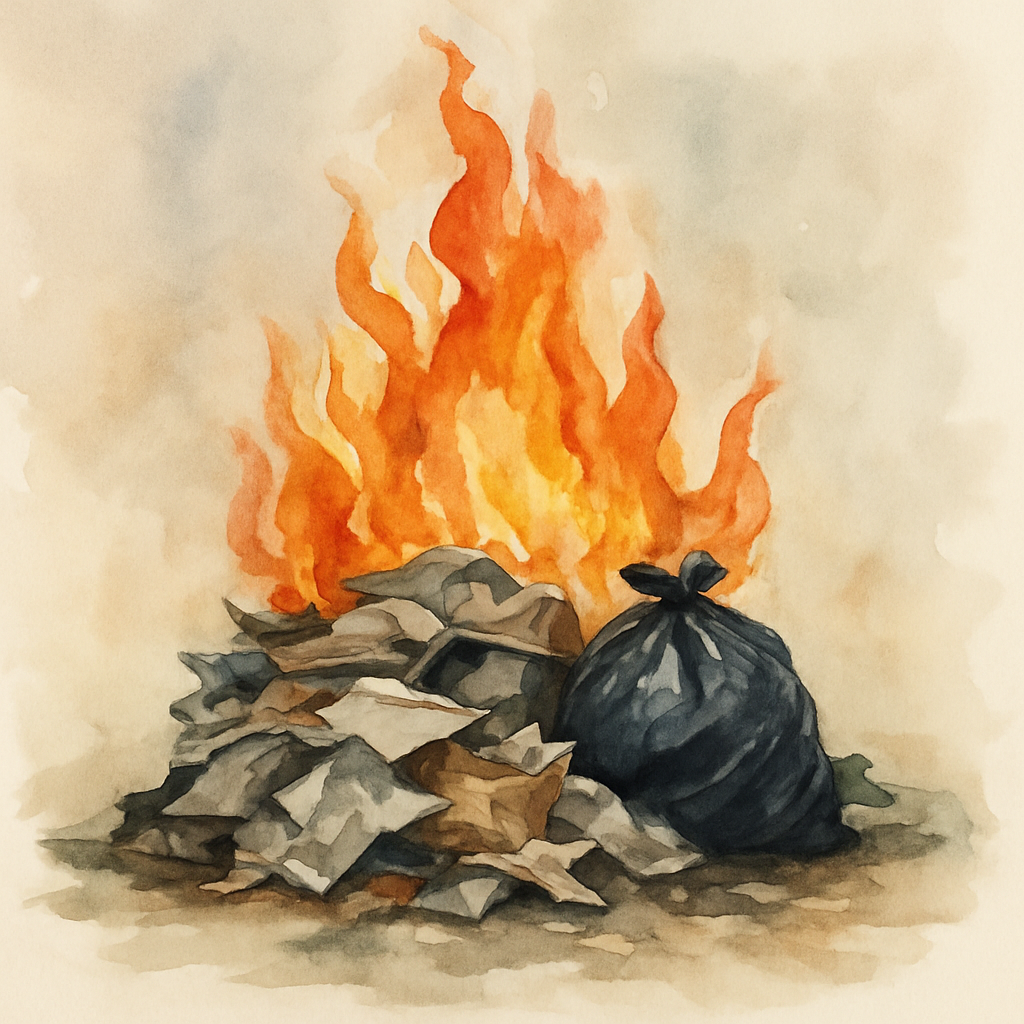
    Sometimes you’ve got a match in your hand
    and a bonfire of garbage behind you.
    But lighting it would just make the whole street smell.

    So you drop the match.
    And walk.

    Years later, I realize:
    I’m still that girl.

    Imperfect.
    Yes.
    But loyal to the core to the vault I vow to be.
    And that’s what silence proves.
    It says: I’m not afraid to leave your truth standing next to mine.

    Because that night?
    I chugged one beer.
    She slept with a man twice her age who had a girlfriend.
    (The girlfriend, by the way, didn’t leave him over her.
    She left him because of another girl he cheated with.)

    So tell me—
    Which one of us woke up the next day still feeling whole?

    She put on a show for our boss,
    but he found out the next day what really happened.
    That his manager slept with a minor employee.
    Her reputation?
    Scorched earth.
    And she couldn’t even blame me.

    That’s the thing about dignity:
    it isn’t just about who you are in the dark.
    It’s about who you refuse to become
    when someone hands you the lighter
    and begs you to burn.

    When you set trash on fire,
    everyone smells it,
    and they know where it came from.

    But if you vault it—
    and let it rot quietly—
    someday it might just become compost.

    Will they think they won?
    Maybe. For a minute.

    But when they go home and face the mirror,
    they have to live with what they are.
    And what they are
    isn’t brave.
    It’s petty.

    And the woman they tried to shame?
    She looks in the mirror and sees silence.

    Powerful, screaming silence—
    the kind that doesn’t owe anyone a headline,
    but could still write one if she wanted to.

    This story stayed in my back pocket.
    I never needed to use it.
    But now?

    Now, it reminds me:

    I’ve walked away twice
    when I could’ve blown the whole thing up.
    I didn’t.

    Not because I couldn’t.
    Because I wouldn’t.

    That’s not weakness.
    That’s restraint.

    You blow me up?

    and I walk away anyway.

    And that trash?
    Still vaulted.
    Still untouched.

    But it’s composting beautifully.

  • When the Apology Never Comes: The Unspoken Apology

    When the Apology Never Comes: The Unspoken Apology

    Category: Unwritten & Understood

    The unspoken apology…
    This is for the ones still waiting.
    For the ones who never got the words they deserved.
    For the ones learning that silence is its own kind of betrayal.

    You don’t have to carry the weight of someone else’s unspoken apology.

    When people hurt us, it’s natural to want peace. To find our way to forgiveness. But it’s hard to get there when the person who caused the pain never even admits they caused it. No apology. No ownership. Just… avoidance.

    It can leave you feeling untethered. How do you heal without a bridge?

    Because that’s what an apology is. It’s not just the right thing to do—it’s the bridge. The crossing point between pain and reconciliation. It doesn’t even require guilt or agreement. It simply requires recognition.

    Without it, there’s no crossing. No repair. Just two people standing on opposite shores, and one of them pretending the water doesn’t exist.

    And that’s where it stings. When someone won’t apologize, they aren’t just avoiding responsibility—They’re declaring, in one form or another, that your hurt isn’t worth the effort.

    It feels like rejection. Because it is a kind of rejection. Not of the event, but of you.

    But here’s what I want you to know: It’s not a reflection of your worth. It’s a reflection of their character.

    I’ve told my kids this for years. When they fight and resist saying sorry, I remind them: An apology doesn’t mean you did something wrong on purpose. It doesn’t even mean what you did was wrong at all. It means someone was hurt. And if you care that they’re hurt—even just a little—you make it right. You say the words.

    That’s the same reason we instinctively say “I’m sorry” when we bump into someone at the grocery store. We didn’t mean to. It wasn’t malicious. But someone was affected, and we acknowledge it. That’s what decent people do. Not because they’re guilty, but because they’re good.

    So what does it say when someone can’t even do that? When they can’t offer a simple act of repair to someone they once cared about?

    It says they’re unequipped. It says they are still run by pride, or shame, or fear. It says they think being right is more important than being kind. And it says they likely struggle to offer that bridge to anyone, not just you.

    And if you need one more way to see it clearly: Think of the person behind you in traffic. You’re driving the speed limit, but someone’s on your bumper. You’re boxed in. You can’t go any faster. But they honk anyway. Throw the finger. Roll down their window to scream at you like you’re the problem.

    You know better. You know it’s not about you. They were already angry. Already impatient. Already spiraling.

    And that’s what it’s like when someone refuses to apologize. Their silence isn’t about your value. It’s about their own dysfunction.

    It’s easy to think, I guess I didn’t mean enough to them. And that might be partly true. But more often than not, nobody does. Because their inability to apologize isn’t selective. It’s systemic.

    So no, you didn’t get the bridge. But let that be the answer. And let it free you.

    If You Didn’t Know Them… Would You Stay?

    Here’s the thing: If you didn’t know this person—if there were no memories, no shared past, no emotional thread pulling you toward them—and someone described them to you like this:

    “They hurt people and walk away untouched.
    No apology. No regret. No effort to make it right.”

    Now imagine that person standing in a group photo. At a party. With their heart fully visible—stitched to their sleeve for all to see. Would you want to be in that picture?

    Would you want your name associated with someone who makes a habit of avoiding accountability? Someone who finds a way to disappear when repair is needed most?

    Probably not.

    Because that’s not who you are.

    If you’re still reading this, chances are you’re the kind of person who says “I’m sorry” even when it’s hard. You’re the kind who feels it deep when you’ve hurt someone—intentional or not. You want to make it right. That’s your reflex. That’s your nature.

    So no—you don’t understand people who don’t. And that’s a good thing. That means you’re not them.

    You’ve been grieving the absence of a bridge, but maybe now you can be grateful you’re not the kind of person who destroys one.

    That clarity? That’s your release.

    That’s your self-worth giving your heart permission to resign.

    You’re not the villain here. You’re not even the one who needs fixing.

    You’re just the one who finally sees it for what it is. And you’re allowed to walk away— grateful that your name isn’t tied to theirs anymore.

    You deserve to be in a better picture.

  • Lime-Less In a Winter Wonderland: Ending Unhealthy Relationships

    February 4, 2025

    Unwritten & Understood

    What a powerful lesson I learned about nature, trees, and life.

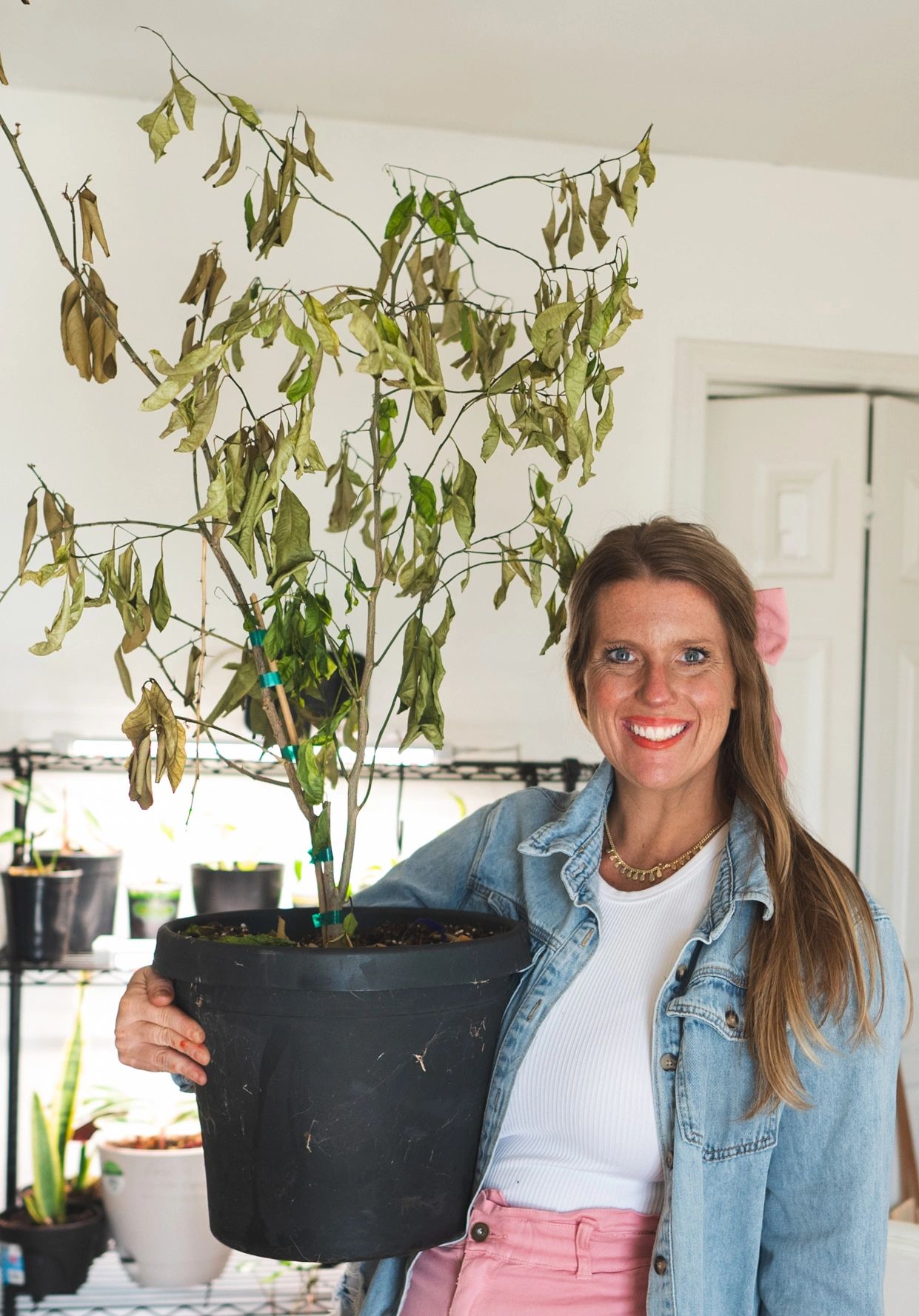
    A couple of years ago, for Mother’s Day, Robert and the kids gifted me a lime tree. I have nurtured and cared for this tree outdoors during the summer and brought it inside during winter, ensuring it has the perfect environment for growth. If you are unfamiliar with lime trees, known for their fragrant blossoms and juicy fruit, thrive in warm, sunny conditions.  

    Recently, in my morning rush, I briefly placed the tree outside in freezing temperatures, hoping to water it without creating a mess indoors. However, while managing four kids and not my time, 🙂 I realized I wouldn’t have time to water it before we had to leave for school as I planned. The thought of bringing it back inside crossed my mind, but optimism fooled me into believing a short trip to drop the kids off would be fine.  

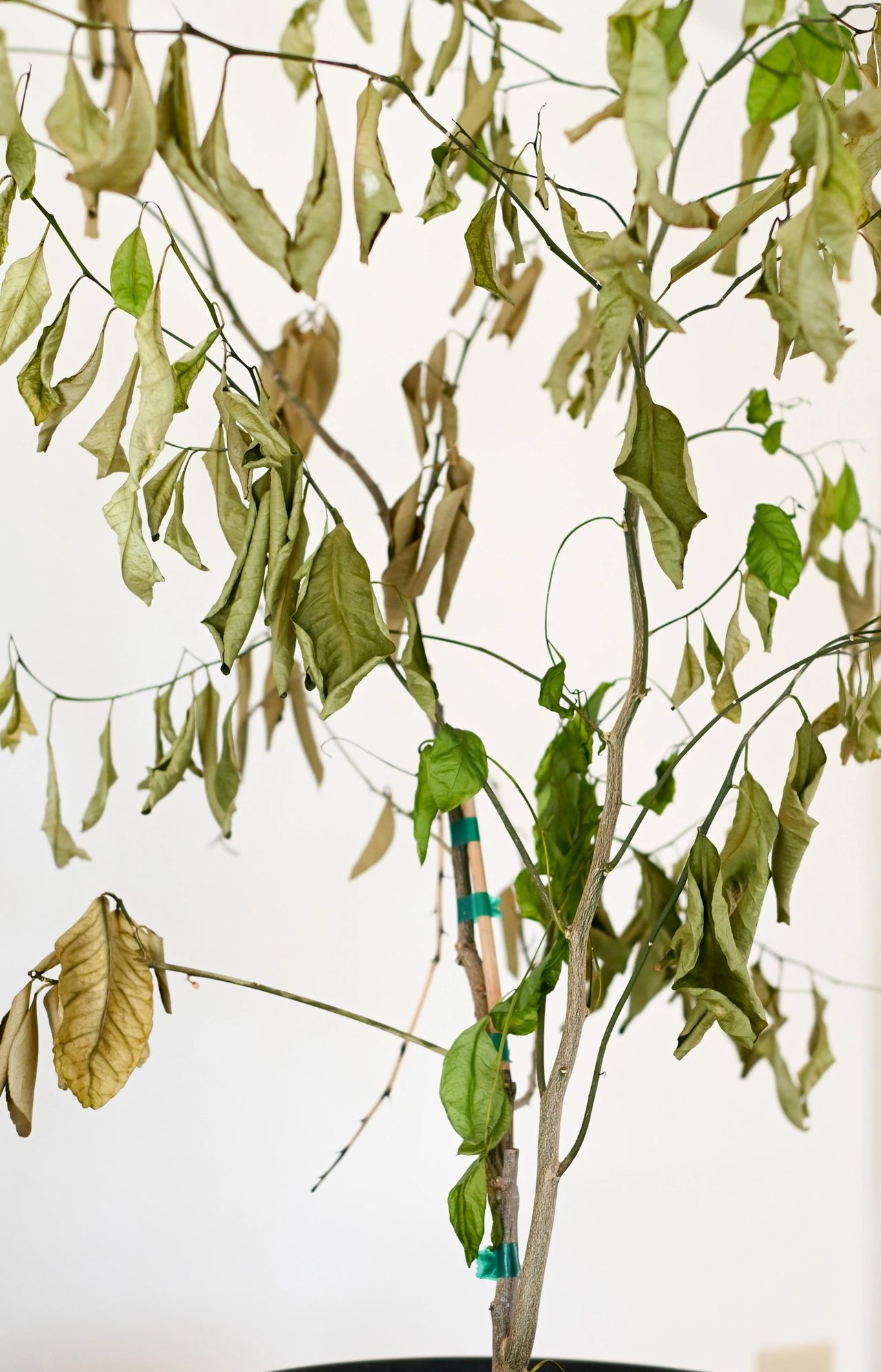
    My mission became clear upon returning home: I needed to water the tree and bring it inside. I saw my beloved tree wilting on the porch, so I sprang into action, watering it and immediately bringing it back indoors. I was hopeful, but as I stand here today, this thing doesn’t exactly look like it’s thriving anymore. I am uncertain if it will survive. However, not all is lost in my catastrophe.  Not only did I learn that trees quickly deteriorate in less-than-ideal environments, but the situation reminded me how fast our environments can affect us. 

    My tree has endured periods of insufficient sunlight, water, and nutrients—somehow it has always survived and even thrived with a little bit of TLC.  However, no TLC was going to be enough to save my tree this time.  The cold environment, even for a short time, took its toll on my little lime queen.  

    But we already know that plants are sometimes sensitive to their enviroments, don’e we?
    I mean, how many plants have you killed in your lifetime?  Some of mine died from over watering.  I remember when I got my first plant from my sweet neighbor.  It was a snake plant.  I was going to be a changed woman from years past.  There would no longer be a cycle of the plant looking dry, me promising myself I would water it, me forgetting, and weeks later, there would be a dead tree.  I watered this snake plant, and you wouldn’t believe it, but apparently this was the first plant that I ever owned that can get over-watered “loved” and rot and die.  Believe me when I tell you, this bothered me.  I have a paid app for this now,  I learn about a plant’s environment right when I buy the darn thing.  However, like most instructions, I interpret them as flexible suggestions.  Yep!  My lime tree proved my brown thumb wrong again!  

    I should have known though, right?  Our environments matter.  I am reflecting on my life and the challenges I’ve faced over 37 years; I recognize many struggles stemmed from choosing to remain in toxic relationships. Even brief moments in unhealthy situations can have lasting effects. This is not only in romantic relationships; toxic friendships have their fair share of devastating outcomes that could have been avoided by fleeing sooner than later.  While the signs of an unhealthy relationship can often be obvious, much like my wilting tree, there are nuances to when it is time to go, and you should forfeit all efforts. 

    If you don’t have a dying tree to remind you how important your environment is, I am here to share snippets of my life experiences and when I knew I had to go. 

    One-sided friendships: Throughout my life, I often held onto one-sided friendships, hoping for change, but those emotional attachments brought more pain than letting go ever would.  My name sits next to a missed call on their phone for weeks, never returned.  You know, I make plans; they break them. We have all been in those friendships which aren’t fun or healthy.  I would think about what I could do to make myself more valuable to them.  I always just showed up when they needed me without being asked, removed the word “no” from my vocabulary, and when they called me out of convenience, I would answer, even if it wasn’t a good time for me.  In the end, I only found more investment, which deepened my attachment, and in stark contrast, they respected me less.  These bonds are hard to leave, and they can devastate your self-esteem.  If you see red flags that you are in a one-sided friendship, you might take a step back for emotional clarity and decide if this relationship is best for you.  If you see the negativity it brings to your life, let the relationship go.  There are always more fish in the sea!   

    Overly Dependent Relationships:  I have also been in places where I was expected to shoulder others’ burdens. In one significant situation, a friendship with a professional turned toxic as she manipulated me for more than I was comfortable giving. When I tried to distance myself, the manipulation intensified in threats about removing me from her social media.  When I wouldn’t engage, she would message me again with another sob story about how much she missed our friendship.  I will be honest; that chic creeped me out.  It was the first time I realized the importance of recognizing dependence early on and packing up before the crap show began.  Highlighting that not all unhealthy relationship dynamics stem from lack of attachment.  The ones who love you too much, like I did my snake plant, are just as much of a hindrance to our well-being. Side note:  Please just don’t have personal relationships with people that have authority over your life.  What a stupid decision on my part.  I was like a mouse on one of those sticky pads trying to get out of that.  Just don’t.  Let me be the designated goose in the flock for you. 

    Family Relationships:  Toxicity can manifest in family relationships, too.  These suck, don’t they?  You deal with a bunch of disrespect; alcohol on the holidays just isn’t tuning them out anymore. Boundaries get crossed, and you finally say something in hopes of resolving the issue, and discussions fall into deaf ears. When efforts become exhausted, it is essential to prioritize our emotional well-being. These relationships can profoundly affect everyone involved, including those you did not intend to impact, like your spouse or children.  You know how it goes:  When you think about those relationships, your spouse becomes the sounding board for your endless rants and often becomes the person at the tip of your defensive sword, and the children get less attention because your focus remains on this failing relationship that you discovered is failing, and there is nothing you can do about it; yet, you keep trying because that’s the “family” thing to do, right?  You are bad for refusing to deal with bull from your family, right?  This doormat response to your environment is like a silent poison in the air, infiltrating the well-being of everyone around you.  While you can’t control others’ actions, you can choose to step away before emotional harm deepens. Leaving a toxic relationship is not easy, especially with family, but self-preservation is a worthy endeavor.  Family should be the most supportive environment, and when it isn’t, trust me when I say it is absolutely okay to draw the line and say enough is enough.  If a family member is disinterested in mutual respect, then the label becomes just that, a label, until they initiate some maturity.  People who love you — family members should — will not be okay with hurting you, and do not stay in their dysfunction simply because of a title they have in your family tree.  Standing up for yourself, even against family, can be a freeing moment.  

    These are just a few examples of the havoc relationships can reap on our environments. Often, like my tree, short periods in a harmful atmosphere can have detrimental effects both physically and emotionally. So my question is: When will you abandon the unchangeable and seek refuge for yourself?

  • Quiet Endings

    Quiet Endings

    June 6, 2025

    Unwritten & Understood

    Moving on

    It’s real.
    Endings.
    They hurt.

    Sometimes it’s losing someone you love.
    Sometimes it’s leaving a place you weren’t ready to let go of.
    And sometimes, it’s saying goodbye to a person
    you never wanted to let go of—
    but knew you had to.

    We all carry chapters that close.
    Doors that don’t open again.
    Final scenes that never got rewritten.

    I used to crumble at the sound of “never again.”

    Getting older doesn’t make the pain easier.
    But it does make you steadier.
    Wiser.

    You learn that what’s meant to stay… stays.
    And the rest?
    It becomes part of the road behind you.
    A part of the story—
    but not the destination.

    I used to think anything that mattered would announce itself.
    That if a door was about to close, I’d hear the hinge moan.

    But some things don’t warn you.
    They don’t creak.
    They don’t crash.
    They just go quiet.

    And the worst part?
    You don’t realize what mattered
    until it’s already folded into the noise of normal life.

    Some things wait.
    Some things knock twice.
    But the rarest ones?
    They don’t wait at all.

    They arrive and fill a void you didn’t realize existed,
    unexpected,
    real—
    and then they’re gone.

    Not because they wanted to leave.
    But because they had to.

    And no,
    timing doesn’t make something less true.
    It only decides whether it’s remembered
    or lived out loud.

    And maybe…
    maybe that’s mercy.

    Because not all things are meant to last.
    Some are just meant to wake you up.
    To show you what it feels like to be alive,
    And what it costs to carry it.