Category: Daily Quiet

  • Secure in Love, Anxious About Losing It: Anxious Attachment

    The last time I wrote about the book Attached, I mentioned thinking that I had an anxious attachment style. What I did not explain was that I eventually landed somewhere slightly different: securely attached, but with anxious tendencies.

    Before reading the book, if you had asked me what anxious attachment looked like, I would have pictured a jealous person.

    Someone who checks her husband’s phone. Someone who feels threatened by other women. Someone who is constantly searching for evidence that she is about to be replaced.

    So imagine my surprise when I recognized parts of myself in the description.

    Because I am not jealous.

    When Robert and I were engaged, my mom and stepdad came to visit us at the house we had recently purchased. We were cooking dinner and visiting when Robert’s phone rang.

    There was a woman on the other end.

    She was stranded at the Russellville exit after dark and asked if Robert could come help her. She knew he lived nearby. I knew her from the short time I attended Robert’s high school, and I remembered thinking she was beautiful.

    Robert wanted to go help her, and I supported that.

    As he was leaving, I remember my mom protectively asking, “Are you sending him by himself?”

    “Yes,” I said.

    In my head, I was thinking, Why would I go? My family is visiting, and I can’t do anything to help her.

    My mom apparently felt that I was not being protective enough of my future marriage, so she sent my stepdad with him.

    Seems pretty secure of me, right?

    About a month later, we were close to getting married. I would soon be moving into our house, so I came to Russellville to decorate while Robert cleaned the gutters.

    I remember him standing on a ladder.

    And I remember thinking, I hope he doesn’t fall and die.

    I told him I could not bear to watch him up there.

    At the time, I knew nothing about attachment styles, but I carried that memory with me for the next sixteen years of our marriage.

    It made me wonder whether anxious attachment can take different forms.

    I do not check Robert’s phone. He has given me his Facebook password at least twenty times, but I could not tell you what it is right now.

    I have never spent much time worrying that another woman might take him from me.

    But I can cry almost instantly when I think about saying goodbye or about everything that could happen before we are ready to.

    The other night, Robert and I were outside working on our outdoor kitchen. Heat, exhaustion, and sleep deprivation had taken their toll on me.

    I looked around at everything we had worked so hard to build together, and a thought entered my mind:

    What if tomorrow God decided it was Robert’s time to go home?

    Suddenly, all of it felt temporary.

    The house. The outdoor kitchen. The pool. The life we had spent sixteen years creating.

    Without him, I would become the woman who had it all and nothing at the same time.

    It was not a fleeting thought. It produced sadness. It created a knot in my throat and brought tears to my eyes.

    It also produced an action response.

    I went and found Robert a hat. I turned on our enormous outdoor fan. I made sure he was not getting overheated.

    And I told him I loved him.

    I know that may sound like an enormous emotional leap—from watching my husband work in the heat to imagining life without him—but it is not much different from an anxiously attached person sensing a slight shift in a relationship and imagining its complete demise.

    The difference is that I am not anxious about being chosen.

    I am anxious about losing what has already been chosen.

    I hesitate to say that without clarifying something important.

    I do not think my version of anxiety is somehow better, deeper, or more loving than someone else’s.

    On paper, jealousy may sound less loving than being afraid of death or separation, but I do not think fear becomes more noble simply because it is not about betrayal.

    Anxious attachment is still anxious attachment when the feared rupture is death, an accident, emotional distance, abandonment, or another person.

    All of it deserves self-awareness because all of it can lead us to react to fear as though it were fact.

    My anxiety may not make me search Robert’s phone, but it can make me search a delayed phone call, a change in routine, or a quiet expression for evidence that something is wrong.

    Trusting his faithfulness does not always mean I peacefully trust life.

    My fear can also make it difficult to fully enjoy something while part of me remains aware that it will not last forever.

    Sometimes I think I try to survive the loss of things before I have actually lost them.

    One of the most interesting things I learned in Attached was that people with anxious attachment tendencies can be extremely sensitive to emotional changes.

    Because they fear rupture in a relationship, they may become highly alert to changes in mood, behavior, tone, and routine.

    Long before I read the book, I knew I was good at reading a room.

    I notice emotional shifts before anyone says a word. I watch patterns. I detect changes. I decode them.

    Detecting the shift is not usually my problem.

    The decoding is where I can get into trouble.

    The book describes research in which people with anxious attachment tendencies were often able to recognize that an emotional atmosphere had changed. But when they were asked to immediately decide what had caused the change, their interpretations were much less accurate.

    They detected the shift correctly.

    Then anxiety filled in the blanks.

    When they were told to pause before deciding what the emotional shift meant, their accuracy improved. Their instincts had noticed something real, but they needed time to separate what they observed from what they feared.

    Eventually, I began to recognize that pattern in myself.

    My boss was quieter than usual, and I wondered if there was a problem with my job performance.

    It turned out that they had received terrible news on the way to work.

    Robert seemed preoccupied, and my mind whispered that he might be pulling away.

    It turned out that he was distracted because he was acting as director while his boss was out of town.

    My instincts were not necessarily wrong when they told me something was different.

    I was wrong when I immediately assumed the difference was about me or about the security of the relationship.

    The most memorable example happened during one of Robert’s outages at the nuclear plant.

    A man from the plant had previously died on his way home after working night shift during an outage. A year or so later, I woke up at 7:00 one morning, and Robert had not made it home.

    He was normally home by 6:30.

    He was not answering his phone. He had not texted to say he would be late, and at that time, I did not have a direct number I could call inside the plant.

    The more time passed, the more frightening the silence became.

    Logically, I knew that if he had been in a serious accident, the police likely would have contacted me.

    But ambiguity is fertile ground for an anxious mind.

    Every unanswered question became another opportunity for my brain to create an answer, and every answer was worse than the one before it.

    Robert finally called at 7:45.

    The person who was supposed to relieve him had been late. Robert could not leave his position or get to a phone until someone arrived to take over.

    Nothing terrible had happened.

    But my brain had noticed a break in a familiar pattern, and it immediately prepared me for rupture.

    That is the anxious tendency I recognize in myself.

    It is not, Who is he talking to?

    It is, Why is this different?

    It is not, Is he going to choose someone else?

    It is, Is something happening that could take him away from me?

    Understanding this has not made me incapable of anxious thoughts. It has simply taught me not to treat every thought as a conclusion.

    Now, when I sense a shift, I try to separate three things:

    What did I actually observe?

    What story did my mind attach to it?

    What else could be true?

    Sometimes intuition is telling us that something has changed.

    But anxiety is often the voice insisting that we already know why.

    The pause between those two things has changed the way I respond, not only in my marriage but in nearly every relationship I have.

    I am also not speaking from a place of believing that betrayal or separation could never happen.

    I know spouses can leave. Marriages can end. People can make choices that once seemed impossible.

    I have just never felt that Robert’s hand was on the door.

    I am much more convinced that if he leaves this life before I do, it will not be by his own choosing.

    And that is where I land on my attachment style.

    Maybe I am secure in my marriage but anxious about its permanence.

    I do not believe our story would end because we stopped choosing each other.

    What makes our bond special is not that the world contains no one else with potential. We do not choose each other because there are no other attractive, interesting, or compatible people in existence.

    We choose each other because we committed to.

    No matter where temptation, difficulty, distraction, or disappointment appears, we both know where we are going to end up.

    In each other’s arms.

    Maybe I was never afraid that Robert would stop choosing me.

    Maybe I was afraid that one day, life would not let me keep him.

  • Hammocks and Summer Days

    Hammocks and Summer Days

    Today, we had the pool liner installed, and with it came the end of a stressful renovation… at least I hope so.

    Mostly for Robert.

    I say that with a smile because my husband thinks… a lot. His brain is always solving problems, asking questions, and trying to think five steps ahead. Sometimes I wonder if it ever gives him a break.

    Which might be why Jonah reminds me so much of him.

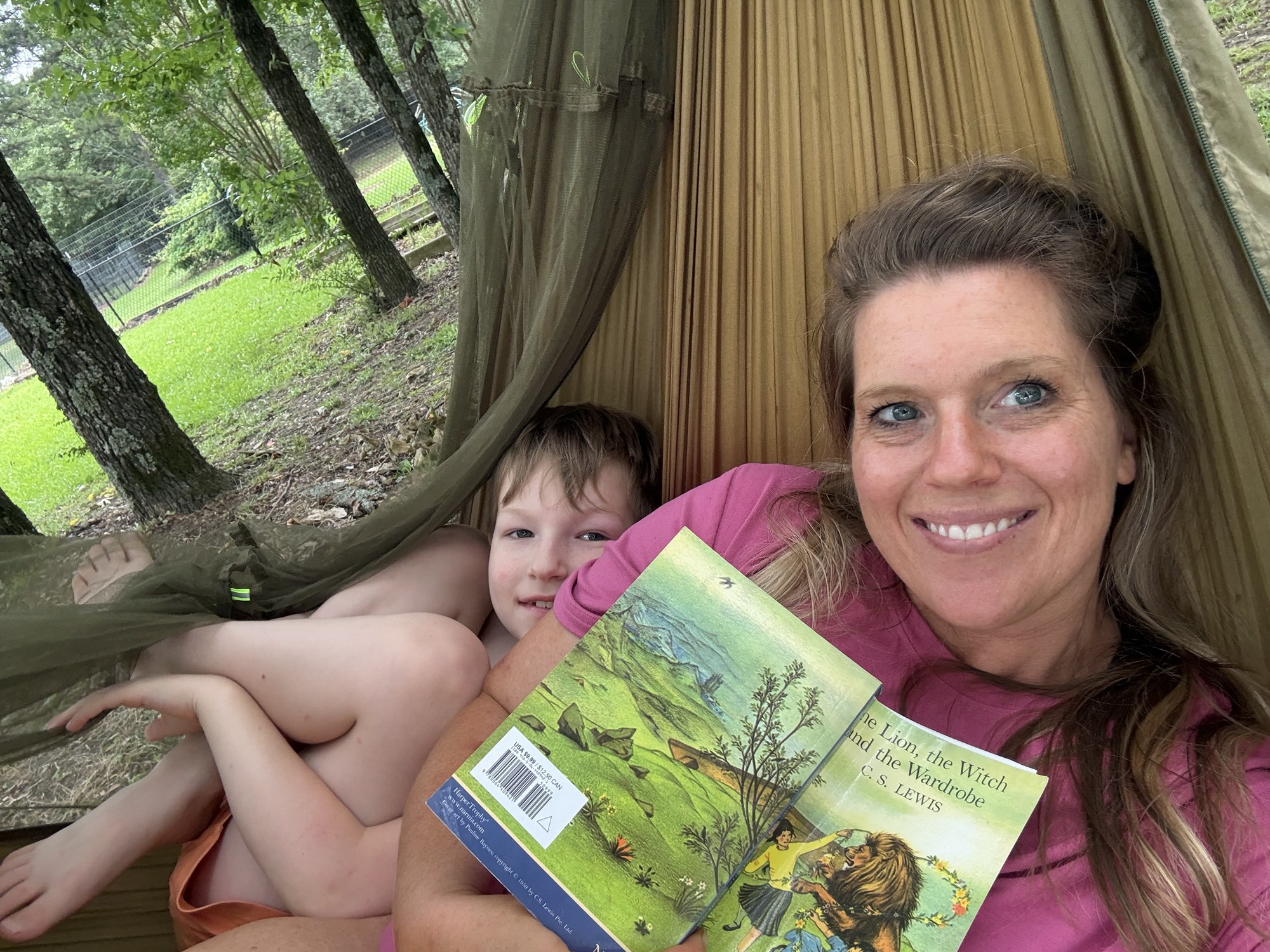
    Today, while Robert handled the contractors, Jonah and I climbed into the hammock outside with Chronicles of Narnia: The Lion, the Witch and the Wardrobe. Before I knew it, we’d read four chapters.

    Well… sort of.

    Every couple of minutes I’d get interrupted.

    Not because he was bored.

    Because he had questions.

    “What happened to the wardrobe door?”

    “Why can’t Edmund find it?”

    “If the door disappeared, then how did Lucy get back in Chapter 2?”

    I kept trying to explain that it was dark where the wardrobe door was, so the children were following the light farther into Narnia. But that answer wasn’t good enough.

    He just couldn’t make it make sense.

    When we finished reading, we walked inside to eat the watermelon we’d cut together earlier that day. Well… the watermelon I’d cut after Jonah insisted I practice first because he wanted perfect squares.

    As we were eating, he was still talking about the wardrobe.

    “I just don’t understand it,” he said again.

    His brain simply wouldn’t let it go.

    Watching him smile, think, and wrestle with that question reminded me of something that had happened just a few days earlier.

    According to my Oura ring, I’d gotten two hours and twenty minutes of sleep that night.

    I stumbled out of my bedroom into the living room, which is completely unlike me because I usually head straight for the coffee pot. I looked around, sighed, and wondered how I was supposed to function through the day.

    Then I noticed Jonah had slept on the couch.

    I hate when they do that.

    I’m not particular about much, but every time one of the kids sleeps on the couch, all I can think about is them wearing it out. Maybe it’s because a couch practically has to be falling apart before Robert agrees it’s time to buy another one.

    Still half asleep, I yawned and said, “Buddy, I am so tired.”

    He looked at me.

    “Can I ask you a question?”

    I sighed.

    “Yes, Jonah.”

    “Never mind.”

    The little disappointment in his voice immediately made my mom guilt kick in.

    “Just ask.”

    “No. It’s okay.”

    “Jonah,” I said, “please don’t do this. I’m too tired. Just tell me.”

    Finally, he blurted out,

    “I just don’t understand why they made white chocolate. It’s pointless.”

    I stared at him for a second.

    Then I laughed.

    Because honestly… I had absolutely no answer.

    Later that morning, Robert finally woke up.

    He’d been quiet for days, and I knew something was bothering him.

    “You care to tell me what’s stressing you?” I asked.

    “The renovation.”

    “I just can’t stop my brain.”

    Then it all started coming out.

    “I wonder if they put concrete under the pool stairs.”

    “I wonder if the scratches on the pool steps could cause a leak.”

    “I forgot to see how thick the concrete is where we’re putting the fireplace.”

    “What if it won’t hold it?”

    Question after question after question.

    I reminded him that we’d hired contractors because this is what they do every day.

    Then I couldn’t help but laugh.

    “What?” he asked.

    “You know who you sound like?”

    He looked at me.

    “Jonah.”

    Then I told him about my two hours of sleep, stumbling into the living room before coffee, and Jonah’s urgent question that absolutely could not wait.

    “I just don’t understand why they made white chocolate.”

    Robert burst out laughing.

    Today, lying in that hammock, listening to Jonah work through every possible explanation for the wardrobe door, I found myself smiling again.

    I’d already realized it a few days ago.

    Jonah thinks just like his dad.

    One wonders whether there’s enough concrete under the pool stairs.

    The other wonders why Edmund couldn’t find the wardrobe door.

    Both of them will chase a question until they’ve exhausted every possibility.

    And honestly…

    I wouldn’t have either one of them any other way.

  • Tiny Acts of Kindness Tuesday: The Lemonade Stand

    Tiny Acts of Kindness Tuesday: The Lemonade Stand

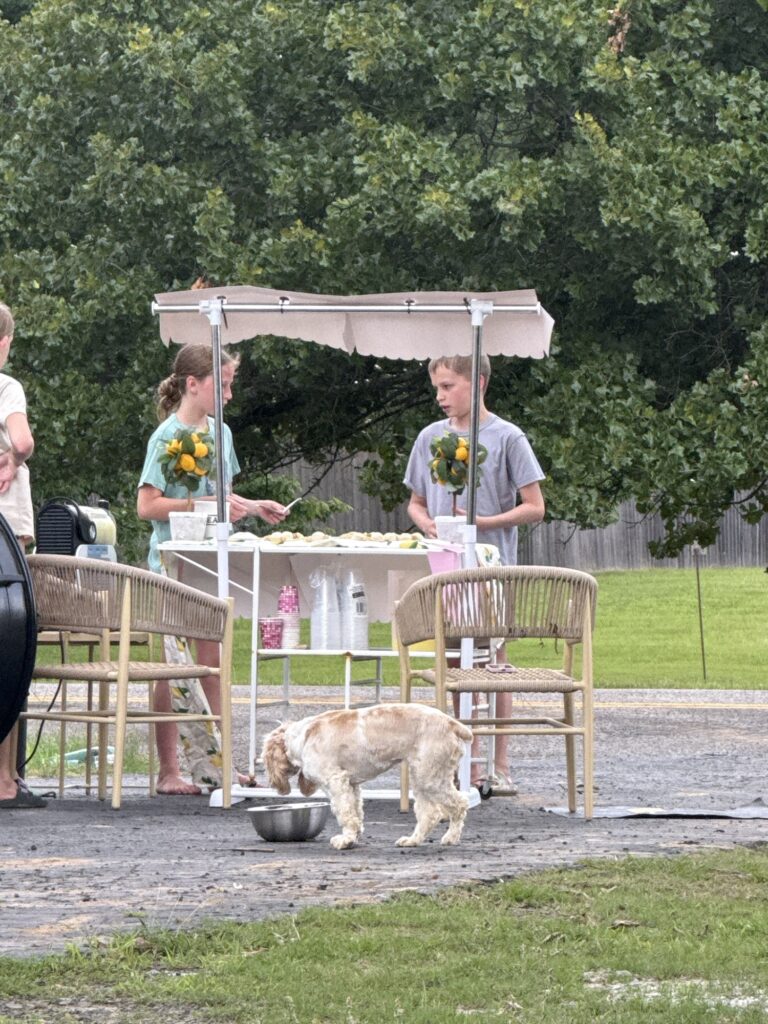
    This week’s Tiny Act of Kindness Tuesday is about how my daughter’s lemonade stand inspired me.

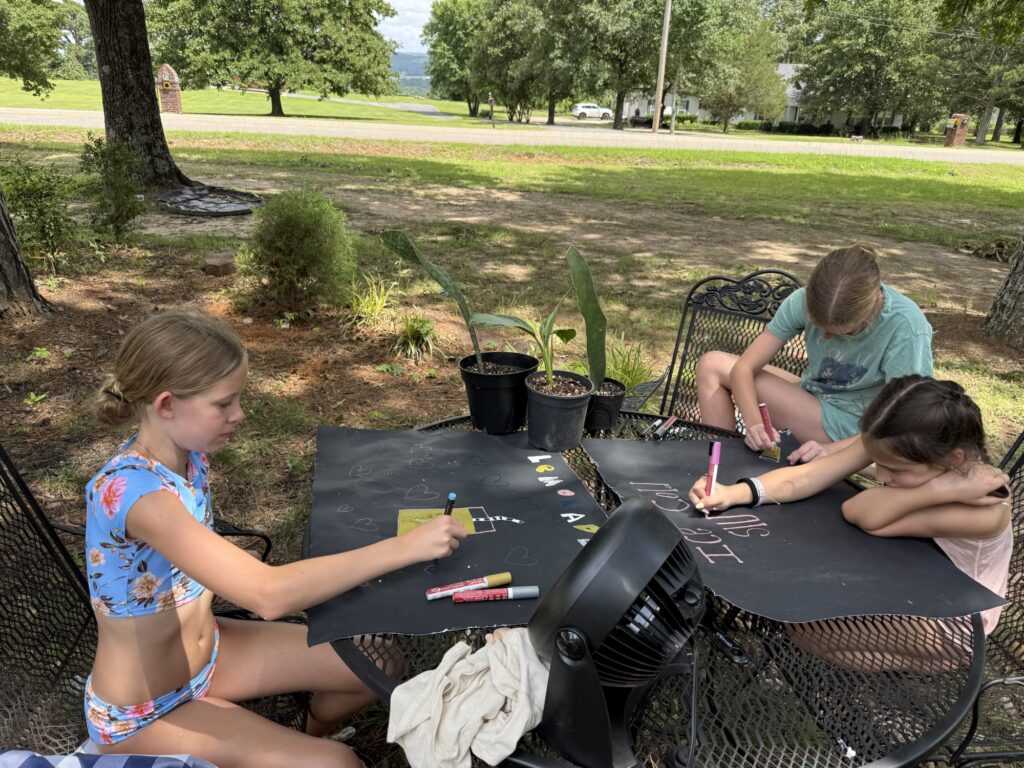
    A couple of weeks ago, Abigail had some friends over, and it was hot outside.

    Right now, our pool is waiting on a liner to be installed, so our usual summer plans are on hold. Originally, we decided to paint. Then, somewhere in the middle of the afternoon, I jokingly said, “I wish you were still little enough to want to do lemonade stands.”

    Her eyes lit up.

    She immediately started talking about the last lemonade stand she had when she was five years old. She remembered making money and having fun, and before I knew it, she had convinced her friends they needed a lemonade stand.

    It was already after 1:00 p.m., and I had to send Robert to the store for lemonade mix.

    I gently warned the girls that lemonade stands aren’t always successful on our road. We don’t live in the same close-knit neighborhood where Abigail spent her early childhood. Our homes are more spread out here, and there simply isn’t as much traffic.

    But sometimes the fun isn’t in the selling.

    Sometimes the fun is in the setting up.

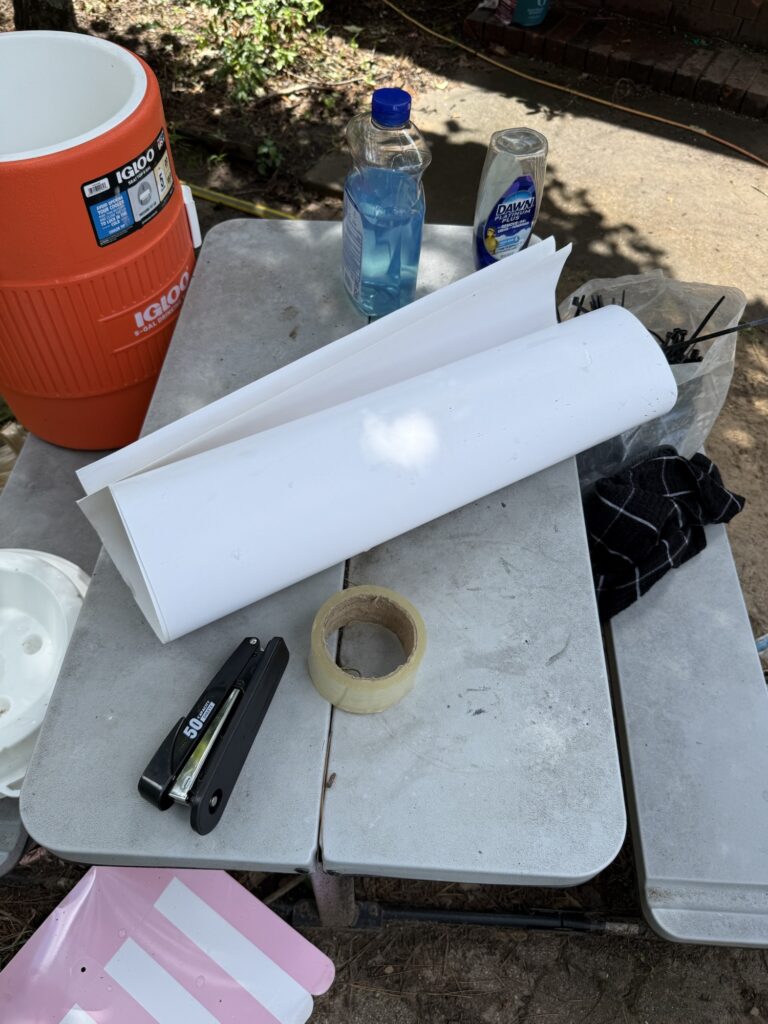
    Abigail found some rolled-up poster board in my craft area, and I taught the girls a little art trick for flattening curled paper. We dampened it, weighed it down with garden blocks, and left it to dry in the sun while we worked on the rest of the stand.

    Then Abigail and I started shopping our own house.

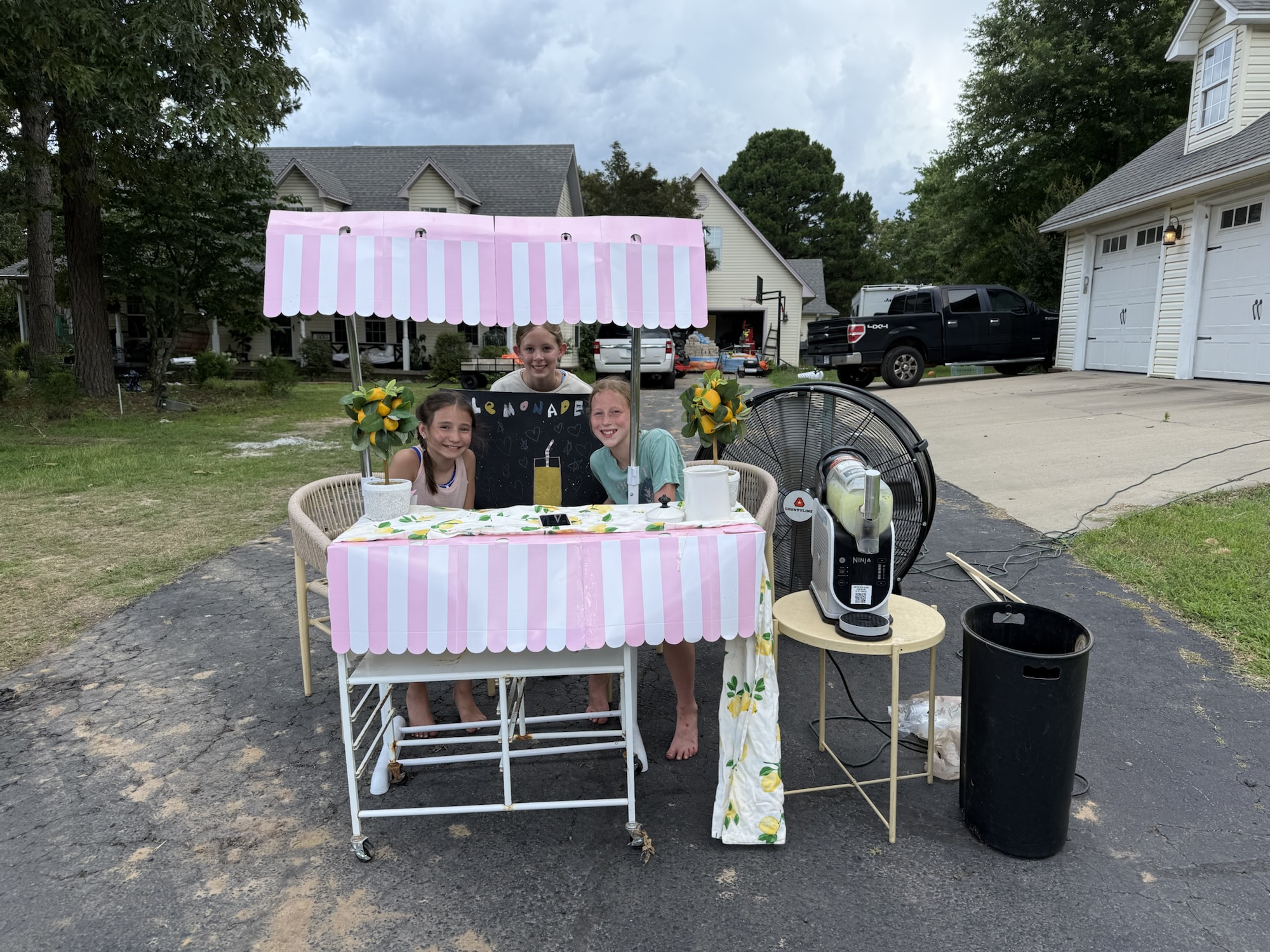
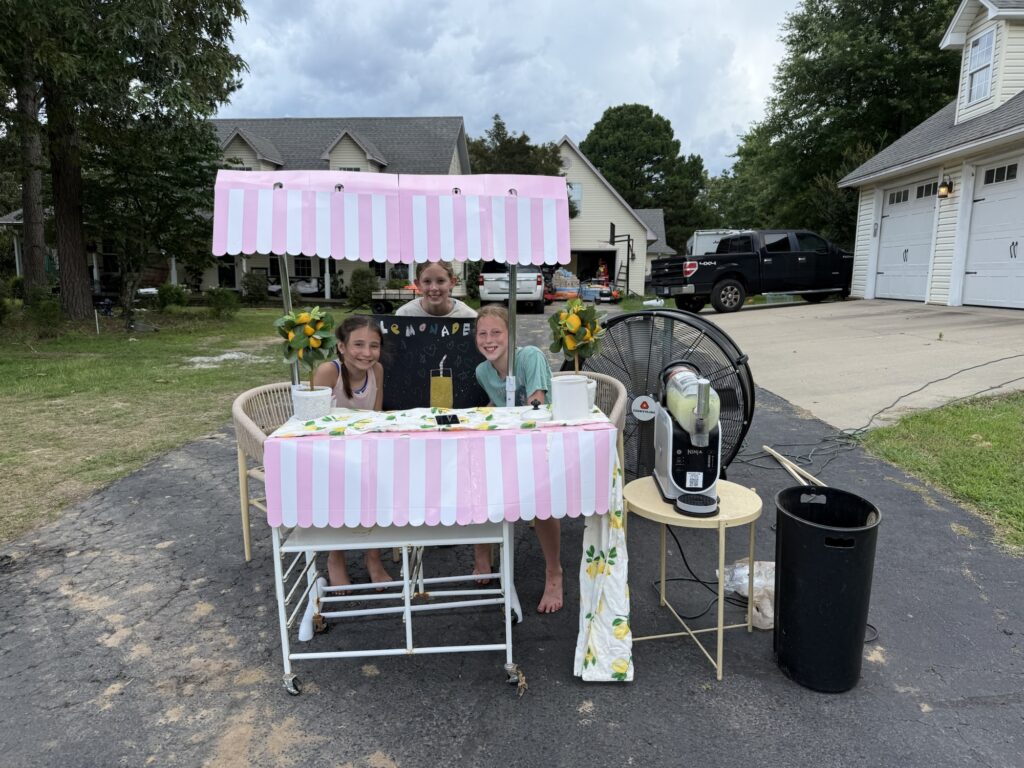
    The stand itself was an old white plant cart I normally use for rehabbing plants. I found a pink cardboard awning left over from a birthday party years ago. We added a lemon-themed tablecloth, a tip jar, some summer decorations, and a few lemon trees that usually sit elsewhere around the house.

    Before long, what had started as random odds and ends looked like a real lemonade stand.

    We mixed lemonade, made simple syrup for extra sweetness, and brought out my Ninja Slushi machine because, if I’m being honest, I use that thing almost every day during spring and summer.

    The girls spent the afternoon making signs, arranging decorations, and getting everything just right.

    And I loved every minute of it.

    But the stand wasn’t my favorite part of the day.

    The people were.

    One of the girls looked at me at one point and said, “I don’t even care about the money. I just want a customer.”

    I started praying for customers, but I know how spaced out the neighbors are here. But even if just one….

    Because the girls weren’t trying to get rich. They wanted someone to stop. They wanted someone to see what they had created. They wanted to serve somebody. They wanted to share their excitement with the world.

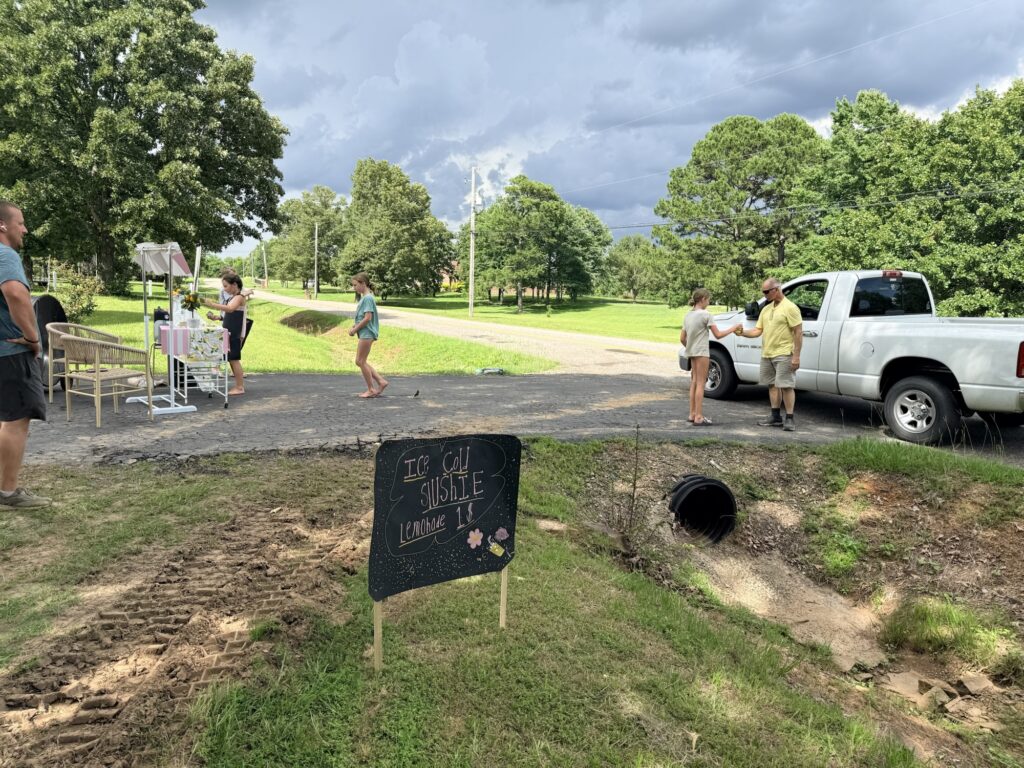
    And people did.

    Car after car slowed down.

    Neighbors stopped.

    Strangers stopped.

    Our neighbor sent her son and tagged everyone she knew from our area in a community post.

    One man came back for a second cup.

    Another handed the girls a twenty-dollar bill for two cups of lemonade.

    Ironically, the girls weren’t the only ones who made new friends that day. After six years here, I left with two new phone numbers and a few neighbors I finally got the chance to meet.

    I don’t think those adults realized what their kindness meant.

    To them, it may have been a quick stop on a hot afternoon.

    To those girls, it was everything.

    It told them their effort was noticed and that creating something and putting it out into the world was worth doing.

    I’ll be honest: I rarely carry cash anymore. But that afternoon changed the way I think about lemonade stands.

    We often talk about wanting kids to stay out of trouble, work hard, and spend less time staring at screens.

    That is exactly what these girls were doing.

    They weren’t scrolling TikTok.

    They weren’t texting.

    They weren’t sitting inside playing video games.

    They were outside in the Arkansas heat creating something together, hoping someone would stop and share in their excitement.

    And so many people did.

    Those cups of lemonade probably weren’t life-changing.

    But the kindness those girls experienced was.

    They’ve already started talking about their next lemonade stand.

  • The Life I Used to Dream About.

    Happy Summer.

    The sunshine season is my favorite.

    Today, I am sitting on my porch in a chair with a glass of sweet tea because that was my dream when I was little. Not a fancy house or car or a name-brand purse. Nope. I wanted a porch, and I wanted to sit on that porch every chance I could get with a wedding ring on my finger and sweet tea in my hand.

    I know a lot of people love to travel, and I won’t pretend I don’t enjoy the beach, but honestly, nothing compares to my porch.

    When I was thirteen, we had a back porch, and I would sit out there listening to music and dreaming about my future. It’s no surprise that I got married young. I spent a lot of my teenage years journaling, imagining, planning, and hoping.

    Now, somehow, I’m living the life I used to write about:  I’m sitting right here on my front porch, listening to crickets and watching the ferns hanging from the posts sway in the breeze.

    Lately I’ve been thinking about how quickly life moves. Summers come and go. Kids grow up. Gardens bloom and fade. Projects begin and end. Before you know it, the season you wanted to remember has become a distant memory.

    That’s one of the reasons I write.

    Last year this blog was a blender of thoughts fueled by emotion. This year feels different. I feel different. More settled. More intentional. More aware of the things I want to remember.

    So this summer, I’m going to hold myself accountable by giving each week a little structure.

    ✨ Move Me Monday
    Something that inspired me, challenged me, touched my heart, or changed my perspective.

    ❤️ Tuesday’s Tiny Acts of Kindness
    A small act of kindness I witnessed and don’t want to forget.

    🛠️ Work On It Wednesday
    Something I’m building, growing, fixing, creating, or learning.

    More than anything, I want this blog to be a record of this season of life. The people. The projects. The lessons. The beauty hidden in ordinary days.

    And if you’re here reading along, I’m glad you’re on the porch with me.

  • Before the Roosters Crow: A Morning Gratitude Reflection

    Before the Roosters Crow: A Morning Gratitude Reflection

    Clarity when life is chaotic

    Sometimes a thankful heart doesn’t come from the mundane itself, but from noticing it before the world wakes up. These are the small hours where gratitude feels louder than worry, and where the ordinary starts to look extra.


    I’m up before the roosters crow. I know that for two reasons: first, we got a rooster over the weekend and he’s silent right now. Second, it’s still pitch dark outside.

    This is the space in time where warm coffee and I meet. When I show up late, I get her twin sister — cold coffee. I like warm coffee because that means I also have time to write my morning gratitude reflection.

    We celebrated Abby’s eleventh birthday over the weekend. Just a quaint one with our little family.

    She was really excited. We got her an iphone, but I wrapped it in a huge box. We totally fooled her.

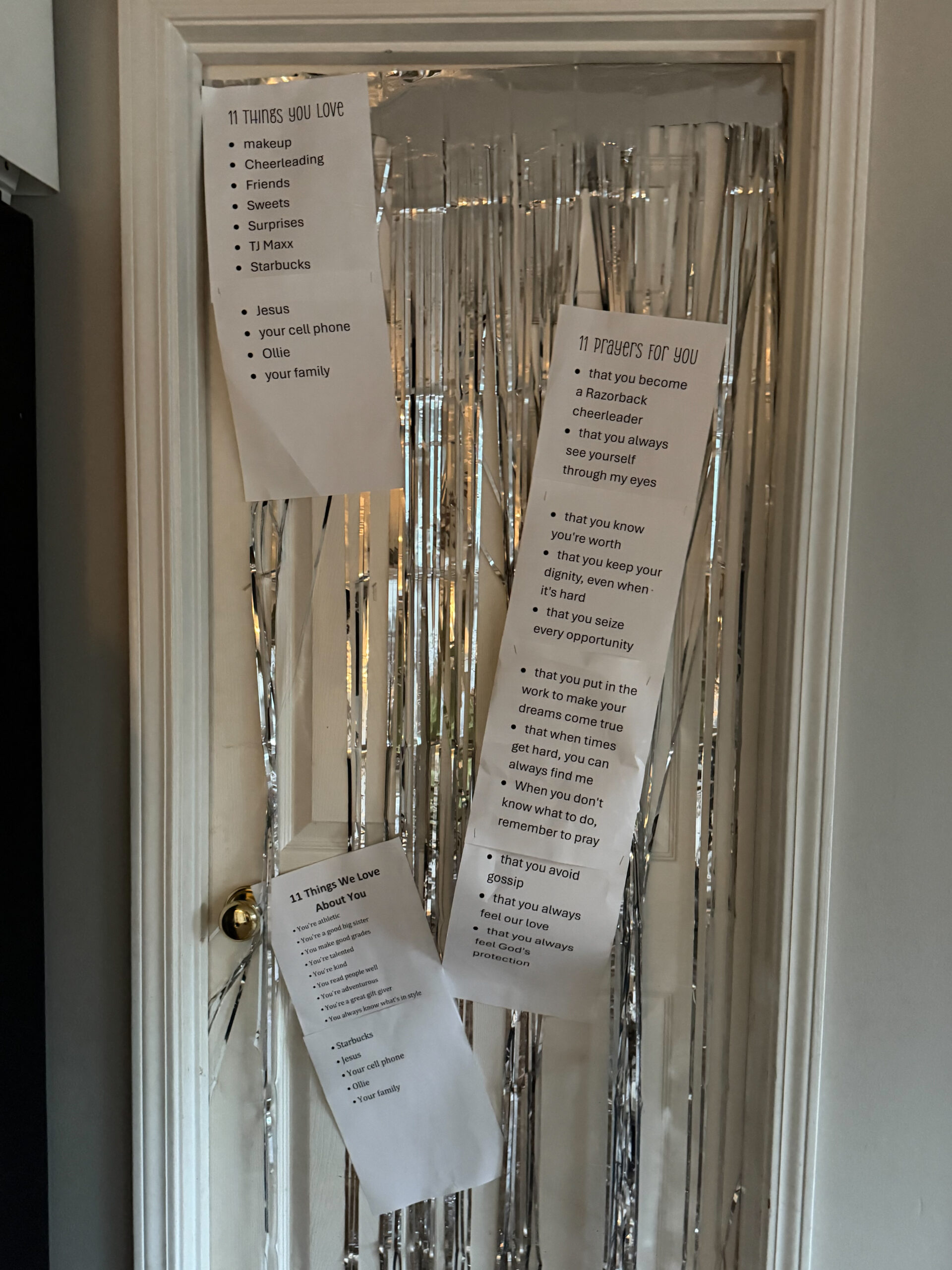
    If you are looking for a tradition to do on your child’s birthday, I started decorating their door in the wee hours of the night before their birthday, so they wake up feeling special. I make three lists, and I keep my lists the same each year: # of prayers for you, # of your favorite things, and # of our favorite things about you. The number of items depends on the number of years they have been born. So since it was Abby’s 11th birthday, she had 11 items under each list.

    Here it is. Simple, yet affirming.


    It amazes me how small things, like a child’s birthday, can change the entire lens through which you see each day.

    I fall down rabbit holes sometimes — a Facebook post about a mom fighting for her life, or a young father who passed away — and suddenly, eleven years doesn’t seem like time stolen. It feels like currency I didn’t earn.

    I’m no better than anyone else, so why do I get to wake up today with a warm cup of coffee, healthy kids, and an ordinary list of tasks? I don’t know, but I sat with that for a minute….

    The thought evokes a strong sense of both unworthiness and gratitude. Do you ever think about that simple yet deep comfort some of us wake up to every day, like our health? I don’t say that with any kind insult, but more just a relief that I remembered today that time hasn’t been stolen from me; rather, it’s been generously shared with me, and why God is so good, I will never know why.

    But for now, I get to enjoy the mundane — because life hasn’t thrown any unforeseen strikes. Yet.

  • Slow Extraction

    The truth about broadcasting your healing through writing.

    Yesterday, I wrote about the past.
    Each layer of emotional clothing I strip off feels more vulnerable than the last.

    Writing for the public—unlike my private journal—is the opposite of strength training.
    With lifting, the weight stays the same.
    It’s your muscles that grow.
    They adapt.
    They harden.

    But with writing, especially your own truths,
    your courage may grow—
    but so do the emotional stakes.

    Each day, I find another buried trauma
    in the graveyard of my emotional landscape.
    The ghosts rise in the wind and whisper,
    “Are you ready to be honest today?”

    Weights don’t ask you that.
    If you’re not ready to advance,
    you can lift the same bar again.
    You still get to call it progress.

    But here?
    Progress only means one thing:
    digging deeper.

  • The Way You Look at Me:  The Unsaid Power of Deep Eye Contact

    The Way You Look at Me: The Unsaid Power of Deep Eye Contact

    The Way You Look at Me: The Power of Deep Eye Contact Admitted.

    It’s strange to find a new love language at 37, right?

    It’s not just any stare though.

    It’s the emotional presence in relationships.

    Wool Socks, Coffee, and Forever: Real Love

    It’s not the kind you toss out of habit.
    It’s not the polite kind.
    The kind that lingers—on purpose.

    The kind that says:
    You still matter here.
    You’re beautiful.
    I see you—and I want to.

    And here’s the part I never expected:
    I’m still discovering what makes me feel pursued.
    I used to think I had it figured out.
    But this?
    This depth—this presence—this quiet, focused gaze…
    It reaches me in ways nothing else has.

    It makes me feel feminine, grounded, and emotionally known.
    It builds intimacy without a single word.

    I told him—softly, but clearly:
    “I need you to look me in the eyes. Deep.”

    Not to solve anything.
    Not to explain.
    But to hold space.
    To remind me that home is still here—and I’m not invisible in it.

    (Click the word home to read more about that.)

    Turns out, connection doesn’t always sound like a conversation.
    Sometimes, it looks like stillness.

    A moment of a man’s undivided attention.
    Sometimes, it’s the way he looks at me—and doesn’t look away.

    I am glad Robert is adaptable.

  • Daily Quiet: Jonah Learns to Ride His Bike

    June 5, 2025

    Daily Quiet


    Jonah Learns to Ride His Bike

    You’re earning the crown.
    With every push of the pedal,
    you’re learning to balance—and push through.

    The bike is patient.
    It moves at your pace,
    but it won’t balance for you.
    That’s where practice becomes mastery.

    It’s okay. We’re all learning to balance.
    Our checkbooks.
    Our time.
    Our eating.
    The list goes on.

    Don’t rush, sweet boy.
    The moment you master one thing,
    life hands you something new.

    I used to hold the handlebars.
    Today, I only held the back of the seat.
    You stepped forward—independent, proud,
    gauging your success by the lightness of my grip.

    You did it.
    You really rode.

    We ended on a good note.
    A sweaty one, too.
    The humidity tricked us—
    85 degrees in 67% humidity is no joke.

    But fifteen minutes?
    Fifteen minutes is enough.

  • Mom at Midnight: Raising Tiny Chaos Junkies

    Mom at Midnight: Raising Tiny Chaos Junkies

    June 10, 2025

    Author’s Note:
    This post is for every parent lying awake at midnight—brain fried, body done, heart full. It’s for the ones parenting through chaos, guilt, and grace, and finding the courage to stand up again tomorrow. You’re not alone.


    Body:

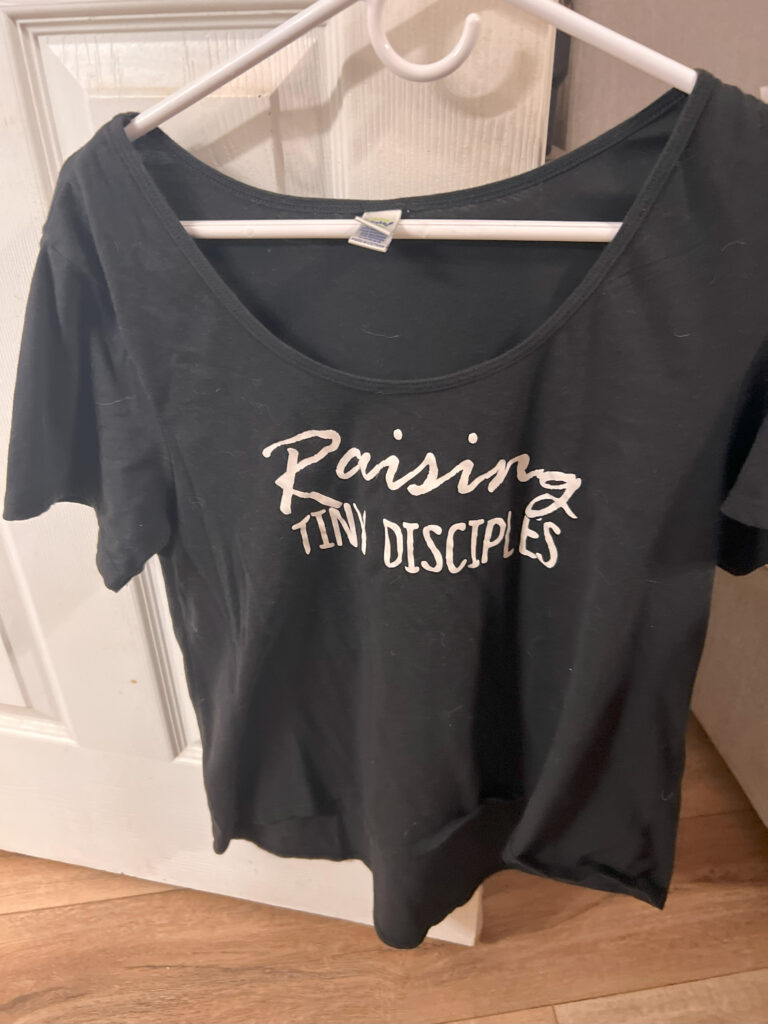
    This was my shirt. Eight years ago.

    Black T-shirt with white “Raising Tiny Disciples” lettering hanging on a hanger, representing a homemade HTV mom shirt from 2016.
    The original HTV shirt from the “Jesus & essential oils” era—eight years and three chaos junkies ago.

    A homemade HTV “Raising Tiny Disciples” shirt—peak “Jesus & essential oils” era.
    I’ll link a newer version of the DIY cutter I used back then (hello, Silhouette Cameo 2016).

    It boldly declared my mom mission: “Raising Tiny Disciples.”

    And to be fair, it wasn’t wrong… if we’re talking about the original twelve. You know, the ones B.C.—doubtful, chaotic, snack-seeking, and constantly questioning authority.

    If I could go back, I’d add some fine print:
    (…like the one B.C.)

    Because let’s be honest: my kids have the spiritual potential of Peter and the behavioral instincts of a gremlin on Red 40.

    It’s Monday night. Quiet—only because the chaos is finally unconscious.
    I’m lying in bed, tossing like a hooked trout. My body’s begging for sleep. My brain? She’s just now ready to solve world peace and cereal logistics.

    Sometimes I’m sharp when I need rest… and useless when I need function.
    I’ll lie awake planning tomorrow and then spend the

  • Karen Read Acquittal

    Karen Read Acquittal

    Karen Read Acquittal – A Court Reporter’s Perspective on Truth, Tone, and Reasonable Doubt

    Such a compelling case, indeed

    I watched the Karen Read docuseries. A friend asked me to weigh in—probably because I’m a court reporter, and I spend a lot of my life watching people under pressure, trying to lie, bluff, or convince. This one was hard to pin down. Some of it felt deeply compelling—like the part where she says she pulled a piece of glass out of his nose. But other parts didn’t quite make sense either.

    Here’s what I noticed.

    Usually, when someone’s done something as serious as killing another person, their calls afterward don’t feel real. Most of the time, you can hear the performance—the overly sweet voicemail, the fake calm. They try to sound clueless, loving, innocent. But the tone is wrong. You can feel it.

    Karen Read didn’t sound like that.

    She came across as full of passion—chaotic, raw, erratic even—but not calculated. I watched an interview that talked about how many times she called him after the incident. How much she screamed. And honestly, that kind of energy is highly unusual for someone trying to cover up a murder. The tone of her voice, the volume, the effort she poured into those voicemails? It wasn’t giving “clean getaway.” It was giving spiraling confusion. If she did hit him, I’m not entirely sure she knows that she did.

    Robert and I talked about it, and we both landed in the same place: even if there’s a chance she did it, this case was nowhere near beyond a reasonable doubt.

    And body language says a lot. Her tone, her physical responses—even the sheer number of calls she made before learning he was dead—all of it pointed to a kind of passion and denial that doesn’t align with guilt. If someone knows they’ve killed someone, they don’t call to scream at them. They usually call to pretend they didn’t have issues. They clean things up. They delete the evidence. They try to rewrite the narrative.

    Karen didn’t do any of that.

    She didn’t try to fix her broken taillight. She didn’t wipe off the hair found on the car. She didn’t act like someone with something to hide. And when she was giving her thoughts and opinions—on camera or in court—she consistently shook her head yes. That’s actually a well-known indicator of truthfulness. When people are lying, their body often betrays them. Take Scott Peterson or Chris Watts, for example. In their televised interviews, when asked if they knew where their wives were, they shook their heads no—while saying yes. Look it up. I noticed it years ago while watching their documentaries, and it stuck.

    That kind of stuff matters.

    And then there’s the other side. The lead detective in this case? He sent inappropriate, raunchy text messages and had personal ties to the family who owned the house where the victim died. The people inside that house the night it happened were all butt-dialing each other left and right—no one explaining why. And one of the men who was there took his phone and ran it over with a car. Who does that? Most people just trade their phones in or upgrade. I’ve never known anyone to destroy both their phone and their SIM card unless they’re trying to make sure nothing is left behind.

    Put all of that together, and the verdict makes sense.

    There may always be pieces we can’t explain. But guilt has a pattern, and so does innocence. And this case—despite its chaos—looked a lot more like the second.